
New Students Must Know: The Series of Assessments During 2026 School Orientation
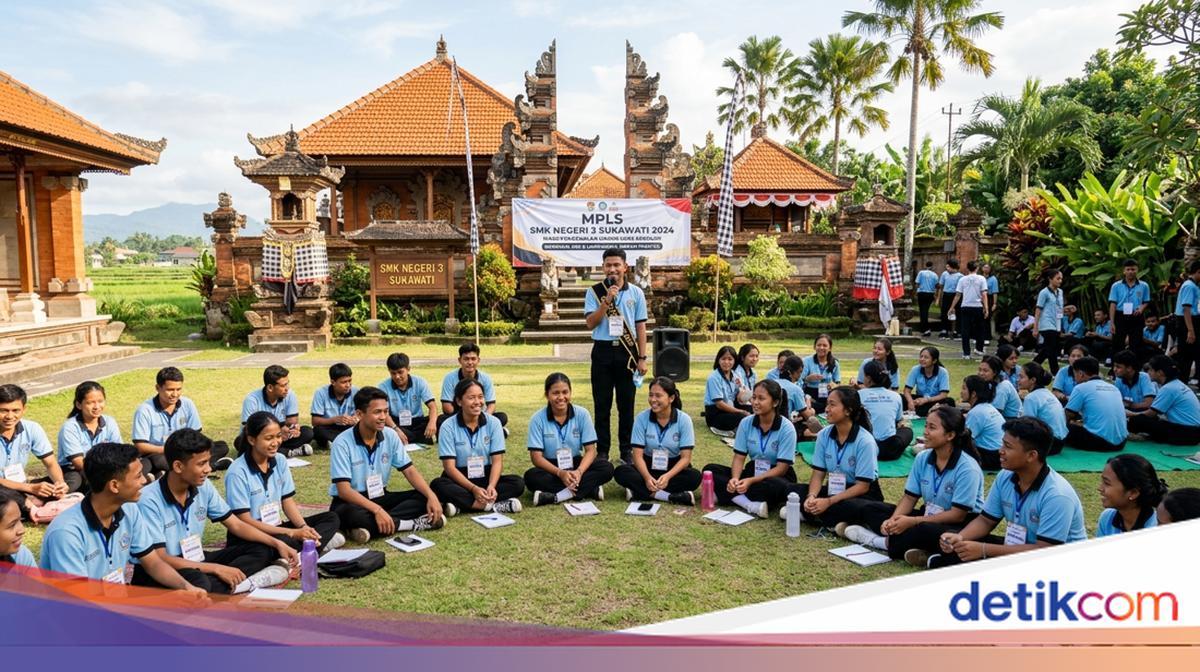
The Ministry of Primary and Secondary Education (Kemendikdasmen) has introduced a number of enhancements to the implementation of the 2026 Friendly School Environment Introduction Period (MPLS). Beyond introducing the school environment, this year’s MPLS is also designed to help schools identify the conditions, potential, and support needs of each new pupil.
Rusprita Putri Utami, Head of the Character Strengthening Centre (Puspeka) at Kemendikdasmen, explained that pupils will undergo several assessments during MPLS. Whereas in 2025 there were only reading literacy and numeracy assessments, the instruments for 2026 have been expanded to cover academic, social-emotional, health, and talent and interest aspects.
“In 2026, there are a number of enhancements compared to the 2025 MPLS, particularly in the aspect of recognising pupils’ self-potential and support needs,” Rusprita said during the Friendly MPLS 2026 Solution Webinar broadcast on the Cerdas Berkarakter Kemendikdasmen RI YouTube channel on Wednesday (24/6/2026).
On the third day of MPLS, pupils are scheduled to take three assessments with a total duration of approximately 90 minutes. These assessments include: identification of initial social-emotional conditions and learning concentration; a reading literacy and numeracy assessment; and identification of talents and interests. Unlike previous years, all instruments, data processing, and reporting of assessment results will be facilitated directly by the Ministry through the Friendly MPLS System.
The assessment results will consist of an individual report for each pupil and a school-level recapitulation of data. Teachers can use these reports as a basis for developing learning strategies that are more suited to pupils’ needs. “Therefore, not only will teachers use the results as a basis for designing learning preparations, but school principals can also use them for planning school programmes related to talents and interests, as well as fostering a safe and comfortable school culture,” Rusprita stated.
In addition to being used by schools, the assessment results can also be shared with parents. This is intended to help parents better understand their child’s characteristics and needs, thereby optimising the support process at home.
The enhancements to the 2026 MPLS are not limited to academic and psychological aspects. The Ministry has also incorporated a fitness assessment to be conducted on the second day of MPLS. This assessment includes body mass identification and a flexibility test, aiming to provide schools with an initial overview of pupils’ health and fitness conditions. Furthermore, schools are encouraged to open registration for the Free Health Check-up programme before and during the implementation of the Friendly MPLS, with the results forming part of the school’s post-MPLS evaluation.
“Thus, the 2026 MPLS moves more strongly from merely introducing the environment to introducing the pupil in a more holistic manner, covering academic, social, emotional, talent, interest, health, and learning support needs,” Rusprita emphasised.
Through these various assessments, schools are expected to obtain a comprehensive profile of new pupils from the very beginning of the school year. The collected data can be used to formulate more targeted learning strategies, identify pupils’ learning support needs, map talents and interests, build a safe and comfortable school environment, and strengthen collaboration between schools and parents. With this approach, MPLS is no longer just an orientation activity but a foundational step towards understanding each learner’s characteristics comprehensively.
Parents will also be involved in filling out several instruments during the MPLS socialisation session. For kindergarten and primary school levels, parents will be asked to complete instruments regarding the child’s initial social-emotional conditions and learning concentration, body mass identification, and, specifically for new primary school pupils, talent and interest identification. Primary school pupils will also undergo a flexibility test on the second day of MPLS. For junior high, senior high, and vocational school levels, pupils will undergo body mass identification and a flexibility test on the second day, followed by identification of initial social-emotional conditions and learning concentration, a reading literacy and numeracy assessment, and talent and interest identification on the third day. For special needs schools, the assessment involves body mass identification with teacher assistance, and the results and recommendations can be conveyed to parents in accordance with applicable guidelines.