
New Species Discovered in Banyuwangi Gains Global Attention, BRIN Reveals Facts
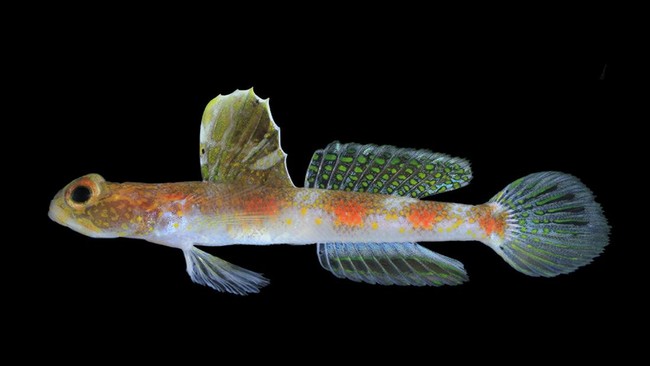
Researchers at BRIN have discovered a new species of shrimpgoby in the waters of Banyuwangi, East Java. The fish has been named Tomiyamichthys oriens sp. nov.
After a series of morphological studies and molecular analyses, the shrimpgoby found in Banyuwangi was confirmed as a new species. The discovery, which adds to Indonesia’s marine biodiversity, was published in the prestigious international journal ZooKeys, Volume 1283, 2026.
The research team comprised Kunto Wibowo and Hilda M. Pratiwi (Centre for Biosystematics and Evolution Research), Anik B. Dharmayanthi (Centre for Biosystematics and Evolution Research), Agus Priyadi (Centre for Applied Zoology Research), and Ruby V. Kusumah (Centre for Applied Zoology Research), in collaboration with Djohan Tjiptadi and Wiwi Tarmini of CV Cahaya Baru.
The study began with two individuals of marine ornamental shrimpgoby of the genus Tomiyamichthys collected from the waters of Banyuwangi. The researchers then carried out identification and analysis using a morphological approach and mitochondrial cytochrome c oxidase subunit I (COI) DNA markers.
Based on the research results, Tomiyamichthys oriens resembles Tomiyamichthys hyacinthinus, which originates from Japan. However, closer observation revealed a number of distinguishing characters.
These include differences in the number of fin rays, the number of scales, the number of gill rakers, body colour pattern, and molecular-level differences, confirming that the two are distinct species.
BRIN Centre for Biosystematics and Evolution Research researcher Kunto Wibowo said the designation of the new species was not based on a single method, but on an integrative taxonomy approach.
“We combined morphological characters with DNA analysis to obtain more comprehensive evidence. The results show that T. oriens has consistent characters that differ from its closest relative, making it worthy of being established as a new species,” said Kunto, quoted from BRIN’s official website on Wednesday (22 July 2026).
Mitochondrial DNA analysis showed a genetic difference of 3.1 per cent compared with T. hyacinthinus. In addition, the fish has distinctive features in the form of five large bright orange blotches along its body, small yellow spots on its head, and two elongated filaments on the first dorsal fin of males, distinguishing it from other species in the same genus.
According to Kunto, the name oriens is taken from Latin, meaning “east” or “sunrise”. The name was inspired by the bright orange colour of the fish’s body, while also referencing Banyuwangi, which is known as The Sunrise of Java.
“The naming of this species is also a form of recognition of its discovery location. We hope this finding will spur further research to uncover the immense marine biodiversity of Indonesia,” he added.
So far, T. oriens is only known to inhabit the coastal waters of Banyuwangi, in sandy-bottomed habitats. Information from local fishermen indicates the fish is found in shallow waters, although its ecological association with the shrimps that typically serve as living partners for this goby group still requires further study.
The discovery of T. oriens adds to the list of fish species described from Indonesian waters, while also demonstrating that the coastal regions of the archipelago still hold biodiversity potential that has yet to be fully documented. BRIN continues to strengthen biosystematics research as the scientific foundation for supporting the conservation, management, and utilisation of Indonesia’s biodiversity.
Source: jawawa.id (https://jawawa.id/newsitem/new-species-discovered-in-banyuwangi-gains-global-attention-brin-reveals-facts-1784710304)
Originally published by CNBC Indonesia (https://www.cnbcindonesia.com/tech/20260722132231-37-752903/spesies-baru-di-banyuwangi-jadi-sorotan-dunia-brin-ungkap-faktanya), translated from Indonesian