
New Solar Record: Type IV Radio Signals Persist for 19 Days Non-Stop
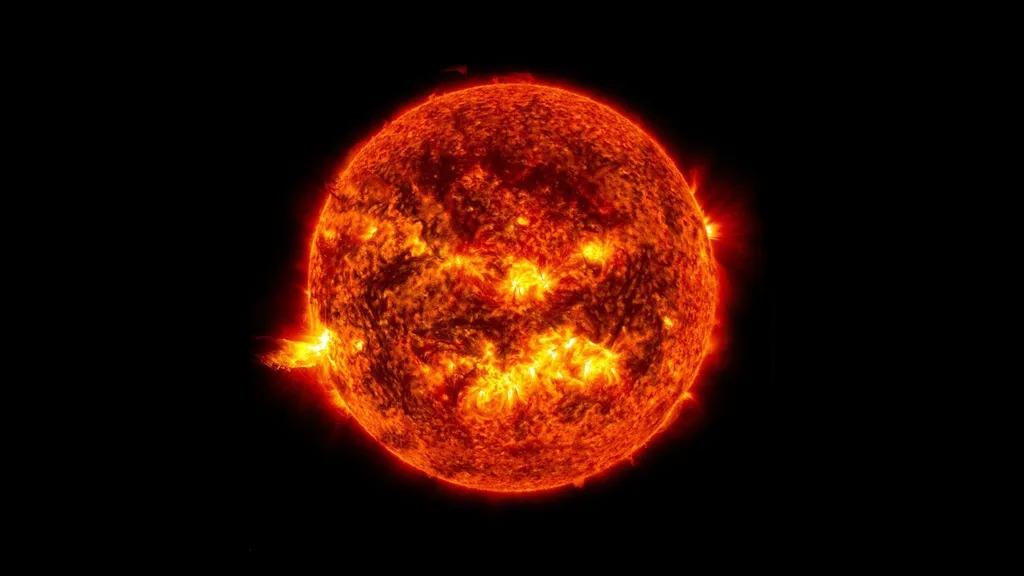
Space phenomena have just recorded a new surprise record for scientists worldwide. The Sun, the centre of our solar system, has broken the record for continuous radio wave transmission duration, far exceeding previous records. This phenomenon provides a new perspective for Media Indonesia’s editorial team on the dynamics of our star’s magnetic energy and how space monitoring technology works collaboratively.
According to gathered data, this extraordinary event occurred from 21 August to 9 September 2025. During this period, the Sun emitted strong radio signals continuously for 19 full days. This figure is highly significant given that the previous longest solar flare record lasted only five days. In other words, the new phenomenon lasted nearly four times longer.
The signal is classified as a Type IV radio burst. Technically, these bursts are produced by energetic electrons trapped within the Sun’s powerful magnetic field. Although radio bursts are common occurrences, their duration spanning weeks rather than hours or days makes this anomaly a serious concern for NASA and other space agencies.
The successful documentation of this phenomenon is due to advanced monitoring technology. As the Sun rotates, the signal was monitored alternately by four different spacecraft:
Data from the STEREO mission allowed researchers to trace the flare source to a massive magnetic structure shaped like a funnel, known as a helmet streamer, in the Sun’s outer atmosphere. This structure resembles a large V-shape, similar to the appearance seen during total solar eclipses.
Scientists believe the extreme duration was triggered by three consecutive Coronal Mass Ejections (CMEs) erupting from the same region. These successive explosions continuously supplied charged particles and magnetic energy, keeping the radio signal active for almost three weeks.
The critical question is: is this phenomenon dangerous? According to expert analysis, there are several key points regarding its impacts:
The research published in The Astrophysical Journal Letters marks a significant milestone in space weather. By understanding how long-duration radio bursts form, researchers will be better prepared to predict solar activity that could impact human technology infrastructure. (Source: Futurism, Science Daily)