
New Rules Open Up Government Projects to Regional Contractors
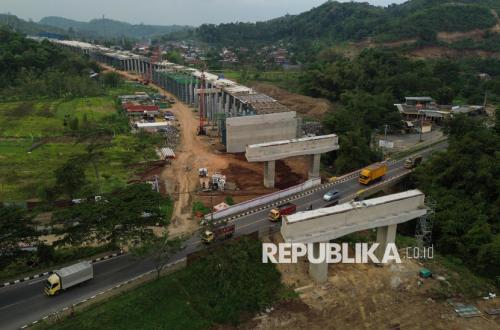
JAKARTA — Non-state-owned national contractors may secure a larger share of government construction projects worth between Rp50 billion and Rp100 billion. The Indonesian National Construction Contractors Association (Gapensi) says new regulations open up opportunities for private construction companies and regional businesses to compete for development projects.
Gapensi chairman Andi Rukman N. Karumpa said the opportunity arose following the issuance of Public Works Ministerial Regulation No. 6/2025 and Government Procurement Policy Agency (LKPP) Regulation No. 3/2026. The two rules are seen as giving national contractors, including construction micro, small and medium-sized enterprises (MSMEs), greater scope to compete.
“What is interesting is that projects in the Rp50 billion to Rp100 billion segment, which used to be carried out by state-owned enterprises, are now prioritised for national non-state-owned companies,” Andi said in a written statement in Jakarta on Tuesday (13 October 2026).
Andi said dividing work into segments based on project value could enable fairer competition in line with companies’ capabilities. The policy also gives regional contractors the chance to win work suited to their qualifications.
However, Gapensi warned that regulatory changes must be matched by the availability of projects and budget support. Without the actual delivery of project packages, opportunities for private contractors and MSMEs may not lead to increased business activity.
Andi highlighted the importance of ensuring that regional transfers and infrastructure budgets are disbursed smoothly. The availability of funding, he said, would determine whether small contractors in the regions could actually secure work.
“If regional-transfer-funded packages are not held up, and infrastructure funds are not reduced to zero again, we are confident that programmes will genuinely be created for regional construction MSMEs in the Rp2 billion, Rp7.5 billion and Rp15 billion segments to provide public services at the grassroots. People’s purchasing power will certainly rise, and economic growth will increase,” Andi said.
Construction projects in the regions could also stimulate economic activity beyond the construction sector. They require workers, building materials and various supporting services, creating business opportunities for local communities.
Gapensi also urged the government to apply project segmentation consistently, particularly for projects that can be carried out by national non-state-owned companies. Andi said he hoped the provisions would be implemented in procurement, rather than existing only on paper.
“Moreover, the Rp100 billion classification must actually be implemented, with projects carried out by national business operators,” Andi said.
Public Works Ministerial Regulation No. 6/2025 sets standards for business activities, supervision and sanctions under risk-based business licensing in the public works sector. Issued on 30 December 2025, it implements Government Regulation No. 28/2025 and replaces Public Works and Housing Ministerial Regulation No. 6/2021.
Under the regulation, construction business certification (SBU) qualifications are divided into five levels: Small 1, Small 2, Small 3, Medium and Large. The classifications are based on business capacity, including annual sales, and require specified net capital, certified workers and equipment.
Small 1 covers companies with annual sales of up to Rp2 billion; Small 2, sales above Rp2 billion up to Rp7.5 billion; and Small 3, sales above Rp7.5 billion up to Rp15 billion. Medium covers values above Rp15 billion up to Rp50 billion, while Large applies to values above Rp50 billion.
LKPP Regulation No. 3/2026, issued on 22 September 2026, sets out guidelines for government procurement of goods and services through suppliers. It replaces LKPP Regulation No. 12/2021 and its amendments.
The regulation provides for five supplier-selection methods: e-purchasing, direct procurement, direct appointment, quick tender, and tender or selection. It also prohibits lending company credentials to another party and transferring all work to a third party.
Gapensi said the prohibition is important to ensure that projects intended for small businesses are genuinely carried out by companies that meet the requirements. The association hopes that project segmentation and procurement oversight will widen business opportunities for national contractors.