
New Regional Axis of Saudi Arabia, Turkey and Pakistan: How Should Indonesia Respond?
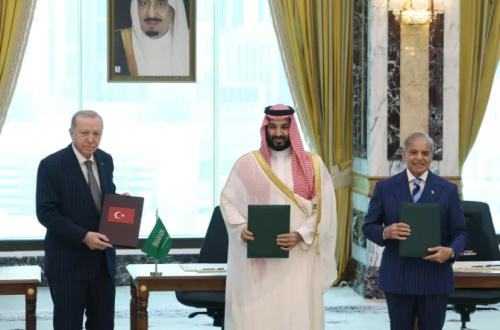
The Kingdom of Saudi Arabia, the Republic of Turkey and the Islamic Republic of Pakistan officially signed a Joint Defence Agreement at a summit held in Makkah on 7 August 2026, bringing together Crown Prince and Prime Minister Mohammed bin Salman (MBS), Turkish President Recep Tayyip Erdoğan, and Pakistani Prime Minister Shehbaz Sharif.
The pact establishes the principle of collective defence — that an attack against one state is considered an attack against all three. The agreement was born amid the escalation of the Gulf conflict, the US-Iran war, and maritime security threats in the Red Sea and the Strait of Hormuz, indicating a major shift in the regional security architecture.
The Trilateral Defence Agreement, or the Makkah Agreement (Makkah Defence Pact), marks the formation of a new strategic power axis in the Muslim world. The pact redesigns the regional security architecture, reduces dependence on the United States, and alters the map of power in the Muslim world.
How, then, does this pact affect the dynamics of the Muslim world? What is its impact on geopolitics and the global balance of power? How should Indonesia respond to the Makkah Defence Pact?
According to the summit’s final statement, the agreement aims to strengthen joint deterrence and develop defence cooperation among the three countries. The agreement stipulates that any armed attack against one signatory state is considered an attack against all states.
The statement added that the agreement is based on “historic ties” and shared strategic interests among the three countries and aims to enhance security and stability in the region and globally. Previously, the Turkish President stated in a post on platform X that the agreement is based on the principle of “collective deterrence” and includes strengthening security and defence cooperation, developing joint projects in the defence industry, and cooperation in combating terrorism.
He added that the agreement affirms the right of states to self-defence in accordance with Article 51 of the UN Charter, and noted that the agreement “does not target any state” and is open to accession by other states seeking peace and stability in the region.
Source: jawawa.id (https://jawawa.id/newsitem/new-regional-axis-of-saudi-arabia-turkey-and-pakistan-how-should-indonesia-respond-1786834235)
Originally published by Republika (https://analisis.republika.co.id/berita/tjtmzv282/poros-regional-baru-saudi-turki-dan-pakistan-bagaimana-ri-bersikap), translated from Indonesian