
New Phenomenon in Korea: 'Fake' Shopping Apps Become an Escape for Gen Z
A unique phenomenon is spreading across South Korea. Amidst the increasing pressure of the cost of living, a series of ‘fake’ shopping and delivery applications have emerged, allowing users to experience the sensation of shopping or ordering food without actually spending any money.
This trend, dubbed ‘dopamine sites’, has become a new way for Generation Z to satisfy consumerist urges without incurring actual expenses or the subsequent ‘buyer’s remorse’.
According to Kwak Keum-joo, Professor Emeritus of Psychology at Seoul National University, the appeal of these platforms is not merely providing the sensation of shopping, but serving as an outlet for consumption impulses amidst economic pressure. “Currently, we are constantly driven to consume, so the desire to buy goods is always present. However, after making a purchase, people often regret spending too much money. These websites may offer a way to satisfy that urge while reducing regret,” she stated, as quoted by Korea JoongAng Daily.
Shopping and Ordering Food, But Never Arriving
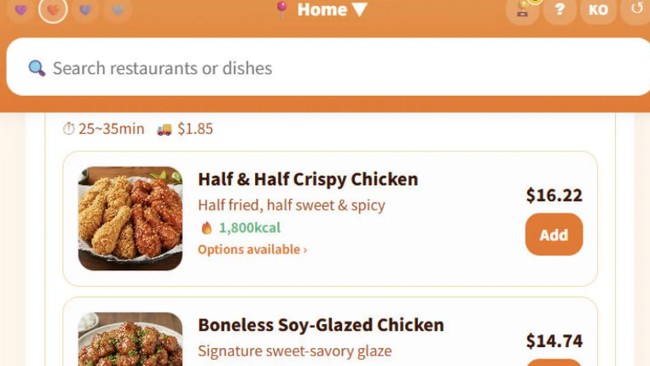
One of the most talked-about platforms is a virtual food ordering site launched in late March 2026. Users can select menus much like real food delivery apps, ranging from fried chicken and pizza to sushi and bingsu. They can add items to a basket, enter an address, select a payment method, and press the ‘order’ button. Even virtual delivery riders can be seen moving towards the user’s location on a map.
However, no food actually arrives. No restaurant receives the order, and no money is deducted from bank accounts. Instead, users receive a notification stating they have just saved approximately 2,120 calories, complete with virtual transaction proof valued at US$22.38.
The site was created by Park Seo-hyun, a 27-year-old man who admitted to frequently ordering food late at night in the past. “I used to order food about 10 times a week. I was easily addicted. One day, I joked about wanting to be able to order food without actually receiving it, and my friends encouraged me to create such a site,” he said.
The platform, which features an interface very similar to popular apps like Baedal Minjok and Coupang Eats, has been met with enthusiasm. By mid-June, approximately 30,000 people were using the service weekly to ‘shop’. Park even plans to release an app version with an even more realistic experience, including minimum purchase requirements similar to real services.
From Virtual Food to Imaginary Goods
This phenomenon is not limited to food. Virtual shopping sites offering imaginative products have also emerged. Users can ‘buy’ items such as a ‘Moon Rabbit Moonlight Mortar’ for 120,000 won or adhesive tape claimed to ‘repair broken friendships’ for 50,000 won. Much like real marketplaces, users can add items to a basket, complete a checkout, and leave humorous reviews for products that do not exist.
The developer stated that his inspiration came from the manga and anime Doraemon. “Whenever I face difficulties, I often imagine how wonderful it would be if there were tools that could solve everything magically. Imagining something that requires no cost and harms no one,” he said.
Unexpectedly, many users enjoy the experience. “People treat it like a real shopping centre and share their experiences on social media. Perhaps because the process of shopping itself is enjoyable, not just the possession of the items,” the developer added.
Why Gen Z Loves It
The popularity of dopamine sites is now spreading beyond South Korea. Similar platforms such as ‘FoodNeverComes’, which offers a wider culinary variety, and ‘DopamineCart’, which mimics the Amazon shopping experience without real transactions, are appearing. International media outlets such as The Times and Psychology Today have also highlighted this phenomenon as a new trend born from economic pressure and digital consumer culture.
According to Kwak, the appeal of these sites is more than just triggering dopamine. Shopping algorithms constantly encourage people to buy similar products, leading to increased spending and regret. In an economically pressured situation, virtual shopping sites offer psychological satisfaction without financial consequences.
This phenomenon is emerging while economic pressures in South Korea remain palpable. Consumer inflation in June was recorded at 3.2% annually, the fastest rate in two and a half years. Meanwhile, online shopping transaction value in May exceeded 25 trillion won, an increase of approximately 10% compared to the previous year, driven by rising purchases of essential goods and cosmetics.
Amidst the heavy temptation to shop, these ‘fake’ apps are becoming a new escape. No goods actually arrive at the doorstep, but for some, the sensation of pressing the checkout button is enough to keep their wallets safe and reduce post-purchase regret.
Source: jawawa.id (https://jawawa.id/newsitem/new-phenomenon-in-korea-fake-shopping-apps-become-an-escape-for-gen-z-1783165884)
Originally published by CNBC Indonesia (https://www.cnbcindonesia.com/tech/20260704165244-37-748049/fenomena-baru-di-korea-aplikasi-belanja-palsu-jadi-pelarian-gen-z), translated from Indonesian