
New Phenomenon: Countries Race to Secure Nuclear 'Power Boost' from Earth to the Moon
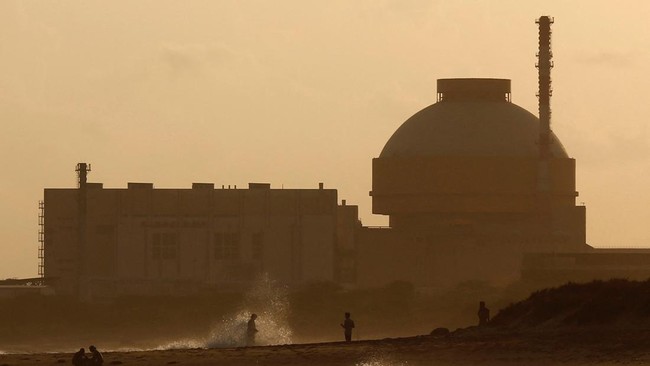
A new phenomenon is unfolding across the world as many countries race to secure nuclear fuel. With demand expected to double by 2040, various nations are reopening uranium mines, expanding enrichment capacity, and exploring alternative fuels, uranium extraction from seawater, and fusion technology, according to a report by Singapore’s CNA titled The Nuclear Option on Thursday (20/8/2026).
In the United States, particularly in southern Texas, uranium mining has come back to life after a long dormancy. The Alta Mesa Uranium Project has been ramping up uranium exploration since 2024, despite the area having been abandoned by residents since the 1990s when demand and imports of uranium fell sharply after the end of the Cold War. The 2011 Fukushima nuclear power plant accident in Japan following an earthquake and tsunami also raised awareness among world governments about nuclear safety.
“I want to continue the family legacy and leave my mark,” said one mine worker, Jesus “Jesse” Garza Jr. “Nuclear energy is clean energy. This is the future and I want to be part of it,” he asserted.
The nuclear energy revival is not confined to Texas. More than 40 countries plan to build new reactors or are considering doing so. The search for new low-carbon electricity sources is the driving reason. At the same time, industries such as artificial intelligence and cryptocurrency mining are further increasing energy demand.
One of the attractions of nuclear energy is the energy density of uranium. A single uranium fuel pellet about the size of a fingertip can produce energy equivalent to one tonne of coal or 17,000 cubic feet of natural gas.
However, the growing interest in global nuclear capacity comes after a long period of low uranium production. Demand is expected to double by 2040 and could potentially begin to outstrip supply after 2030. This situation has raised warnings about potential fuel shortages in the next two decades, prompting many countries to hunt for supplies in various places.
Uranium is actually 500 times more abundant than gold, but the largest known mineable reserves are concentrated in fewer than 10 countries. The world’s largest uranium producer is currently Kazakhstan. At the Kharasan-2 mine in southern Kazakhstan, uranium is extracted through the in-situ recovery method. Wells are used to pump a solution underground to dissolve the uranium, which is then brought to the surface and processed into yellowcake, a concentrated powder used to make nuclear fuel.
ISR accounts for more than half of global uranium production and helps Kazakhstan produce around 40% of the world’s primary uranium. However, extracting uranium from the ground is only the first stage. Kazakhstan still mainly relies on Russia for uranium enrichment before the material can be used as reactor fuel. The war in Ukraine has also complicated Kazakhstan’s export routes through Russia.
As global attention shifts to alternative suppliers, Australia has returned to the spotlight. The country has the world’s largest known uranium resources, twice as much as Kazakhstan. However, converting those reserves into supply takes nearly a decade. Companies can spend around five years drilling and assessing reserves, then another five years obtaining permits.
Access to uranium reserves is also politically and socially sensitive. In Western Australia, where no new uranium mining projects have been approved since 2017, some reserves lie beneath land that holds deep significance for Aboriginal indigenous communities.
Meanwhile in Sweden, which holds around 27% of Europe’s known reserves, uranium has not been fully utilised. In the country, uranium is largely found in alum shale, which can release heavy metals into groundwater and rivers if disturbed. Due to environmental concerns and broader political considerations, Sweden banned uranium mining in 2018. However, as electricity prices soared in Europe, pressure increased to reduce dependence on imported fuel, especially from Russia, while strengthening energy security. Sweden subsequently lifted the ban starting in January, while maintaining environmental oversight.
Because land-based uranium reserves are concentrated in a handful of countries, Japan has begun looking to the sea as an alternative source. The oceans are estimated to contain around 500 to 1,000 times more uranium than extractable land-based reserves. The amount is theoretically enormous. Research in Japan suggests that uranium in the sea could potentially sustain the world’s nuclear power plants for tens of thousands of years.
The problem is that uranium in seawater has a very low concentration, making extraction still expensive. Japanese scientists are now developing special materials that can capture uranium compounds from seawater. These materials are also being researched for reusability so that extraction costs can be reduced. If this technology reaches commercial viability, Japan, which has long been heavily dependent on uranium imports, could potentially obtain an alternative domestic fuel source.
The hunt for nuclear energy sources is also driving the development of fuels other than uranium. China, for example, is developing a molten salt reactor fuelled by thorium, a naturally occurring radioactive element that can be used as an alternative nuclear fuel.