
New Order in the Strait of Hormuz and Global Oil Prices
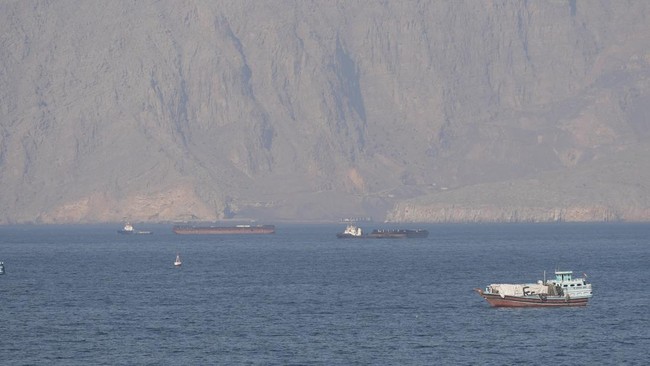
Although ceasefire narratives dominate headlines, oil prices are not reverting to their fundamental levels. The global oil market is not returning to the status quo that existed before the war.
The Strait of Hormuz has now mutated from a mere free shipping lane into an instrument for monetising sovereignty. For the global oil market, this represents a kind of institutionalisation or formalisation of additional costs within the new oil price structure.
The Emergence of the “Toll Scenario”
The future of the Strait of Hormuz now hinges on the “Islamabad Roadmap,” a Pakistani mediation effort attempting to bridge tensions between Tehran and the West. However, the highest probability does not point towards total peace, but rather towards a “Limited Normalisation” scenario.
In this scenario, Iran opens the strait to commercial shipping, but under highly transactional conditions, namely through the payment of “maritime supervision toll fees.” This is essentially a form of monetised sovereignty.
The United States finds itself in a fundamentally dilemmatic position here. Although rhetorically opposed, the US is likely to de facto tolerate this levy. Why? Because the alternative—a surge in oil prices beyond US$130 per barrel—would strike harder at any administration’s economy.
This scenario is far more realistic than achieving a “Grand Bargain,” given the rigidity of “America First” rhetoric that closes the door to restoring full freedom of navigation.
Another scenario is the “Hybrid Blockade,” if negotiations reach a permanent impasse. In this case, the strait would only open to ships from “friendly” countries (China, Russia, Pakistan) and close to those affiliated with the US/Israel. This is more or less the condition that has already been and is currently ongoing.
The Speculation Component
Why do oil prices remain “hot” even as ships start moving? The answer lies in what is termed the “Gap of Fear,” which causes an additional cost component (premium) in the oil price structure.
The premium cost component of this new price structure is the physical transit fee imposed (unilaterally) by Iranian authorities. Strategically, this fee serves as an instrument for monetising control over the Strait of Hormuz, one of the world’s most important chokepoints, and can thus be called the “Hormuz Factor.”
The first component of the “Hormuz Factor” is the direct transit fee. Based on technical data for a Very Large Crude Carrier (VLCC) unit with a capacity of 2 million barrels, the toll amount (per transit) is around US$2 million.
In other words, the direct impact on price is US$1 per barrel. During this ongoing conflict period, this additional US$1 per barrel cost can be considered certain. The next cost component is maritime insurance, which acts as the first transmission mechanism from kinetic tensions to financial value.
War insurance premiums serve as the first indicator of on-the-ground kinetic risks, preceding price movements in the futures market. War risk premiums are the canary in the coal mine, an early indicator confirming that physical risks remain acute even as diplomacy proceeds.
Since the conflict began, there has been a surge in insurance premiums, where standard war risk premiums have sharply increased from a base of 0.01% to 0.5%-1.0% of the ship’s hull value. For a single VLCC worth US$150 million, this premium increase adds a burden of around US$1.5 million per voyage. Roughly, this creates an additional cost of US$0.75 per barrel.
If we use the assumption of the current fundamental oil price, which should only be around US$80 per barrel, and add the above transit and insurance costs, while the market price is recorded at US$91 per barrel, there is a discrepancy of at least US$9.25 per barrel.
This US$9.25 per barrel figure truly reflects the market’s trust-distrust (speculation) towards the ongoing ceasefire process and negotiations. From the total discrepancy of US$11 per barrel (market price US$91 - “fundamental” price US$80 per barrel), the US$9.25 per barrel accounts for 84% of it.
This can be read as approximately 84% of the total “Hormuz Factor” being contributed by market speculation variables in response to developments. Market speculators currently seem to view the ceasefire not as a permanent solution, but merely as a pause before potentially worse events.
To a certain extent, the “Hormuz Factor” is seen not as a temporary disruption, but as a risk that has been permanently internalised (institutionalised) into the components forming oil prices and the global energy supply chain.
Hormuz Elasticity Rule
The Strait of Hormuz facilitates flows of up to 20.3 million barrels per day (bpd). This dependence gives rise to a kind of “Hormuz Elasticity Rule,” whereby every continuous supply disruption of 1 million bpd over a certain period can trigger a price increase in the range of US$5 - US$10 per barrel.
With current traffic conditions reaching only 20-24 ships per weekend end—a sharp bottleneck compared to pre-crisis normal volumes—the market is beginning to form a new baseline price floor.
Paper calculations using this elasticity rule project that if the “toll” system is implemented permanently and reduces effective flow by 10% (around 2 million bpd), prices could rise by US$15 - US$20 per barrel above previous fair levels. The global oil market