
New Online Scam Hubs Emerge Near Indonesia After Cambodia Crackdown
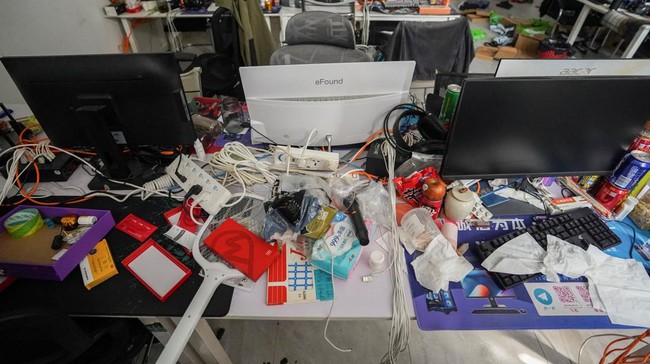
Large-scale raids against massive online scam hubs in Cambodia have failed to eradicate cybercrime practices in the Asian region. Instead of disappearing, these online scam mafia syndicates are reported to have begun shifting their operations and establishing new bases in Srielanka.
According to a Bloomberg report, these scamming groups have begun infiltrating beachfront resorts and office buildings in the South Asian nation. This massive migration of syndicates to Sri Lanka is driven by several factors, including free travel visa policies, the availability of ideal buildings for operational bases, strong telecommunications networks, and the existence of informal money transfer systems that lack regulatory oversight.
Although the location is considered strategic for scammers, Sri Lankan authorities are not remaining idle. The country has moved swiftly by forming a new cybercrime unit. Throughout 2026, local police reported having arrested over 1,000 perpetrators, most of whom were apprehended in the capital, Colombo.
“The police, along with immigration authorities and the central bank, are coordinating to control this,” said Sri Lankan Assistant Police Chief, Fredrick Wootler, as quoted on Wednesday (24/6/2026).
Nevertheless, law enforcement on the ground faces significant challenges. Many perpetrators are abusing tourist visas, making it difficult for authorities to impose appropriate legal sanctions.
Police Raid Apartments and Luxury Resorts
The pursuit between authorities and perpetrators continues. Last April, officers successfully raided a property on the west coast of Sri Lanka, discovering more than 150 foreign nationals suspected of operating a cyber scam syndicate. Only days later, police raided an apartment building near Colombo and detained another 120 foreign nationals.
Facing tightening pressure from authorities, perpetrators are rapidly changing tactics. They are breaking their macro-networks into small cells and moving into hotel rooms, apartments, and short-term rented office spaces.
“This is happening in a way that is, unfortunately, even harder for us to monitor,” said Erin West, founder of the anti-scam non-profit Organisation Shamrock. “They can truly operate in any environment.”
This phenomenon of shifting bases was actually predicted. A report from a US Congressional committee in July 2025 warned that global online scam networks tend to migrate to jurisdictions where law enforcement is weak but digital infrastructure is robust.
Under Intense Scrutiny from China
The rise of Sri Lanka as a new epicentre reflects the operational pattern of organised scams, which is now expanding far beyond their traditional strongholds in Southeast Asia, spreading to the United Arab Emirates, Timor-Leste, Fiji, and parts of Africa.
This situation has drawn serious attention from China. Diplomatic relations and pressure from Beijing were key factors that forced Cambodia to take firm action against these syndicates in early 2026.
The Chinese Embassy in Sri Lanka stated that it is “closely monitoring” reports of the arrests, which also involve Chinese nationals. “Cases like these cause immense losses,” the Chinese Embassy’s official statement wrote. The Embassy noted that Sri Lanka’s advancing telecommunications infrastructure, geographical location, and the “kindness and hospitality of its people” are being exploited by criminals.
Furthermore, the large number of Chinese workers in Sri Lanka due to Belt and Road Initiative (BRI) infrastructure projects is suspected to make it easier for scammers to blend in and hide within the diaspora community.
Legal Loopholes and the Crypto Black Market
Julia Dickson, a researcher at the Centre for Strategic and International Studies (CSIS), believes that Sri Lanka must learn from countries like Vietnam and the Philippines to prevent these syndicates from gaining control. “The core issue is whether officials truly want to take action, or if they are reaping significant profits as seen in Cambodia?” Dickson criticised. According to Transparency International’s 2025 Corruption Perceptions Index, Sri Lanka ranks 107th out of 182 countries.
Hattotuwa added that Sri Lanka currently lacks a specific and robust legal framework to tackle large-scale online scam operations. Meanwhile, easy access to SIM cards and high connectivity serve as the primary attractions exploited by perpetrators.
More concerningly, these mafia groups are utilising a local informal money transfer system known as Undiyal. This system provides an effective black market channel to launder and move proceeds from scams—including in the form of cryptocurrency—allowing them to evade the radar of the central bank and financial regulators.
Source: jawawa.id (https://jawawa.id/newsitem/new-online-scam-hubs-emerge-near-indonesia-after-cambodia-crackdown-1782305534)
Originally published by CNBC Indonesia (https://www.cnbcindonesia.com/tech/20260624133829-37-745359/markas-penipuan-baru-muncul-di-dekat-ri-setelah-kamboja-tumbang), translated from Indonesian