
New NU Leadership Must Address Potential for Division
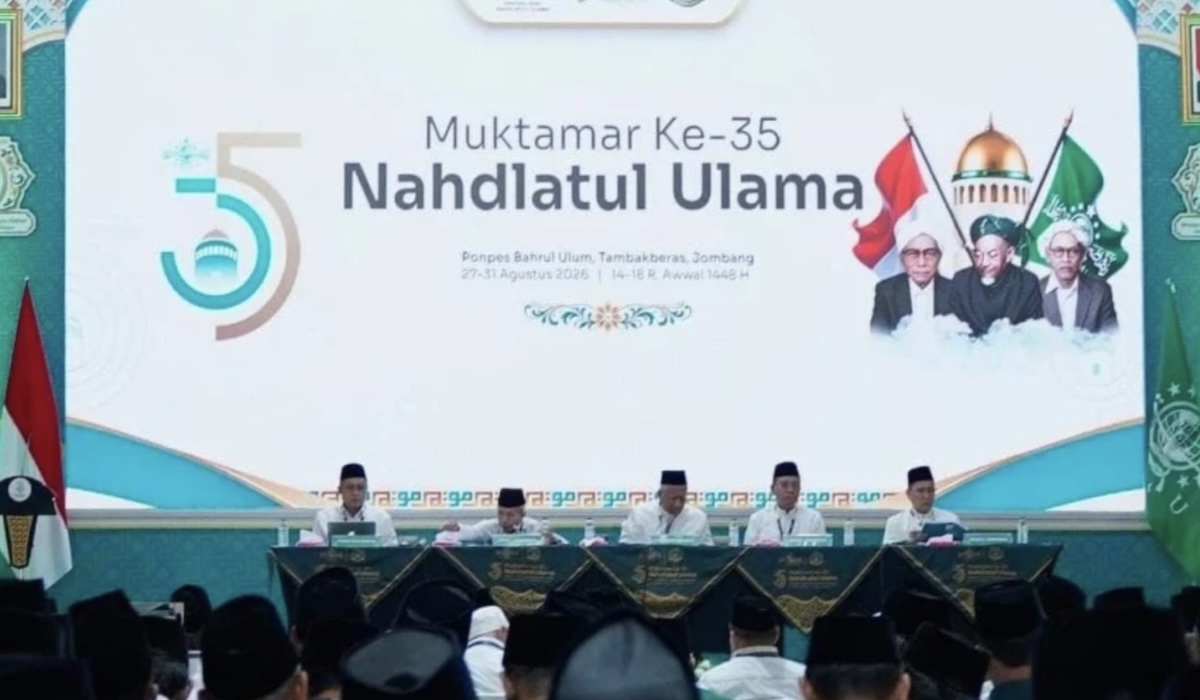
The 35th Muktamar of Nahdlatul Ulama (NU) is viewed as not yet being the end of internal issues within the organisation. Political observer and Director of Parameter Politik Indonesia, Adi Prayitno, believes that the potential for division is the greatest challenge that must be immediately addressed by the new leadership of the Nahdlatul Ulama Executive Board (PBNU).
According to Adi, the dynamics emerging before and during the Muktamar, including demonstrations, serve as a signal that internal conflicts still leave unresolved issues. Therefore, whoever eventually leads the PBNU must be capable of consolidating all existing groups.
“The greatest challenge for NU right now is the potential for division, because there has been internal conflict previously. The presence of protests during the Muktarium could be a sign of that. Consequently, whoever is elected as the General Chairperson of PBNU is obliged to invite others to join,” Adi said when contacted on Sunday.
He believes that the new leadership must not rely solely on the support of the groups that backed them during the election process. All internal factions within NU need to be embraced so that previous differences do not escalate into prolonged conflict.
Adi noted that such consolidation is vital because NU is the largest Islamic community organisation in Indonesia. Dynamics within NU are not merely an internal organisational matter but can also become a matter of public concern.
Therefore, the 35th NU Muktamar should be utilised as a momentum to end tensions and rebuild togetherness among internal groups. “Consolidate and embrace all internal factions of NU. This Muktamar must serve as a moment for political reconciliation (islah), given the previous internal conflicts,” he stated.
Adi added that the reconciliation process should not stop at an invitation to peace. The new leadership also needs to provide space for groups outside the winning circle to participate in the PBNU management. He believes that including opposing parties within the organisational structure could be a way to reduce the potential for new factions emerging after the Muktamar.
“NU is the largest Islamic organisation and must demonstrate organisational maturity. Those who lost should be invited into the PBNU management. Let us work together for the sake of the community and the nation,” said Adi.
He assessed that such togetherness is necessary so that NU’s energy is not drained by internal issues. Once the Muktamar concludes, the organisation’s focus should be directed towards the needs of the community, particularly Nahdliyin citizens.
According to Adi, the new leadership needs to shift focus from internal political dynamics towards agendas that directly impact citizens. He identified three sectors that require priority attention: economy, education, and health.
In the economic sector, Adi encouraged NU to be more serious in building empowerment for Nahdliyin citizens. He noted that NU possesses sufficient resources to develop the organisation’s economic strength while simultaneously improving the welfare of the community within its ecosystem.
One idea he highlighted was strengthening NU’s-owned enterprises. He believes these businesses can be directed to strengthen economic independence and empower Nahdliyin members. “NU must focus solely on serving the community, specifically advancing the economic, educational, and health sectors for its members,” he said.
Adi views the economic sector as a major task that requires attention following the Muktamar. NU, he noted, has resources that can be developed to build a more organised economic strength. “Economic empowerment for Nahdliyin citizens. NU must start focusing on how to establish NU-owned enterprises (BUMNU) with the aim of economic empowerment. NU has the resources to do this.”
In addition to the economy, education is also seen as a priority. Adi encouraged NU to establish universities that can serve as benchmarks for higher education development. He noted that this opportunity is available because NU possesses many academics and scientists with educational experience both domestically and abroad.
“NU needs to focus on building renowned campuses that serve as models. NU has a wealth of the best scientists who are graduates from both domestic and international institutions,” concluded Adi.