
New Natural Resource Export Proceeds Rules Provide Support for the Rupiah, Global Risks Still Loom
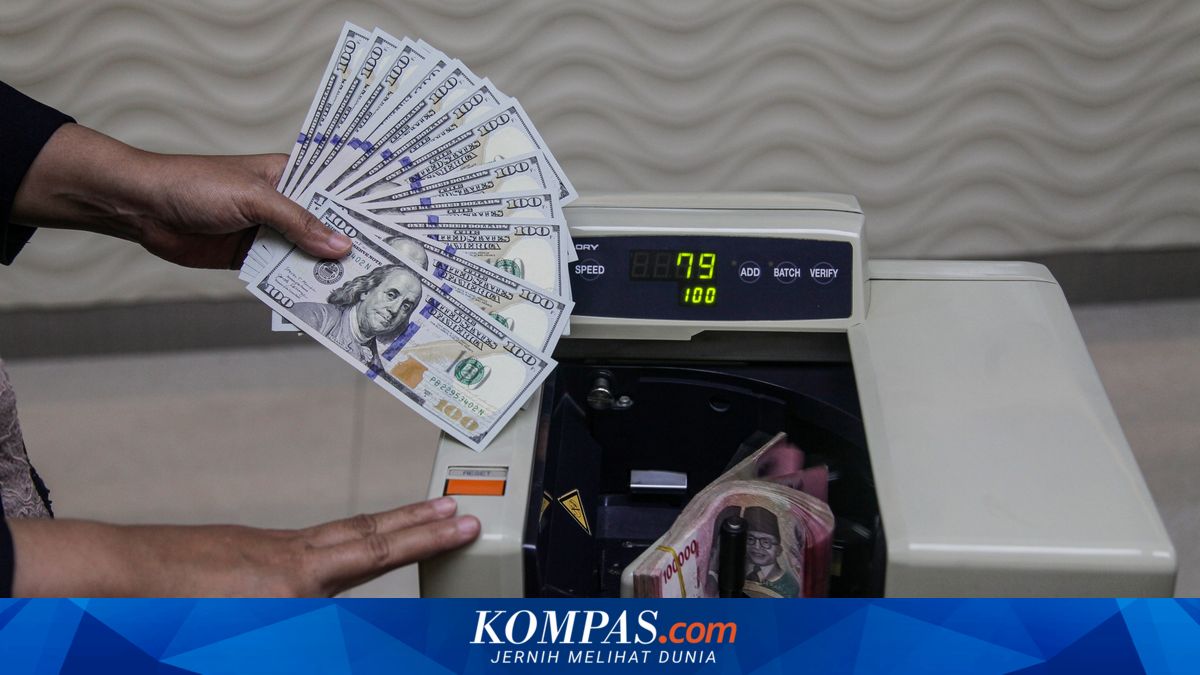
Jakarta — The implementation of new rules on natural resource export proceeds (DHE SDA) is seen as providing support for the movement of the rupiah at the beginning of the week. Whilst successfully propping up the Garuda currency, the market is still monitoring several global risks that could potentially influence the exchange rate direction in the coming period.
In the spot market, the rupiah closed stronger by 75.50 points or 0.42 percent to the level of Rp17,805 per US dollar in Monday trading (1 June 2026).
Currency and commodity analyst Ibrahim Assuaibi assessed that the rupiah strengthening was influenced by the implementation of new DHE SDA rules that require export proceeds to be placed in banks under the Association of State-Owned Banks (Himbara).
“What made the rupiah strengthen on Monday during the holiday was the matter of implementing the new DHE regulation that must be parked in Himbara banks; this is quite positive,” Ibrahim told journalists.
According to him, the policy provided positive sentiment for the market and was thus able to support the movement of the rupiah amid various external factors that continue to loom.
However, Ibrahim viewed the rupiah strengthening as not fully reflecting global market conditions. This is because, in the same trading, the US dollar actually showed a tendency to strengthen.
“As I see it, in today’s trading the dollar actually strengthened, there was a gap up,” he explained.
“There was also a temporary weakening of around 35 points, but it quickly strengthened again,” he continued.
The provision is contained in Government Regulation (PP) Number 21 of 2026 concerning the Third Amendment to Government Regulation Number 36 of 2023 concerning natural resource export proceeds from extraction, management, and/or processing activities.
Under this regulation, non-oil and gas exporters are required to place 100 percent of their natural resource export proceeds in special domestic accounts for a minimum of 12 months. Meanwhile, oil and gas exporters must place at least 30 percent of their natural resource export proceeds for a minimum of three months.
The placement of natural resource export proceeds must be conducted through state-owned enterprise (BUMN) banks. The conversion of natural resource export proceeds from foreign currency to rupiah is limited to a maximum of 50 percent.
Ibrahim assessed that the policy had the potential to exert considerable influence on the movement of the rupiah, although the longer-term technical impact still needs to be monitored.
“It is possible that this natural resource export proceeds policy will have significant influence, although I am not yet certain about the technical details,” he concluded.