
New Modus Operandi: Meutya Warns of Digital Radicalism Disguised as Aid and Welfare Promises
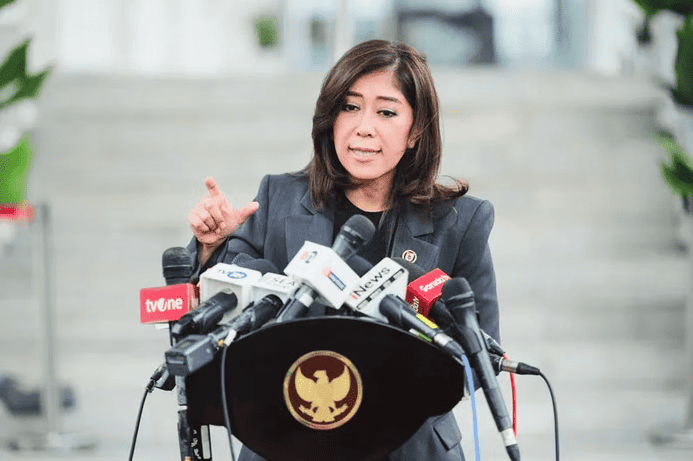
Minister of Communications and Digital (Menkomdigi) Meutya Hafid has said that the pattern of radicalism spreading in the digital sphere has taken on a new form, with recruitment carried out by promising assistance to build victims’ trust.
She explained that the spread of radical ideology no longer occurs through invitations to hatred or violence, but rather through seemingly benign approaches, such as offering help, building closeness, and giving hope of a better life. Once trust has been established, victims are gradually steered towards extremist beliefs.
“Violence begins with an outstretched hand — medical assistance, debt repayment, personal aid deliveries — followed by promises of welfare. Only after trust has been formed are they directed towards extremist beliefs,” Meutya said in Jakarta on Wednesday (29/7).
According to her, radical groups are now exploiting subtler, more personal approaches to influence potential victims, particularly children and vulnerable groups.
“So, for example, promises of welfare — here it might be a promise of free schooling, while elsewhere they are told to marry,” Meutya said.
Meutya also revealed that in May, the National Counter-Terrorism Agency (BNPT) successfully foiled recruitment attempts against 112 children through a single digital platform.
The finding shows that radical groups continue to exploit the digital space to seek new targets using increasingly hard-to-detect methods.
She assessed that behavioural changes in children caused by exposure to digital content do not happen suddenly. These changes occur gradually and therefore often go unnoticed by families.
“Bit by bit, the relationship with parents grows distant. Stories that were once shared openly become fewer, until eventually there is no communication at all. That is when we often realise too late that a serious change has taken place,” she said.
According to Meutya, technological developments have made radicalisation increasingly difficult to recognise. The power of narratives combined with algorithms in the digital sphere can shape an information environment according to users’ preferences.
As a result, a person can continue to receive information that reinforces their beliefs, even when it does not accord with facts. “When narrative and algorithm combine, they create an algorithmic illusion, so that facts lose out to emotion or belief,” Meutya said. (Ant/P-3)
Source: jawawa.id (https://jawawa.id/newsitem/new-modus-operandi-meutya-warns-of-digital-radicalism-disguised-as-aid-and-welfare-promises-1785343868)
Originally published by Media Indonesia (https://mediaindonesia.com/politik-dan-hukum/916200/modus-baru-meutya-sebut-radikalisme-digital-berkedok-bantuan-dan-janji-kesejahteraan), translated from Indonesian