
New Middle East Era: Building Own Weapons, Ready to Challenge America
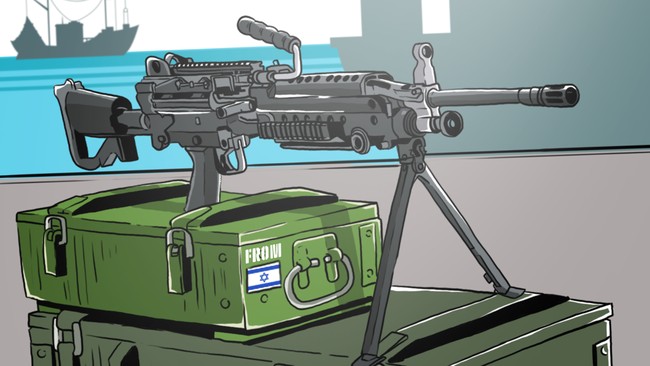
Jakarta, CNBC Indonesia - The oil-rich nations of the Gulf region have long been known as major global arms buyers, particularly from the United States. Wealth from oil has enabled Gulf monarchies to bulk purchase various defence tools, from fighter jets to warships. In a turbulent region beset by security risks, military spending is a core necessity. Unsurprisingly, the area accounts for roughly a fifth of total global arms imports. However, that direction is now starting to change. According to The Economist, the wealthy rulers of the Gulf are now beginning to build their own defence industries. The goal is clear: to reduce dependence on arms supplies from the West. This ambition has intensified following the war with Iran that began in early 2026. Saudi Arabia, for example, is targeting that by 2030 half of its arms procurement budget can be spent domestically, up from about a quarter currently. The kingdom also wants to make Saudi Arabian Military Industries one of the world’s top 25 defence companies by revenue, though the state-owned firm is still mostly producing spare parts for US fighter jets and some armoured vehicles. SAMI has a number of partnerships, including with US aerospace giant Boeing. Meanwhile, Qatar has similar ambitions through Barzan Holdings, albeit on a relatively smaller scale. The fastest movement is seen in the United Arab Emirates. In 2019, around 25 Emirati defence companies were merged to form EDGE Group, which then became the nation’s ‘national champion’ in the defence sector. Since its formation, EDGE has been quite aggressive in expanding its business, buying majority stakes in several foreign companies. Last May, EDGE agreed to acquire 80% of Costruzioni Motori Diesel, an Italian engine manufacturer. EDGE also holds a 51% stake in joint ventures with two other Italian firms, Leonardo across various defence fields and Fincantieri in the shipbuilding sector. It also has a partnership with Germany’s Rheinmetall in air defence. Last November, EDGE formed a joint venture with fast-growing US defence tech firm Anduril to produce drones for the UAE and its allies. EDGE’s performance is also starting to look substantial. Last year, the company’s revenue hit US$5 billion, with reportedly ‘healthy’ profit margins. An order book of about US$8 billion lifted EDGE’s total backlog to more than US$20 billion. EDGE CEO Hamad al-Marar forecasts revenue will rise by about a fifth in the next two years as these orders are fulfilled. EDGE is now even among the world’s top three producers of precision-guided munitions, with products such as the Desert Sting DS-25, an air-launched precision-guided glide weapon with a 24-kilogram pre-fragmented warhead. EDGE does not try to produce all weapon types itself, instead focusing on systems and components deemed critical or at risk of supply chain disruption. Its ambition is also rising, moving from owning intellectual property to creating its own technology and IP. EDGE’s expansion has helped shrink the UAE’s share of global arms imports to 2.7% in 2021-2025 from 3.5% in 2016-2020, according to Swedish research institute SIPRI. Notably, almost three-quarters of EDGE’s production is exported to countries in Latin America, Africa, and Asia. CEO Marar says rising regional competition does not hinder expansion, with global geopolitical conditions opening up more export opportunities. In January, EDGE signed a joint venture deal with Qatar’s Barzan and has licensed its vehicle technology to Saudi Arabia’s SAMI. The UAE’s growing defence capability was also visible in the war with Iran, where officials say around 80% of incoming Iranian Shahed drones were handled by domestically made products. EDGE’s electronic warfare systems, which detect incoming missiles and drones and activate jamming and spoofing, worked alongside US ballistic missile defence systems, proving their technology in combat. The war also brought supply chain challenges due to blockages in the Strait of Hormuz, which risked delaying production. Nonetheless, the UAE’s move in recent years to build its own defence industry now looks like a far-sighted decision, demonstrating capability even with strong allies and close neighbours.