
New Mandatory Halal Certification Rules: Businesses Speak Candidly About the Impact
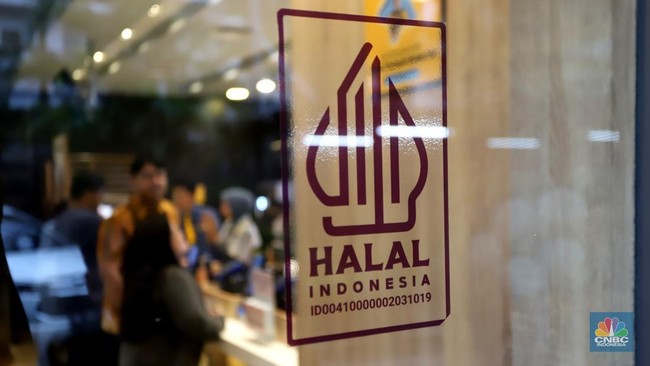
Jakarta, CNBC Indonesia — Tourism industry businesses say they are concerned about the planned implementation of the mandatory halal policy, which is due to take effect on 18 October.
Hariyadi B.S. Sukamdani, chairman of the Indonesian Tourism Industry Association (GIPI), said the readiness of businesses for the mandatory halal policy, particularly the certification requirement, needed to be reviewed.
“Halal certification concerns the supply chain. The difficulty arises when every party in that chain is required to hold a halal certificate. If the supply chain includes micro, small and medium-sized enterprises (MSMEs) or companies that have not yet obtained certification, this will clearly be an obstacle. We therefore ask for the policy to be reviewed,” Hariyadi said at a press conference during GIPI’s fourth national leadership and working meetings on Wednesday (14 October 2026).
In addition to supply-chain readiness, Hariyadi highlighted the cost of obtaining halal certificates, which not all businesses can afford.
“Colleagues in the retail sector have proposed that readiness be reviewed. The challenge is not only the parent company, but the entire supply chain, which must also be certified. There are also costs involved in obtaining halal certificates,” Hariyadi said.
He also said the Halal Product Assurance Agency (BPJPH) had not conducted sufficiently extensive outreach about the mandatory halal requirement. As a result, many small businesses were not ready to apply for certification in the near future.
“In retail, products come not only from large manufacturers but also from MSMEs. They may not be ready in the near future, particularly as BPJPH’s outreach and guidance to the public have not been optimal,” he said.
Hariyadi urged the government to offer a more flexible timeline so businesses could prepare more thoroughly.
“Associations, especially those in the retail sector, have therefore asked for additional time to prepare properly,” he said.
The government has previously reiterated that mandatory halal certification will come into force on 18 October 2026.
BPJPH head Ahmad Haikal Hasan said the policy would be implemented in accordance with the mandate of legislation. He added that the requirement was intended to protect the public and provide businesses with measurable, data-based certainty.
The government would nonetheless allow some leeway and tolerance for businesses that were not fully prepared. The statement was made in response to calls from several parties to postpone implementation.
“Concerns about readiness for the implementation of mandatory halal certification need to be assessed using official data and information. Most calls for a delay stem from the use of inaccurate data and an incomplete understanding of the mechanism,” Haikal said in a BPJPH statement on Tuesday (6 October 2026).
“If the data is correct and the rules are fully understood, there is actually no reason to say that Indonesia is unprepared. So, if anyone is calling for a delay, let us examine the data. Decisions should not be made on the basis of incorrect data or a misunderstanding of the mandatory halal policy,” Haikal said.
Source: jawawa.id (https://jawawa.id/newsitem/new-mandatory-halal-certification-rules-businesses-speak-candidly-about-the-impact-1791985876)
Originally published by CNBC Indonesia (https://www.cnbcindonesia.com/news/20261014183805-4-776268/aturan-baru-wajib-sertifikasi-halal-pengusaha-buka-bukaan-dampaknya), translated from Indonesian