
New Law Passed, Labour Minister Warns Against Withholding Certificates and Discrimination
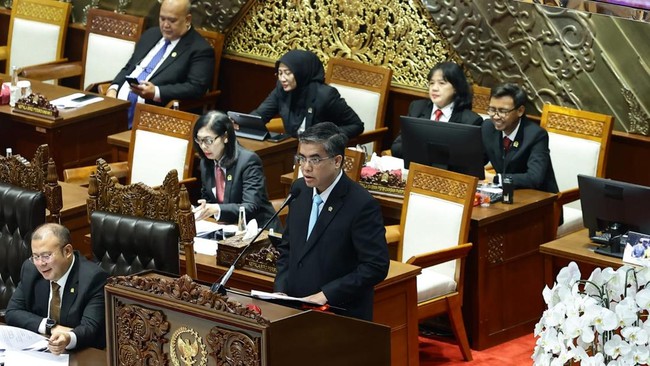
Jakarta, CNBC Indonesia - The Minister of Manpower, Yassuitli, has highlighted several critical points within the new Labour Protection Law that require close attention. These include the prohibition of discrimination in recruitment, transparency in job vacancies, and the ban on employers withholding workers’ educational certificates.
He stated that the Law, which was ratified during the House of Representatives (DPR RI) Plenary Session on Tuesday, 6 October 2026, is designed to provide more equitable protection for workers.
Yassierli added that the law serves as a response to the Constitutional Court Decision No. 168/PUU-XXI/2023, while unifying the norms of Law No. 13 of 2003 concerning Manpower and the Job Creation Law, which had previously caused legal uncertainty.
The law, he added, contains several important regulations for workers, ranging from equality in the workplace, protection for job seekers, internships, job placement, occupational safety and health (K3), to protection for workers during termination of employment (PHK).
“Worker protection is entering a new chapter. The Labour Protection Law is designed to present rules that are clearer, fairer, and relevant to the constantly changing and evolving world of work,” he said in an official statement, quoted on Thursday (8/10/2026).
10 Key Points According to the Minister of Manpower
Yassierli outlined 10 essential points within the Labour Protection Law.
First, equality in the workplace. “This regulation includes the prohibition of discrimination in recruitment, wages, career development, and employment relationships. Every worker must be treated fairly, with dignity, and equally,” he said.
Second, protection for job seekers. Job seekers will gain access to more open labour market information, while the obligation to report job vacancies is strengthened to prevent middleman exploitation, fraud, and fictitious job advertisements.
Third, certainty in internships. Internships are limited to a maximum of six months, and participants are entitled to an allowance, occupational safety and health (K3) protection, coverage under Work Accident Insurance (JKK) and Death Benefits (JKM), as well as internship certificates. “Internships are not intended to replace permanent workers with cheap labour,” Yassierli emphasised.
Fourth, fair job placement. “The job placement process must be conducted objectively, transparently, and non-discriminatorily, with special attention to persons with disabilities, vulnerable groups, and communities in underdeveloped regions. The withholding of certificates and personal documents is also prohibited,” Yassierli asserted.
Fifth, balanced industrial relations. “The regulation of industrial relations prioritises the principle of ‘Progressive Industry, Prosperous People’. Workers’ rights to organise and express aspirations are protected, while providing legal certainty in dispute resolution,” said Yassierli.
Sixth, K3 as a fundamental right. Employers are obliged to guarantee occupational safety and health through an integrated K3 management system, focusing on risk prevention and hazard control, rather than just accident response.
Seventh, stricter supervision and sanctions. Labour inspection will be strengthened through more professional, independent, and proactive inspectors. The inspector-to-worker ratio will be adjusted according to the number of workers and companies, supported by an inspection committee. “Administrative and criminal sanctions will be applied progressively to provide a deterrent effect while maintaining business continuity,” he noted.
Eighth, rights for female workers and persons with disabilities. There is certainty regarding maternity and miscarriage leave, including paid leave, as well as protection for workers with disabilities.
Ninth, a safety net for workers facing termination. Regulations include severance pay reserves, job loss insurance for terminated workers, and protection for outsourced workers in State-Owned Enterprises (BUMN), who must be employed through BUMN subsidiaries.
Tenth, readiness for the future of work. “This Law provides protection for flexible work (future of work) and strengthens the BNSP as an independent institution under the President,” he explained.
“Furthermore, BPS will regulate surveys on the cost of living through coordination with the National Wages Council and encourage the integration of employment data between central and regional governments,” said Yassierli.
Source: jawawa.id (https://jawawa.id/newsitem/new-law-passed-labour-minister-warns-against-withholding-certificates-and-discrimination-1791420803)
Originally published by CNBC Indonesia (https://www.cnbcindonesia.com/news/20261008003206-4-774244/uu-baru-diketok-menaker-ingatkan-larangan-tahan-ijazah-diskriminasi), translated from Indonesian