
New Judging Format Challenges Finalists to Present Their Best Ideas
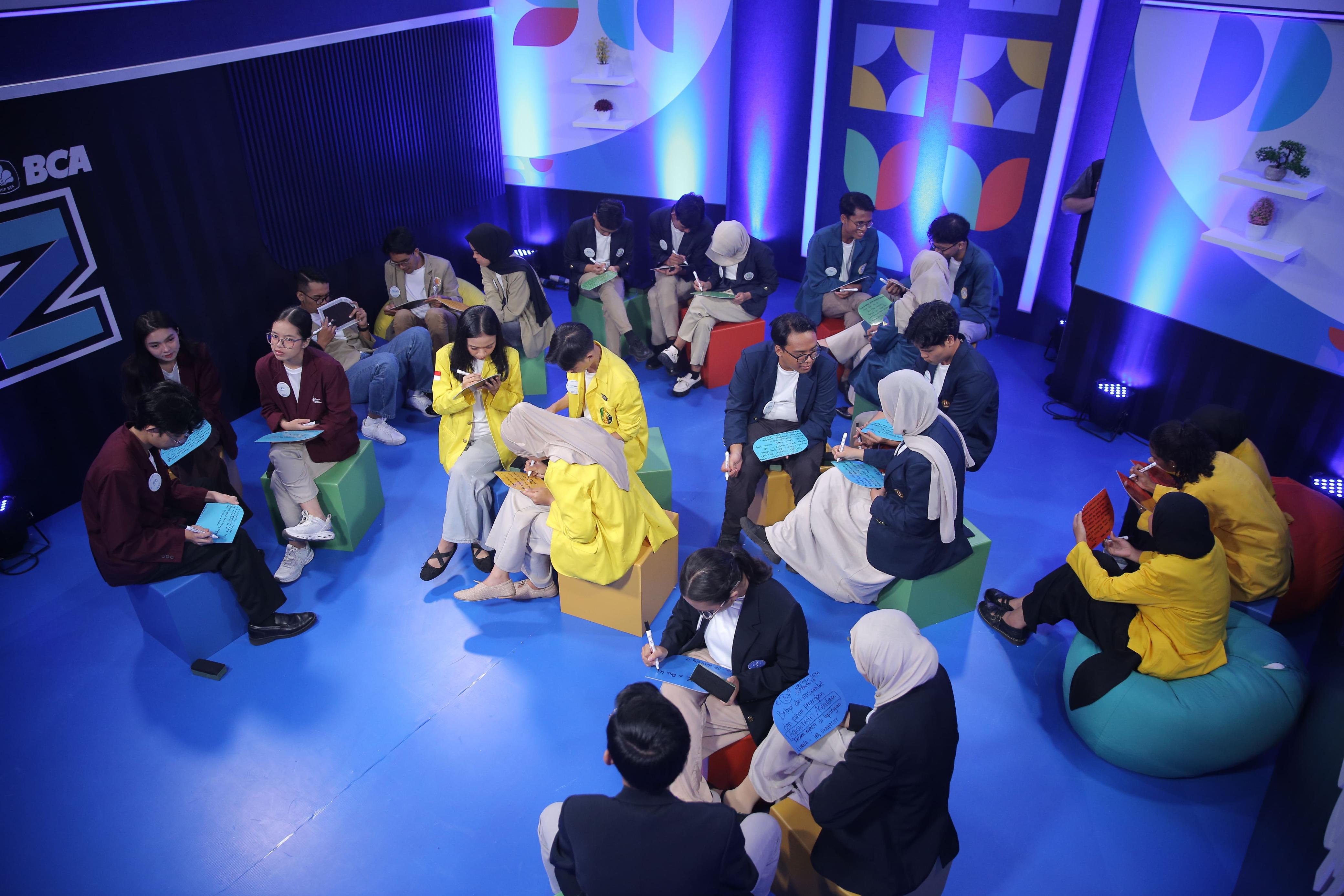
The Genera-Z Berbakti 2026 event features a different judging mechanism compared to the previous year’s implementation. This change presents a new challenge for the finalists, who had previously prepared based on the 2025 edition’s competition format. With the new assessment system, the eight finalist teams are required to develop more mature strategies to convince the panel of judges that their proposed programmes are worthy of being implemented in the target tourism villages and will deliver a tangible impact for the community.
In the final round, all participants must pass three selection stages designed to test the quality of their ideas, quick-thinking skills, and resilience in defending their proposals. The assessment is conducted by three panellists: Nicholas Saputra as BCA Bakti Ambassador, Cinta Laura Kiehl, known as an entertainer and sociopreneur, and scientist and social entrepreneur Tri Mumpuni. The first stage is the Idea Pitch, where each team is given 10 minutes to present their best programme design. Participants then enter the Think Tank session, where finalists are given 60 seconds to answer questions from the panellists. If a panellist provides feedback on the answer, the participant has a further opportunity to respond for a maximum of 30 seconds. The final stage is Head to Head, an argumentation session between participants where finalists question each other, provide answers, and defend their concepts, directly testing the strength of each programme.
In addition to the changes in the judging stages, the organisers also introduced a new rule. Whereas previously one person could represent the team in several sessions, now each stage—Idea Pitch, Think Tank, and Head to Head—must be represented by a different team member. This rule ensures every team member gets an equal opportunity to appear before the panellists and demonstrate their individual abilities. The format change surprised several participants, including Tessa from the DESA HIDUP team, representing UIN Sunan Gunung Djati Bandung. “Initially, my feelings were all over the place and I was really nervous. However, I tried to keep smiling. The proudest moment was when I could speak and answer the panellists’ questions, and then integrate the answers which I thought were good,” Tessa said.
A similar experience was felt by the Laskar Selasik team from Universitas Gadjah Mada. “Honestly, from the start I was a bit nervous and even thought about asking if I could be replaced. I then stopped thinking about right or wrong, and the most important thing was to narrate the presentation content,” said Faruq, a member of the team. Behind the high-pressure competition atmosphere, the organisers hope the programme can be a platform for students to produce innovative solutions that are not only compelling on paper but can also be realistically implemented in the target tourism villages.
“We believe the eight selected finalists have extraordinary potential. Now is the time for them to prove it. We are optimistic that the new final round format of Genera-Z Berbakti 2026 can help the finalists unleash their great potential, which can then be developed to implement their ideas at the activity locations later,” said EVP Corporate Communication & Social Responsibility BCA Hera F Haryn. From the eight competing finalists, the four best teams will have the opportunity to realise their ideas in four Bakti BCA assisted tourism villages. The locations include Desa Wisata Kreatif Terong in Belitung Regency, Desa Wisata Situs Gunung Padang in Cianjur Regency, Desa Wisata Patakbanteng in Wonosobo Regency, and Desa Wisata Kakaskasen Dua in Tomohon City.
Panellist Cinta Laura Kiehl also advised all participants to keep their proposals realistic and easy to implement. “My advice for the campus finalists is to keep their proposals simple. Because it is better to solve problems gradually and slowly than to try to do everything at once but produce a system that is unrealistic and unsustainable,” said the entertainer and sociopreneur.