
New Infrastructure Boosts Investment Prospects in Canggu
Accelerated infrastructure development in Badung Regency, Bali, is encouraging property developers to strengthen their expansion in the Canggu-Berawa corridor. Murino Group is one such developer increasing its business penetration in the area, driven by plans for the Ngurah Rai Airport-Canggu Water Taxi and the Berawa shortcut, which are projected to improve regional connectivity.
Murino Group CEO Efrat Tio stated that enhanced accessibility is a key factor bolstering business prospects for property and hospitality in Berawa. The company sees continued growth potential in the area, particularly for the premium property and hospitality segments. “Berawa has a modern, dynamic, and continuously developing character. The ongoing infrastructure development will certainly add value to this area,” Efrat said on Friday.
He explained that the Water Taxi project, planned to connect I Gusti Ngurah Rai International Airport to the Canggu area via a sea route, is considered a transformative access improvement. The transport alternative is being prepared to reduce traffic congestion in southern Bali. A land journey from the airport to Canggu, which can take one to two hours, is projected to take only about 30 minutes via the sea route. Construction of the project is targeted to take place from August 2026 to July 2027.
In addition to the sea route, access is also being improved through road network development in Badung Regency. This includes the approximately 4.7-kilometre Berawa shortcut, which will connect Berawa, Umalas, Banjar Semer, Kedampal, and Jalan Teuku Umar Barat. The route, with a width of about 10 metres, is targeted for completion by December 2026. Overall, road infrastructure development in Badung Regency in 2026 covers approximately 15.6 kilometres.
Connectivity improvements are crucial for the Canggu and Berawa areas, which have developed into centres for tourism, hospitality, and premium property in recent years. Limited road networks amidst rising tourism activity and property development have contributed to congestion at several points. Murino Group believes these infrastructure changes will increase investment appeal, as access is a primary factor in property asset valuation.
The company’s expansion in Berawa also comes as Bali’s property market is supported by tourism sector growth. The number of foreign tourists visiting Bali throughout 2025 reportedly reached around 6.95 million, an increase of 9.72 percent compared to the previous year. This rise in tourist arrivals has strengthened demand for villas, investment residences, and professionally managed accommodation. Market reports referenced by the company indicate villa occupancy rates in areas like Canggu, Berawa, Seminyak, and Uluwatu range from 70 to 85 percent. Meanwhile, land prices in several strategic areas have reportedly increased by 15 to 30 percent over the last two years, with premium property prices appreciating by around 7 to 15 percent annually. The potential gross rental yield for professionally managed villas is cited in the range of 8 to 15 percent.
Efrat noted that the character of investors in Bali is also changing. Investors are no longer solely pursuing asset price increases but are increasingly considering legal certainty, construction quality, property management, and project sustainability. “We see the future of Bali property moving towards projects that can combine design, living experience, hospitality, sustainability, and investment value in one ecosystem,” he said.
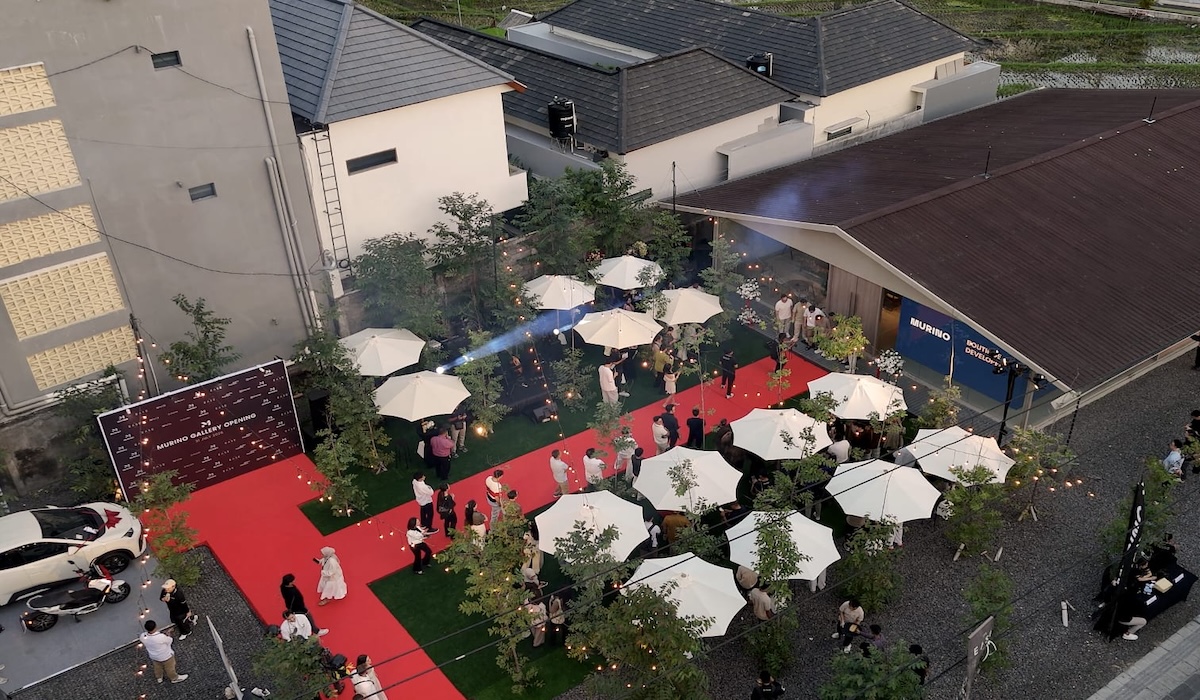
To capture this shift, Murino Group has strengthened its operations in Berawa by opening the Murino Gallery on 31 July 2026. The facility is positioned as a centre for investment consultation and project marketing, rather than just an administrative office. Through this facility, potential investors can obtain information on projects, investment schemes, and the property management concepts developed by the company. “Murino Gallery is a place to meet, discuss, and introduce Murino Group’s vision to investors and business partners. This is an important step to support the company’s growth more professionally and sustainably,” Efrat said. One of the projects marketed through the facility is The Ease Canggu, a development with a wellness living concept that combines residence, investment, and hospitality services. The project’s show unit has also been opened for potential buyers. The company stated that the project’s market includes both domestic and international investors and plans to use the Berawa facility as a marketing base for ongoing projects as well as for launching new projects in Bali.
Efrat concluded that while infrastructure development will be a key catalyst for regional growth, competition in the Bali property market will also intensify. Developers can no longer rely solely on increasing tourist numbers or strategic locations. Products with clear management systems, relevant concepts, and the ability to provide long-term value will increasingly determine investor decisions. The company also stated its commitment to involving local workers, contractors, and partners in its project development, as well as implementing operational efficiency, area management, and green space integration.
Source: jawawa.id (https://jawawa.id/newsitem/new-infrastructure-boosts-investment-prospects-in-canggu-1786103460)
Originally published by Media Indonesia (https://mediaindonesia.com/nusantara/919419/infrastruktur-baru-dongkrak-prospek-investasi-canggu), translated from Indonesian