
New Hope for US-Iran War as Two Giant Chinese Tankers Pass Through the Strait of Hormuz
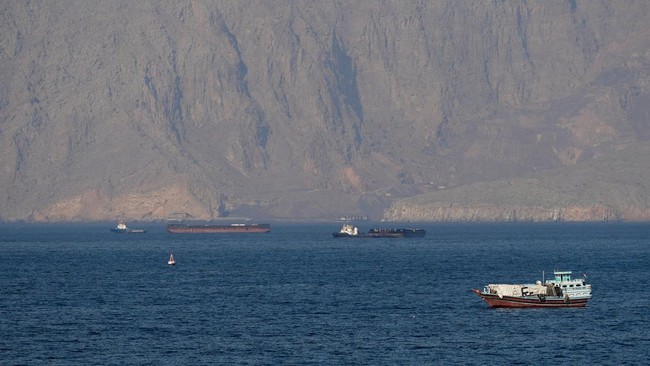
Jakarta, CNBC Indonesia - The hope for a de-escalation of the major war in the Middle East has resurfaced as two giant Chinese-flagged oil tankers successfully exited the Strait of Hormuz on Wednesday, 20 May 2026. The movement of the vessels marks a significant signal amid renewed optimism from the United States administration regarding the prospects of reaching a deal with Iran to end the conflict that has rattled global energy markets for almost three months.
Voyage data show the two Chinese tankers carried around 4 million barrels of Iraqi crude and managed to traverse the narrow chokepoint of the Strait of Hormuz, a region under Iranian pressure during the conflict and a crucial hub for global energy trade.
The development followed remarks by US President Donald Trump that the war could end “very quickly”. US Vice-President JD Vance also spoke of progress in talks with Tehran. “We are in a good position here,” Vance said at a White House press conference, reported by Reuters. Trump himself said he was almost ready to order a strike on Iran on Tuesday, adding “I had one more hour to decide whether to do it today.” He added that Iranian leaders are “begging” for a deal but warned that a new US strike would come within days if no agreement is reached.
The Trump administration has been under domestic political pressure to reopen the Hormuz Strait, the vital route for global oil and commodity supplies. Gasoline prices in the US remain high, while public approval of Trump has slumped ahead of congressional elections in November.
The conflict between the US, Israel, and Iran has triggered the largest disruption to global energy supply in history. Hundreds of tankers have been held up in the Gulf, while energy facilities and ports in various countries have been affected. Although the two Chinese tankers managed to leave the Gulf region this month, global energy trade flows remain far from normal. The Brent crude price briefly fell to $110.16 a barrel after positive signals from the White House and the Gulf, before recovering.
Fujitomi Securities analyst Toshitaka Tazawa said the market is now watching whether Washington and Tehran can actually reach a deal. “Investors are keen to see if Washington and Tehran can find common ground and reach a peace agreement, while US positions change daily,” he noted.
Meanwhile, despite optimism in Washington, negotiations remain fraught. Vance acknowledged that the US finds it difficult to read the exact positions of Iran’s leaders, who are considered divided. “Sometimes it’s not entirely clear what their negotiating stance is,” he said. He also stressed that one of the main objectives of the Trump administration’s policy is to prevent a nuclear arms race from spreading in the Middle East.
From Iran’s side, Ebrahim Azizi, head of the National Security Committee of the Iranian Parliament, said Trump’s decision to delay the attack shows Washington realises that any military action against Iran would trigger a “defining military response.” Iran’s state media reported Tehran’s latest peace proposal includes stopping all hostilities on various fronts, including Lebanon, withdrawing US troops from areas near Iran, and compensation payments for damage caused by US-Israeli strikes.
Iranian Deputy Foreign Minister Kazem Gharibabadi, as quoted by IRNA, said Iran also demands the lifting of sanctions, release of seized funds, and ending the US blockade of Iranian seas. However, the contents of the proposal were judged not to be much different from the previous offer that Trump called “garbage” last week.