
New Hope for Conservation: Two Sumatran Tiger Cubs Survive in the Wild
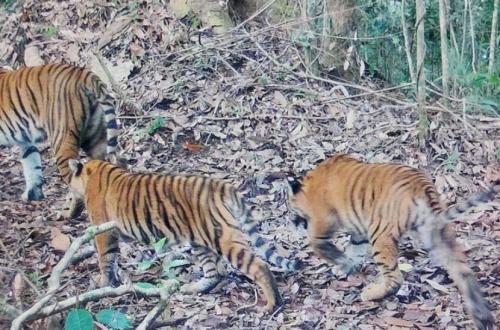
The Ministry of Forestry has again received encouraging news from the landscape of Kerinci Seblat National Park. Two Sumatran tiger cubs (Panthera tigris sumatrae) first recorded by camera trap in September 2025 were monitored again in 2026 in healthy condition and showing excellent growth.
The finding is important news for the conservation of Indonesia’s rare wildlife. The success of the two cubs surviving into adolescence demonstrates that the Sumatran tiger reproduction process is still occurring naturally, whilst also indicating that the habitat remains capable of supporting the survival of the critically endangered species.
Director General of Natural Resources and Ecosystem Conservation, Satyawan Pudyatmoko, said the monitoring results show the importance of sustainable management of conservation areas and buffer forests through multi-party collaboration.
"Every tiger cub that successfully grows and survives in the wild is hope for the future of Indonesian conservation. The Ministry of Forestry will continue to strengthen cross-sector collaboration so that the Sumatran tiger remains part of Indonesia’s natural wealth for future generations," Satyawan said.
According to him, this success is the fruit of synergy between the government, communities, conservation partners, and stakeholders in protecting the Sumatran tiger’s habitat.
Monitoring was carried out through a network of camera traps installed systematically by the Park Management Division of Region II of the Kerinci Seblat National Park Centre together with the Harimau Forest Conservation Foundation in the Kerinci Seblat landscape, West Sumatra.
The research team confirmed that the individuals recorded in 2026 are the same cubs documented in September 2025. Identification was based on the unique stripe patterns of each individual Sumatran tiger, enabling an accurate matching process.
This success is an important indicator that the Sumatran tiger population in the area is still capable of reproducing naturally. In addition to providing information on the number of individuals, monitoring using camera traps also serves as a scientific basis for determining reproductive success rates, cub survival, and population dynamics in their natural habitat.