
New Format: Ministry of Home Affairs Coordination Meeting Now Focuses on Boosting Regional Economies
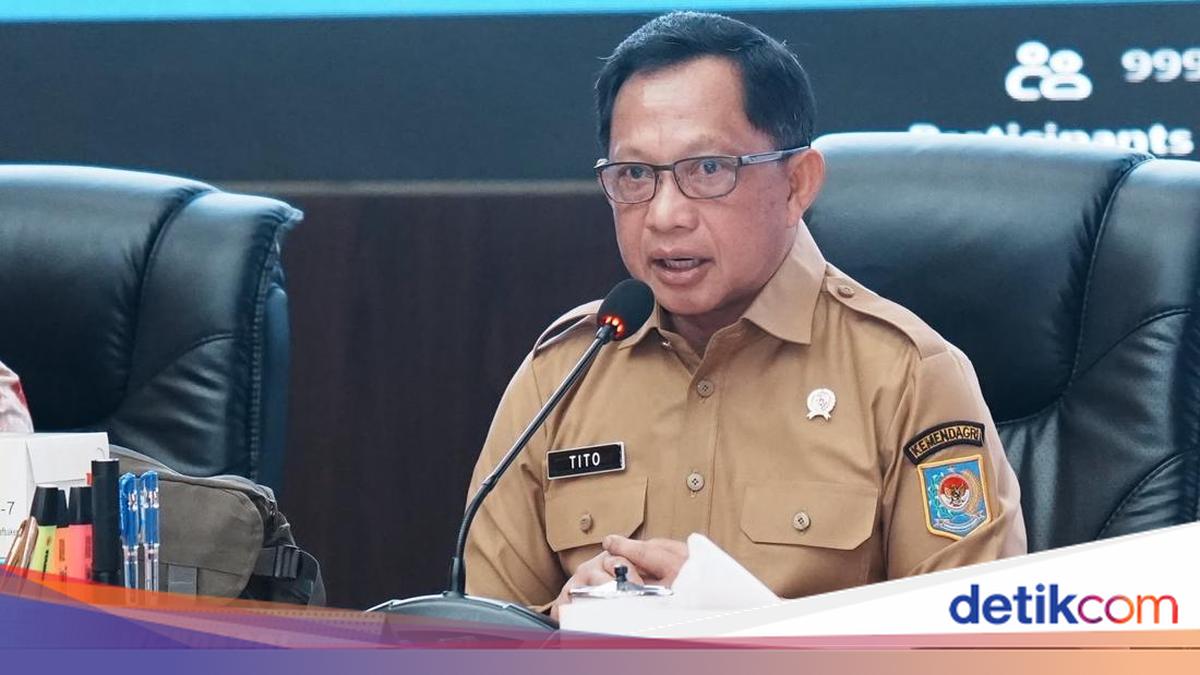
The Regional Inflation Control Coordination Meeting (Rakor), routinely organised by the Ministry of Home Affairs (Kemendagri) in 2026, has introduced a new breakthrough. The Minister of Home Affairs, Muhammad Tito Karnavian, has decided to expand the focus of the meeting agenda, moving beyond merely maintaining price stability to closely monitoring economic growth figures at the regency and city levels.
During the coordination meeting held in early September 2026, Tito emphasised that this was the first meeting specifically dedicated to analysing the realisation of regional economic growth. Moving forward, this will become a routine agenda subject to periodic evaluation.
“This morning, we have also begun discussing this, perhaps once a month, regarding economic growth. This is perhaps our first meeting specifically regarding the issue of economic growth, and we will truly monitor it together,” said Tito, as quoted on Monday (14/9/2026).
Tito explained that this change in focus was not without reason. He emphasised that the role of regional governments is crucial in the grand mission of realising the Golden Indonesia vision and lifting Indonesia out of the middle-income trap.
Regarding the importance of accelerating regional economic growth, Tito challenged regional heads to aim for progressive growth figures to collectively transform the nation’s economic status.
“We want to move beyond being a developing nation trapped in the middle-income trap. One of the keys is that economic growth must be high, even double-digit if necessary. Almost all countries that have become developed nations escaped the middle-income trap when their economic growth reached double digits,” Tito explained.
To achieve this target, Tito analysed the four components of economic growth that must be closely monitored: household consumption, government spending (APBD), investment, and net exports. Regarding the instrument of regional government spending, he asserted that he would not hesitate to issue reprimands to regions with slow budget absorption performance.
“Every three months, we conduct an evaluation, reading how much revenue has been realised according to the target and how much spending has been realised. For those with low realisation, we will automatically remind them and deploy a team. There are those with high revenue but low spending, those with low revenue but spending that exceeds it—meaning they are incurring debt—and those with high revenue and high spending; those are the best,” Tito asserted.
Tito explained that to create an accurate data ecosystem and mature planning, the Ministry of Home Affairs is collaborating with the Minister of National Development Planning/Head of Bappenas, Rachmat Pambudy, and the Head of BPS (Statistics Indonesia), Amalia Adininggar. This collaboration, according to Tito, will trigger healthy competition among regional governments through BPS presentations on regional achievements, while simultaneously providing a roadmap for Bappenas in directing national development priorities.
Nevertheless, Tito reminded that the meeting must not disregard the primary task of inflation control, which currently stands at 3.19 per cent annually. Through this new meeting format, the Ministry of Home Affairs holds high hopes that regional leaders will no longer act reactively only when food prices surge, but will instead be truly proactive in driving economic change within their respective regions.
Source: jawawa.id (https://jawawa.id/newsitem/new-format-ministry-of-home-affairs-coordination-meeting-now-focuses-on-boosting-regional-economies-1789362163)
Originally published by detikcom (https://news.detik.com/berita/d-8661762/format-baru-rakor-mendagri-kini-fokus-pada-peningkatan-ekonomi-daerah), translated from Indonesian