
New Finance Minister Suahasil Nazara Urged to Strengthen Credibility and Policy Synchronisation
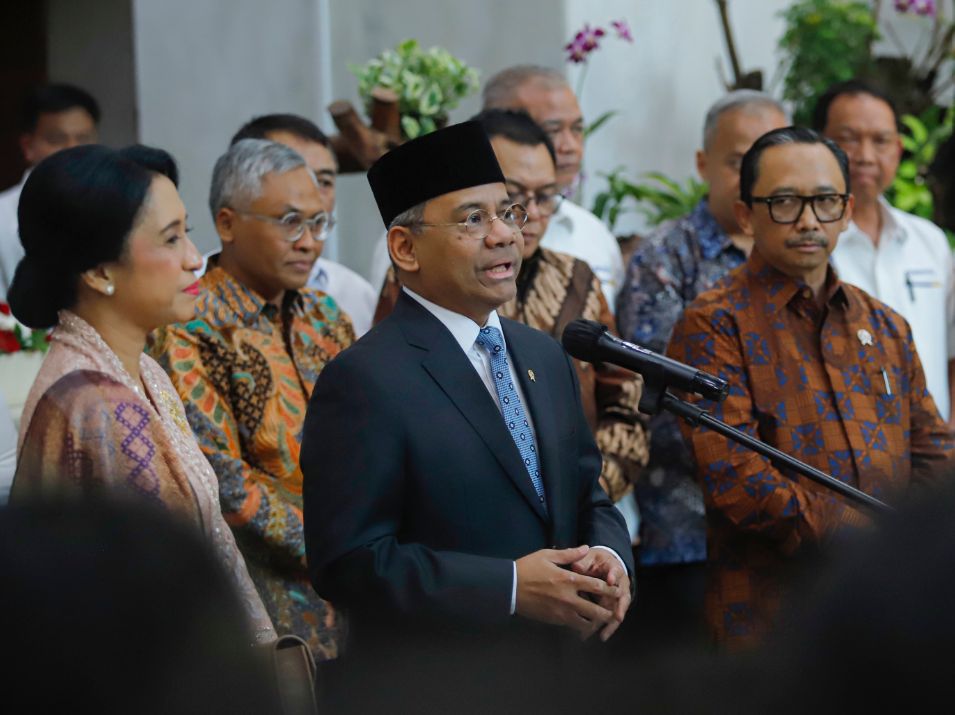
The new Finance Minister, Suahasil Nazara, now faces a major challenge: strengthening fiscal credibility whilst ensuring economic policy runs in a more synchronised fashion. Amid high global capital costs and the need to maintain domestic growth momentum, policy certainty and coordination between institutions are the keys to preserving market confidence.
Fakhrul Fulvian, Chief Economist at Trimegah Sekuritas, emphasised that markets are not only watching the deficit figure, but also scrutinising policy direction, its implementers, and its broader impacts. “Credibility is the ability to make the future more predictable,” Fakhrul said in a statement on Tuesday (15/9).
Fakhrul explained that Indonesia now has an increasingly diverse set of policy instruments. On the fiscal side, there is the State Budget (APBN), the Unspent Budget Balance (SAL), the issuance of State Securities (SBN), Danantara, state-owned enterprises (BUMN), and Special Mission Vehicles (SMV). Meanwhile, Bank Indonesia (BI) manages the BI Rate, Bank Indonesia Rupiah Securities (SRBI), liquidity, and the stability of the Rupiah exchange rate.
However, he underlined that the main issue lies not in a shortage of instruments, but in synchronisation and the correct sequencing of policies. “We already have plenty of tools. The next task is determining who does what, when, and to achieve which target. A good policy that arrives in the wrong order can still produce a bad outcome,” he asserted.
He gave an example: the placement or withdrawal of SAL must take into account BI’s liquidity operations. Likewise, the SBN issuance strategy needs to consider market conditions and capital flow needs.
“Coordination does not mean every institution must do the same thing. Coordination means they know what other institutions are doing and understand how their balance sheets interact,” he said.
The government is also reminded to clearly distinguish between instruments, intermediate targets, and the ultimate goals of policy. Fakhrul assessed that liquidity, low yields, or a small deficit are not end goals, but rather means of achieving larger economic targets.
For instance, placing SAL in the banking sector must have a clear purpose, whether to lower funding costs, boost credit, increase investment, or support economic growth. “Instruments must not be turned into targets themselves,” he said.
This clarity of targets is considered important so that the government can more easily evaluate policies and determine when a policy should be halted. “Economic policy needs an entry point and an exit point. We are often very serious about discussing how a policy begins, but far less so about how it ends,” Fakhrul concluded.
The new Finance Minister is also expected to strengthen relations with various parties, from BI, banks, investors, and the business community, to institutions such as Danantara. This is crucial because fiscal policy currently operates across many balance sheets simultaneously.
The government is asked to pay closer attention to the relationship between the APBN and BUMN, Danantara, SMV, and various contingent liabilities. The aim is to ensure fiscal consolidation does not happen merely on paper.
“A healthy budget balance is not merely about making the deficit look small. The APBN must not appear lighter simply because some risks have merely shifted balance sheet, place, or time,” Fakhrul concluded.
The change of Finance Minister is seen not merely as a change of figure, but as the government’s effort to maintain policy continuity and fiscal credibility amid pressure on the APBN.
Amin Ak, a member of Commission XI of the House of Representatives (DPR RI), viewed the appointment of Suahasil Nazara as Finance Minister as a moment to strengthen fiscal credibility and market stability.
Central government budget cuts have triggered a significant decline in spending by the Special Region of Yogyakarta (DIY) for the 2026 fiscal year.
Former Finance Minister Purbaya Yudhi Sadewa responded to reports of internal conflict over a reshuffle of 300 officials, which was said to have prompted his dismissal by President Prabowo.
Finance Minister Suahasil Nazara has committed to continuing coordination with the KSSK (Financial System Stability Committee) and involving Danantara to maintain national economic stability.
Market players are watching the consistency of fiscal policy following the inauguration of Finance Minister Suahasil Nazara. The Jakarta Composite Index (IHSG) weakened to 6,484 in the first session amid sentiment surrounding The Fed.
Before being appointed Finance Minister, Suahasil previously served as Deputy Finance Minister.
He completed his doctoral studies at the University of Illinois at Urbana-Champaign, obtaining a Doctor of Philosophy (PhD) in economics in 2003.
Source: jawawa.id (https://jawawa.id/newsitem/new-finance-minister-suahasil-nazara-urged-to-strengthen-credibility-and-policy-synchronisation-1789462328)
Originally published by Media Indonesia (https://mediaindonesia.com/ekonomi/933594/menkeu-baru-suahasil-nazara-dituntut-perkuat-kredibilitas-dan-sinkronisasi-kebijakan), translated from Indonesian