
New Finance Minister Should Serve as Momentum to Strengthen Business Confidence
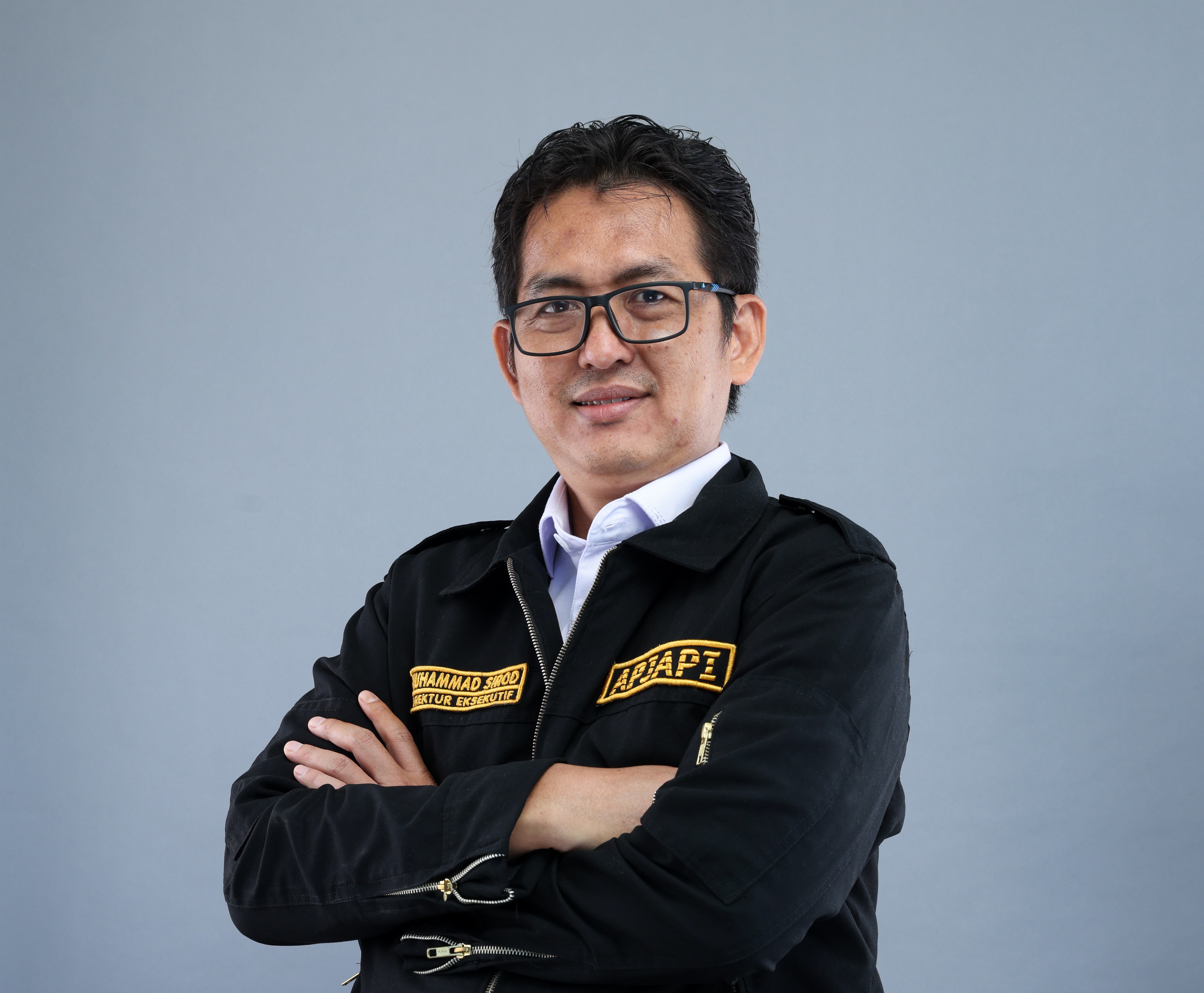
The change in Finance Minister from Purbaya Yudhi Sadewa to Suahasil Nazara is seen as a potential momentum to strengthen government coordination, accelerate the execution of economic policies, and increase business confidence.
Muhammad Sirod, an official from the Indonesian Chamber of Commerce and Industry (Kadin Indonesia), believes the transition does not necessarily indicate a correction of Purbaya’s performance. He noted that several fiscal and economic indicators during Purbaya’s tenure showed positive development.
“I believe Mr Purbaya’s performance has been quite good. Looking at the indicators, the deficit was maintained below 3%, the fiscal position is stable, and the State Budget (APBN) remains credible. Economic growth approached 6% several times,” Sirod said in a telephone interview on Tuesday (15/09/2026).
Official data shows the Indonesian economy grew by 5.61% year-on-year in the first quarter of 2026. Meanwhile, tax revenue grew by 24.6% up to the first semester of 2026.
Sirod also noted that the implementation of the Coretax tax administration system is beginning to yield results for businesses. He mentioned that Coretlag, which was a significant task during Sri Mulyani Indrawati’s tenure, is now operating more effectively, making tax detection more precise.
According to Sirod, improving tax administration is a foundation that must be continued by Suahasil as the new Finance Minister. He views the change in leadership as a move by President Prabowo Subianto to strengthen the effectiveness and speed of the government team’s work.
The Finance Minister holds a strategic position, as they are directly responsible to the President for managing state finances. Therefore, if the President deems there are agendas that need acceleration and require a response more aligned with the government’s direction, personnel changes fall within the President’s authority.
“I see this more as the President’s own requirement. As entrepreneurs, we usually only see the effectiveness of policies after some time,” he said.
Sirod remains optimistic about the transition. As the second year of the Prabowo administration begins, political stability is considered relatively established, meaning the government’s focus should shift towards team cohesion and policy execution speed. “The focus must now be on how this team can be more unified and move faster. The government is also seeking resources to manage energy, food, and human resources effectively,” he added.
Regarding market confidence, Sirod noted that the character of the Finance Minister must suit their function as the state treasurer. While public communication remains important, every statement from the Finance Minister carries high sensitivity due to its direct impact on market stability and investor confidence.
“The Finance Minister is an assistant to the President and the state treasurer. Therefore, they must be aligned with the President’s wishes and expectations and be integrated with the rest of the government team,” he said.
He hopes Suahasil’s calmer leadership style and technocratic background will strengthen market confidence and improve coordination within the government’s economic team.
Following his inauguration on 14 September 2026, Suahasil stated that he would maintain the health and credibility of state finances and ensure the State Budget continues to support the government’s priority programmes. He also emphasised that the deficit would be kept below 3% and that public communication would be part of the effort to maintain the credibility of budget management.
For Sirod, the next challenge is ensuring this fiscal foundation can support higher economic growth targets. The government aims for 6% growth in 2027, moving towards 8% by 2029. “President Prabowo’s target is quite large, 8%. To get there, we need an economic driver, which is investment,” he said.
He noted that realised investment reached Rp1,010.6 trillion in the first semester of 2026, absorbing 1.45 million workers, which serves as the initial capital that needs to be expanded.
Sirod hopes Suahasil can strengthen the government’s strategy, which relies on two growth engines: State-Owned Enterprises (SOEs) and the private sector. “What we hope for is that these two large engines run. SOEs must run, and the private sector must run. If both move, I believe economic growth will be stronger,” he said.
He added that the private sector needs more space to increase investment and business expansion to create more jobs through industrialisation, which would effectively absorb educated labour.
Siroit also supports the government’s efficiency agenda. However, he believes efficiency should be directed towards improving the structure and quality of spending, rather than mere budget cuts.
The government needs to reduce waste at both central and regional levels and avoid reliance on debt to cover financing needs. “We must no longer have a mindset of easy borrowing. We must first make ourselves efficient,” he said.
He believes that three of Prabowo’s systemic agendas—energy security, food security, and the transformation of SOEs—can proceed without relying on debt injections.
From the business perspective, Sirod acknowledged that business conditions still face pressure and job creation remains an issue. However, he sees emerging optimism alongside improvements in law enforcement. “If we are not safe, if the law is unstable and unfair, we are finished. Now, I see a basis for optimism,” he said.
He noted that legal certainty and fair treatment are prerequisites for growth.
Source: jawawa.id (https://jawawa.id/newsitem/new-finance-minister-should-serve-as-momentum-to-strengthen-business-confidence-1789523475)
Originally published by investortrust.id (https://investortrust.id/macro/116349/menkeu-baru-harus-jadi-momentum-perkuat-kepercayaan-dunia-usaha), translated from Indonesian