
New Evidence of China's Global Expansion: Building a Business Empire from Africa to Europe
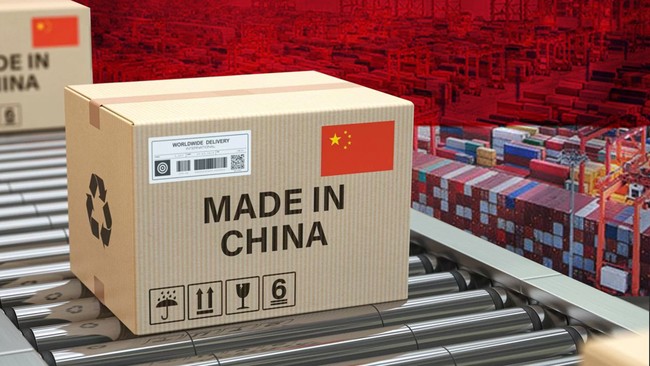
China’s industrial expansion no longer stops at its borders. From Saudi Arabia, Hungary, and Brazil to Indonesia, Chinese companies are racing to build factories, industrial zones, ports, and airports, extending their supply chains across the globe. This wave of expansion is not merely investment; it is beginning to redraw the map of global trade and supply chains.
Ain Sokhna, Egypt, is one example of the rapid pace of China’s overseas industrial expansion. In recent years, the influx of Chinese manufacturing companies and investment has transformed the Egyptian port area into one of the region’s fastest-growing industrial hubs. China’s increasingly solid presence in Egypt is evidence that the Bamboo Curtain country is tightening its grip on the African continent.
Over the past three years, Chinese companies have poured more than US$200 billion, or approximately Rp3,555.2 trillion (US$1 = Rp17,776), into building factories abroad. This expansion is transforming their supply chains in three key ways. First, production networks are becoming more dispersed, with production hubs in various regions of the world. Second, supply chains are becoming more integrated, as many Chinese suppliers follow by opening facilities near the new production sites of Chinese manufacturers. Third, the expansion is increasingly focused on strategic industries, from electric vehicles (EVs) and clean energy to data centre equipment.
Several factors are driving Chinese companies to seek new markets in various countries, from weak domestic consumption to intense competition at home. The tariffs imposed by Donald Trump during his second term are also pushing Chinese companies to expand production to countries subject to lower tariffs than their traditional production bases, such as Vietnam. A number of Global South countries are also offering incentives to attract investment. Egypt, for example, provides a ‘golden licence’ that cuts investment bureaucracy. Chinese companies are using Egypt as a market for its 120 million people as well as an export base.
As a result, the production bases of Chinese companies are becoming increasingly spread across the globe. JA Solar, JinkoSolar, and TrinaSolar, which previously produced solar panels in Southeast Asia, are now building factories in the Gulf region. These new production hubs are also beginning to enter global supply chains, such as Nordex, a German company that buys turbine blades from a Chinese supplier in Morocco, which is part of the African region.
Europe is also a destination for Chinese investment. Foreign Direct Investment (FDI) by Chinese companies in the region surged 50% in 2025 to a record US$10.1 billion, or approximately Rp179.5 trillion, according to Rhodium Group and MERICS. In Serbia, Linglong Tire is expanding the capacity of its plant in Zrenjanin, which supplies automotive manufacturers such as Volkswagen and Ford.
In parallel, China’s overseas supply chains are becoming more integrated, even into the upstream sector. Gotion, a Chinese battery manufacturer, is building a gigafactory about 70 km from Rabat, Morocco. Its suppliers are also expanding, including BTR, a producer of anodes and cathodes, and Hailiang Group, a copper foil producer, which are building factories in the surrounding area. A similar pattern is occurring in Cairo, where Chinese household appliance manufacturers are encouraging their suppliers to open local plants.
Nevertheless, a number of machines, components, and raw materials are still imported from China. In the first half of 2026, China’s exports of capital goods rose 14% year-on-year (yoy), while exports of intermediate goods increased 27%. Going forward, more production needs could potentially be supplied from locations closer to the factories.
Chinese logistics companies are also supporting this expansion by operating or holding stakes in at least 132 ports abroad, as well as rail and airport networks, including the Budapest-Belgrade line completed in 2026.
Chinese companies’ overseas investment is increasingly focused on strategic industries. The Global South is becoming the main market for China’s clean energy technology, including solar power projects in Egypt. Meanwhile, Chinese EV production is increasingly spread across regional hubs, from Rio de Janeiro to London, to be closer to consumers.
AI infrastructure is also an investment focus. Thailand is developing into a production base for optical components for AI data centres, including products from Zhongji InnoLight used by major US technology companies.
Chinese companies are expanding their overseas investment at a time when many Western companies are concentrating factory construction in the US. However, this expansion faces challenges, particularly the shifting US tariff policies, which have caused a number of projects to be cancelled or scaled back. On 13 August, the White House also called for broader restrictions on imports linked to China.
Obstacles are also coming from various directions. Brazil and Turkey are implementing local content rules, while currency fluctuations and high borrowing costs add to the challenges in developing countries. From within China, new overseas investment rules are also limiting technology and data transfers and tightening national security reviews.
So far, China’s share of global manufacturing has not shown a decline. However, the increasing investment by Chinese companies abroad could potentially shift some production to other countries. Even so, the world is expected to remain dependent on Chinese products, wherever those goods are produced.
Source: jawawa.id (https://jawawa.id/newsitem/new-evidence-of-chinas-global-expansion-building-a-business-empire-from-africa-to-europe-1787223170)
Originally published by CNBC Indonesia (https://www.cnbcindonesia.com/research/20260820113550-128-760864/bukti-baru-china-jajah-dunia-bangun-kerajaan-bisnis-dari-afrika-eropa), translated from Indonesian