
New Era of Greater Bandung Transportation Begins, Governor Calls for Modern, Integrated, and Equitable System
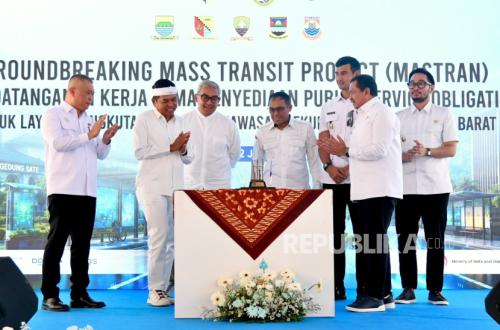
Public transportation in the Greater Bandung area has officially entered a new era. This was marked by the groundbreaking of the Indonesia Mass Transit Project (Mastran) infrastructure and the signing of a Public Service Obligation (PSO) Cooperation Agreement for mass transit services in the Bandung Basin area. Through this programme, the Bus Rapid Transit (BRT)-based mass transport system is targeted to be fully operational by 2027. The system will be supported by a modern transport network including dedicated lanes, hundreds of shelters, depots, and an Intelligent Transportation System.
The inauguration ceremony, held at the Leuwipanjang Terminal area in Bandung City on Wednesday (22/7/2026), was attended by West Java Governor Dedi Mulyadi, Indonesian Minister of Transportation Dudy Purwagandhi, Director General of Land Transportation Aan Suhanan, and regents and mayors from across Greater Bandung.
The man familiarly known as KDM asserted that the public currently needs a transportation service that is not only integrated but also equitable. “This is a joy for the people of Greater Bandung. We hope the construction process runs safely, smoothly, without disruption, and delivers high-quality infrastructure,” said KDM.
KDM added that public transportation has now become a basic need for metropolitan residents. “We are entering a new era. Modern transportation is not just about speed, but also excellent service, digitalisation, and connectivity,” he added.
In line with the arrival of new infrastructure, KDM encouraged a behavioural shift among public transport users towards greater orderliness. Awareness of maintaining public facilities, proper waste disposal, and etiquette in public spaces are crucial. The government must provide excellent service to support passenger safety and comfort, ranging from the availability of cleaning facilities, adequate pavements, sufficient street lighting, to extra security. “Because the higher the traffic of public transport, if not balanced with strong security availability, it will potentially increase crime,” he said.
KDM reminded that improvements to the transportation system in metropolitan areas must be directly proportional to grassroots economic growth and equitable development across all regions. “West Java must be fair. Big cities are developing, but villages must also feel the development. Basic infrastructure must reach all levels of society,” he stressed.