
New "Doomsday" Threatens Earth, 45 Million People at Risk
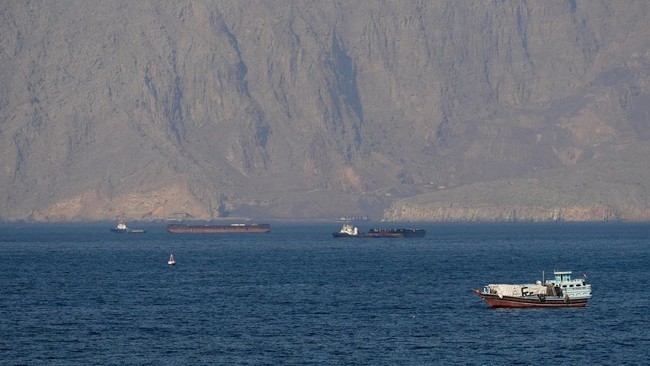
Jakarta, CNBC Indonesia - The world faces a new “doomsday” threat that no longer stems solely from wars and energy crises, but also from the potential for mass starvation due to stalled global fertiliser distribution in the Strait of Hormuz.
The United Nations (UN) warns that 45 million people risk experiencing hunger and malnutrition if the strategic shipping route continues to be blockaded.
Head of the UN task force for preventing humanitarian crises, Jorge Moreira da Silva, stated that the world now has only a few weeks to prevent a global food disaster.
“In the coming weeks, we must prevent what could become a massive humanitarian crisis,” Moreira da Silva told AFP in Paris, quoted on Tuesday (12/5/2026).
“We may witness a crisis forcing an additional 45 million people to experience hunger and malnutrition,” he continued.
The Strait of Hormuz has long been a vital route for world trade, including for fertiliser and agricultural raw material distribution. Around a third of global fertiliser trade passes through the area.
However, over the past months, Iran has tightened shipping access in the Strait of Hormuz in retaliation for the war launched by the United States and Israel since 28 February.
As a result, distribution of essential materials such as ammonia, sulphur, and urea has been disrupted. These commodities are crucial for farmers in various countries to meet planting seasons. The UN fears the impact of this crisis will hit developing countries in Africa and Asia hardest, which heavily rely on fertiliser imports.
The UN Secretary-General has even formed a special task force since March to open fertiliser distribution routes through the Strait of Hormuz.
Moreira da Silva also revealed he has met with more than 100 countries to garner international support. However, to date, there has been no full support from key parties such as the United States, Iran, or Gulf countries, which are major global fertiliser producers.
According to him, several African countries have only a few weeks before the planting season ends. If fertiliser fails to arrive on time, global food production is estimated to drop dramatically and trigger a surge in global food prices.
He also warned that fertiliser costs have already seen a “massive increase”, which could worsen pressure on the global agricultural sector.
The UN estimates that an emergency mechanism could actually be activated within seven days. However, even if shipping routes are opened now, fertiliser distribution is expected to return to normal in three to four months.