
New Discovery Challenges Long-Held Theory of Human Evolution
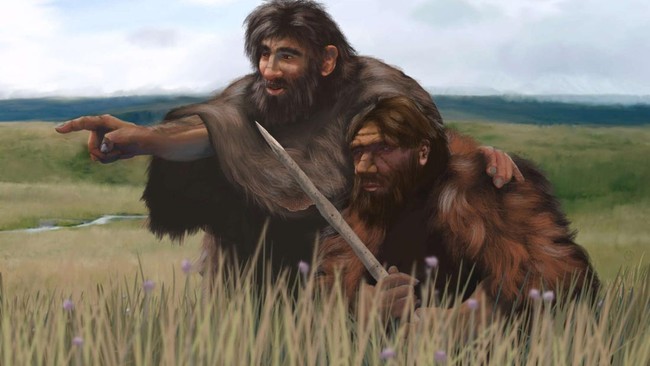
A new discovery is challenging the long-held theory that human evolution was a gradual, linear process from larger faces to smaller ones and increasing brain size. The findings come from a study led by Mark Hubbe from the University of Tennessee-Knoxville and Katerina Harvati from the Senckenberg Centre for Human Evolution and Palaeoenvironment (SHEP) at the University of Tübingen, published in the journal Nature Communications.
The study, titled “Evolutionary drivers of encephalization and facial reduction in the genus Homo”, analysed 87 fossil skulls from various species within the genus Homo. The sample included Homo habilis, Homo erectus, Homo heidelbergensis, Neanderthals, and modern Homo sapiens. Researchers tested six evolutionary models, including natural selection driving directional change, random or neutral changes, stabilising selection maintaining traits within a range, and punctuated equilibrium, which describes long periods of little change followed by rapid evolutionary shifts.
The analysis found that early humans did not undergo significant changes during their evolution. Major changes only occurred when biological, environmental, and cultural constraints began to diminish. “Our analysis confirms known evolutionary trends in brain growth and facial reduction, but it shows that differences within our genus can be much more effectively explained by neutral evolutionary processes and long periods of evolutionary stasis,” explained Hubbe.
A key factor in major physical changes was likely the development of technology and culture. Adaptations occurred as pressures on the body were reduced by the use of tools, food processing, cooperation, shelter, and the ability to exploit new resources. Culture helped humans meet the high energy demands required to support larger brains. “In many ways, culture acted as a buffer. It allowed us to utilise new habitats and access more resources. This reduced the pressure on certain physical structures because they no longer needed to adapt so strictly to environmental conditions,” he explained.
The findings also change how scientists view the origins of modern humans. Rather than ancient humans representing slow, gradual stages leading to present-day humans, the process involved a combination of long periods of random change and biological constraints. “Instead of asking why humans kept evolving towards larger brains and smaller faces, it makes more sense to investigate under what conditions human populations were able to break free from existing constraints and develop new traits,” concluded Katerina Harvati.