
New Disaster Strikes Indonesian Region, UGM Lecturer Reveals the Facts
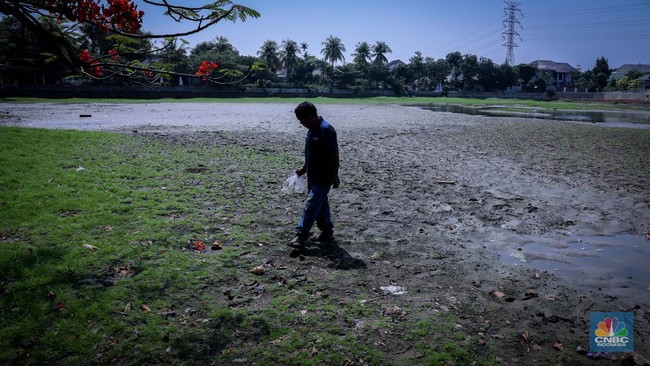
After enduring months of rainy season, Indonesians will soon face the dry season. It is important to note that the 2026 dry season is predicted to differ from previous ones.
Recently, the Meteorology, Climatology, and Geophysics Agency (BMKG) announced that the 2026 dry season will be longer than normal. Additionally, most regions of Indonesia are predicted to experience an earlier dry season, affecting 325 Seasonal Zones (ZOM) or 46.5% of the total ZOM.
Rainfall accumulation during the 2026 dry season period will also mostly be below normal. BMKG warns that 451 ZOM or 64.5% of the total ZOM are predicted to experience a drier dry season than usual.
Entering April 2026, BMKG states that 16.3% of ZOM will already enter the dry season. The regions in question include western Java, most of Central Java to East Java, West Nusa Tenggara, East Nusa Tenggara, Kalimantan, Sulawesi, and Sumatra.
On the official UGM website, it is mentioned that the longer and drier 2026 dry season poses risks of forest and land fires (karhutla). In Riau, karhutla has already occurred on 4,440.21 hectares and continues to increase.
In response to these challenges, Fiqri Ardiansyah, a lecturer at UGM’s Faculty of Forestry, emphasised the need for budgets that prioritise the concept of sustainable emergency management. He said budgets should adapt to emergency management concepts from prevention, mitigation, preparedness, response, and recovery.
More specifically, Fiqri highlighted the strategic role of peat rewetting infrastructure over mere short-term solutions. He stated that karhutla can be prevented and minimised through Weather Modification Operations (OMC), bore wells, and canal blockings.
Based on several studies conducted, Fiqri said, canal blockings are quite effective as a karhutla mitigation step. Not only for the short term but also for the long term.
“Peat that burns is generally degraded peat, so the presence of canal blockings is expected to reduce water loss from the peat ecosystem, keeping the peat moist,” Fiqri said, quoted from the official UGM website, Tuesday (31/3/2026).
Regarding the government’s instructions to encourage private sector involvement, Fiqri proposed a collaboration model that is not merely instructional during emergencies. He encouraged the formation of permanent cooperation agreements manifested through measurable and routine field activities.
“Permanent collaboration can be carried out through roll calls, patrols, joint monitoring with BPBD, Manggala Agni, and so on, conducted routinely, as well as MPA assistance,” he explained.
As a preventive step, Fiqri stressed that fundamental change must start from human behaviour at the grassroots level to prevent karhutla.
“Raising awareness to increase public understanding in using uncontrolled fire is important. This is because fires generally occur due to ignition sources from human activities,” Fiqri emphasised.
As a concrete solution, Fiqri urged companies and communities to implement Zero Burning Land Management (PLTB), especially in areas outside Java. This aims to break the pattern of recurring fire suppression.
Source: jawawa.id (https://jawawa.id/newsitem/new-disaster-strikes-indonesian-region-ugm-lecturer-reveals-the-facts-1774943682)
Originally published by CNBC Indonesia (https://www.cnbcindonesia.com/tech/20260331120511-37-722739/petaka-baru-hantam-wilayah-ri-dosen-ugm-buka-bukaan-faktanya), translated from Indonesian