
New Delhi’s Latest Tactic to Tackle Air Pollution: Higher Parking Charges
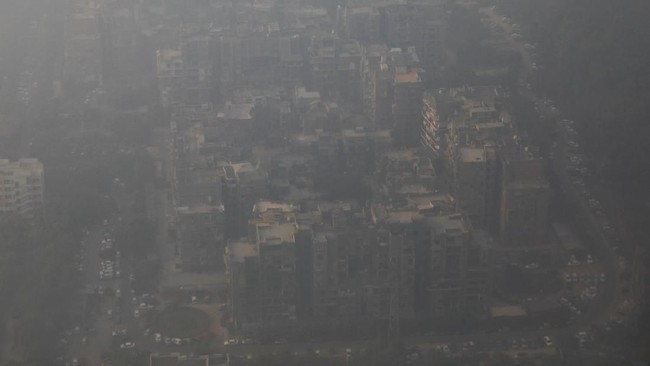
New Delhi’s government is stepping up efforts to tackle air pollution from Sunday (1 November 2026). The new measures include raising parking charges and asking employees to work from home (WFH) to reduce pollution levels in the Indian capital.
According to Reuters, the rules taking effect on Sunday include doubling parking charges. The government is also introducing WFH arrangements for public-sector and private-sector office employees to reduce emissions from transport.
Vehicles that do not meet the prescribed emissions standards will be barred from entering the capital. The government has also immediately prohibited all dust-generating demolition and outdoor construction work.
The Office of Delhi Chief Minister Rekha Gupta said the Delhi Winter Action Plan would be implemented from 1 November, with stricter pollution controls, stronger enforcement and monitoring around the clock.
“We humbly request all Delhi residents to follow these guidelines and contribute to making Delhi’s air cleaner and healthier,” Gupta’s office said.
Over the past month, the Delhi government had already introduced several measures to curb air pollution, including a ban on burning rubbish and restrictions on food vendors’ use of coal and firewood.
Similar efforts in previous years, however, have failed to resolve the smog that regularly blankets the city from November to January. During this period, lower temperatures trap pollutants close to the ground, worsening air quality.
Air pollution in Delhi comes from a range of sources, including vehicle emissions, coal-fired power stations, industrial activity, construction dust and the burning of crop residue in neighbouring states.
India’s Environment Ministry estimates that vehicles account for about 23% of Delhi’s air pollution during winter. Biomass burning, including the burning of agricultural residue, contributes about 20%, while industry, including coal-fired power stations, accounts for around 9%.
As a result, PM2.5 concentrations in Delhi often surge during the height of winter. These very small pollutant particles are dangerous because they can penetrate deep into the lungs and enter the bloodstream, and have been linked to cancer risk.
PM2.5 levels in the city often exceed 300 micrograms per cubic metre, around 20 times the World Health Organization’s (WHO) recommended daily limit.
Last year, PM2.5 levels reached as high as 846 micrograms per cubic metre, about 56 times the WHO guideline.
Monitoring on Sunday put PM2.5 concentrations at 201 micrograms per cubic metre, more than 13 times the safe limit. The level may have been slightly reduced by intermittent rain over the previous few days.
The impact of air pollution in India was also reflected in a study published in the journal The Lancet Planetary Health in 2024. The study estimated that around 3.8 million deaths in India between 2009 and 2019 were associated with air pollution.
Source: jawawa.id (https://jawawa.id/newsitem/new-delhis-latest-tactic-to-tackle-air-pollution-higher-parking-charges-1793523047)
Originally published by CNBC Indonesia (https://www.cnbcindonesia.com/news/20261101135227-4-781250/jurus-baru-pemerintah-ibu-kota-atasi-polusi-udara-tarif-parkir-naik), translated from Indonesian