
New Criminal Procedure Code a Paradigm Shift in Legal Reform, Says Expert
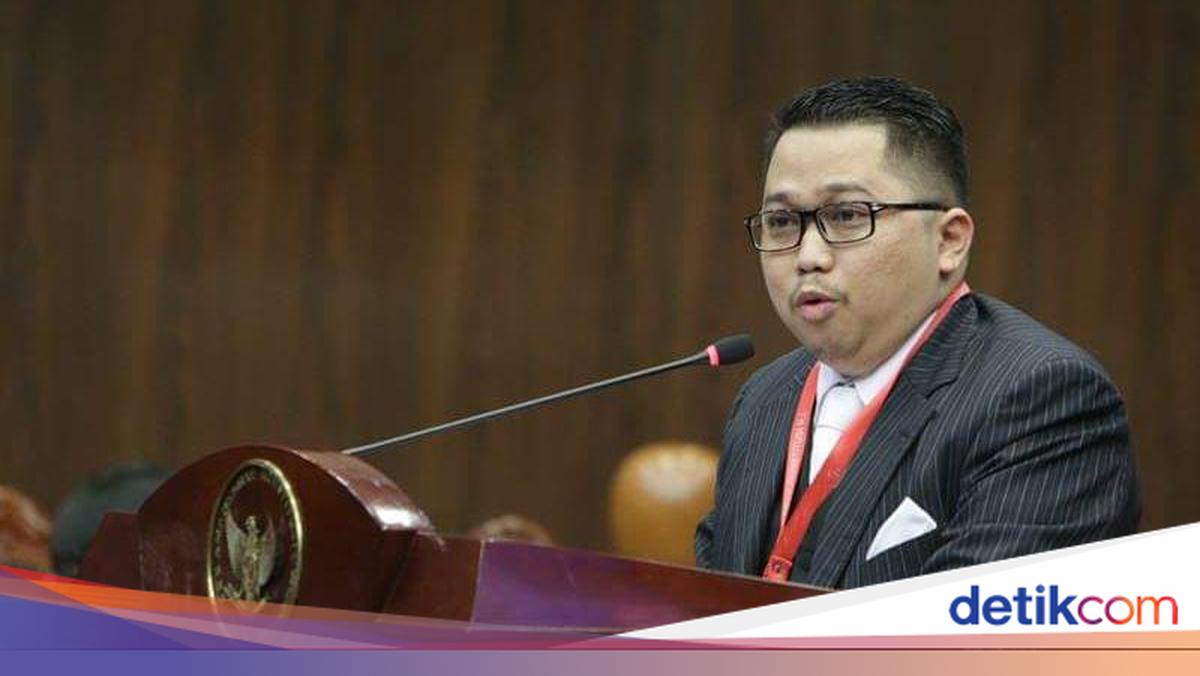
Constitutional law expert Muhammad Rullyandi has stated that the enactment of the new Criminal Procedure Code (KUHAP) represents a paradigm shift in the national criminal justice system, aimed at strengthening the rule of law and providing certainty in the duties and authority of law enforcement officers. According to Rullyandi, the new KUHAP serves as a correction and refinement of previous regulations through a harmonisation process that considers various legal developments, including rulings from the Constitutional Court (MK). “The birth of the new KUHAP is a legal reform paradigm that has undergone a harmonisation process and taken into account various legal changes, including Constitutional Court rulings that are part of the development of criminal procedural law,” he said in a written statement on Wednesday (15/7/2026). He explained that one point of concern was the MK Ruling Number 21/PUU-XII/2014, which regulated the need for a procedure to examine a prospective suspect before a suspect determination was made. He noted that this provision was part of the old KUHAP regime and has been changed with the enactment of the new KUHAP. “The MK Ruling Number 21/PUU-XII/2014 must be understood in the context of the old KUHAP’s validity. With the new KUHAP, there is a new paradigm and new provisions that affirm the mechanism for determining a suspect based on the sufficiency of evidence,” he stated. Rullyandi pointed out that the new KUHAP explicitly regulates that a suspect determination is made after an investigator has obtained at least two pieces of valid evidence, as stipulated in Article 1 point 31 and Article 90 paragraph (1) of the new KUHAP. “The provisions in the new KUHAP emphasise that the primary basis for naming a suspect is the fulfilment of at least two pieces of valid evidence. This is an important instrument in guaranteeing legal certainty while strengthening the professionalism of law enforcement officers,” he said. He added that with this new regulation, the requirement to examine a prospective suspect before a formal determination, as had developed in practice based on the MK ruling, is no longer an absolute requirement as long as the investigator has met the evidentiary standards set out in the new KUHAP. “As long as the investigator has obtained at least two pieces of valid evidence according to the new KUHAP, a suspect determination can be made based on that provision without having to first examine the prospective suspect as a witness,” he concluded. Rullyandi further assessed that this change to the KUHAP must be understood as an effort to balance the protection of citizens’ rights with the need for effective law enforcement. “In principle, the new KUHAP still upholds due process of law, but at the same time, it provides room for law enforcement officers to exercise their authority professionally based on valid evidence,” he closed.