
New Credit Disbursement in Q1-2026 Declines, Global Uncertainty Pressures Investment
JAKARTA, investortrust.id - Bank Indonesia’s (BI) Banking Survey indicates that new credit disbursement in the first quarter of 2026 will be lower than in the fourth quarter of 2025. In Q1-2026, new credit disbursement is recorded at 38.74%, lower than the previous quarter’s growth of 88.92%.
The weakening occurs in working capital credit and investment credit. Working capital credit in Q1-2026 stands at 36.4%, while the previous quarter was 88.64%. Meanwhile, investment credit in Q1-2026 reaches 37.33%, down from the growth in Q4-2025 of 87.32%.
"The growth in new credit disbursement in Q1-2026 is indicated to stem from an increase in consumer credit by 51.97%," states the report.
This increase in consumer credit comes from rising demand for multipurpose credit by 51.9%, unsecured credit by 37.23%, and motor vehicle credit by 13.38%.
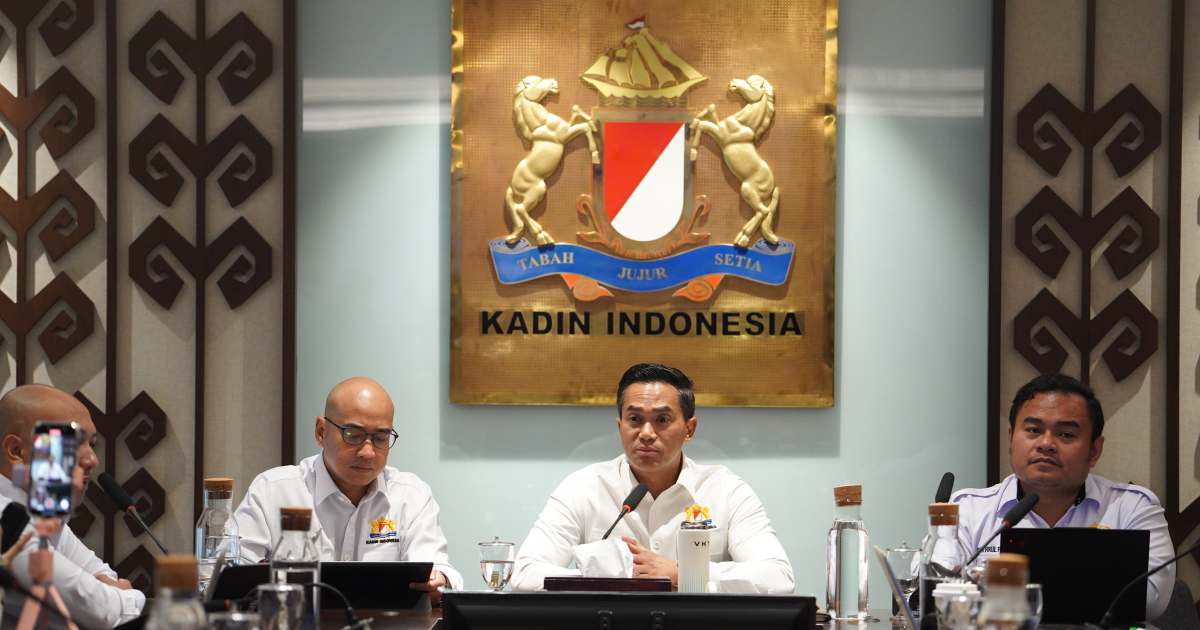
Fakhrul Fulvian, Director of Insight at the Kadin Indonesia Institute, stated that the low new credit in Q1-2026 correlates with business world sentiment.
"Indeed, in the midst of Q1-2026, starting from February, there began to be concerns related to warfare," said Fakhrul, when delivering the business world perception survey at the Kadin Tower, Jakarta, on Friday (24/4/2026).
Fakhrul noted that concerns over the war in the Middle East create uncertainty regarding economic and investment expectations. "Thus, there is indeed an adjustment of expectations," he said.
The Kadin Indonesia Business Pulse Survey for Q1-2026 shows that business actors’ sentiment is trending towards decline. As many as 40.5% of business actors disagree that conditions in Q1-2026 are improving compared to Q4-2025.
"So there is an increase that we need to pay attention to in business conditions," he said.
Fakhrul explained that this sentiment of non-improving business conditions reflects that business actors are beginning to face pressures from demand, costs, and the public’s purchasing power that has not yet recovered.
"And it shows that there is actually an issue of unstable demand," he said.
Therefore, amid this period of full pressure, business actors hope that the government provides more leniency so that even if companies carry out efficiency measures, workers can still be retained and support economic growth.