
New Coordinating Ministry for Downstreaming Established: What is the Fate of Rosan's Ministry?
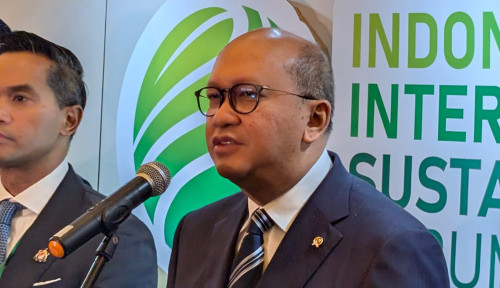
The Minister of Investment and Downstreaming/Head of the Investment Coordinating Board (BKPM), Rosan Roeslant, has spoken out regarding the position of his ministry following the government’s formation of the Coordinating Ministry for Downstreaming and Energy Transition.
Rosan stated that his office is currently awaiting government instructions concerning the division of tasks and coordination after the introduction of the new coordinating ministry. He noted that the mechanism for the division of authority will follow the government’s decision.
“We are just waiting for direction. We are waiting for direction,” Rosan said during the Indonesia Sustainability Forum (ISF) 2026 in Jakarta on Tuesday (6/10/2026).
Despite the existence of a new coordinating ministry overseeing the downstreaming and energy transition agendas, Rosan ensured that the Ministry of Investment and Downstreaming/BKPM will continue to carry out its duties. He emphasised that inter-agency coordination will be key to implementing the government’s investment and downstreaming programmes moving forward.
“The important thing is that we always maintain good coordination,” said Rosan.
The formation of the Coordinating Ministry for Downstreaming and Energy Transition was enacted by the President of Indonesia on Thursday (1/10/2026). The President also appointed Bahlil Lahadalia as the Coordinating Minister for Downstreaming and Energy Transition, while he simultaneously retains his position as the Minister of Energy and Mineral Resources (ESDM).
Bahlil stated that the formation of the coordinating ministry aims to strengthen coordination in executing the downstreaming and energy transition programmes, which are priority agendas for the government. According to Bahlil, both sectors are closely linked to global economic conditions and the need for clean energy, thus requiring an integrated strategy.
“In conditions of geopolitical uncertainty and the dynamics of the global economic constellation, which also demand clean energy, the President views it as important for priority programmes related to downstreaming and energy transition,” Bahlil said.
He added that downstreaming and energy transition cannot be implemented partially as they involve various sectors. Therefore, the government requires stronger coordination with measurable targets.
“Therefore, this cannot be done in a partial manner but must be carried out comprehensively, measurably, and truly testable against the targets commanded by the President,” Bahlil concluded.