
New Chapter in Gibran Diploma Controversy After Supreme Court Annuls Equivalency Certificate
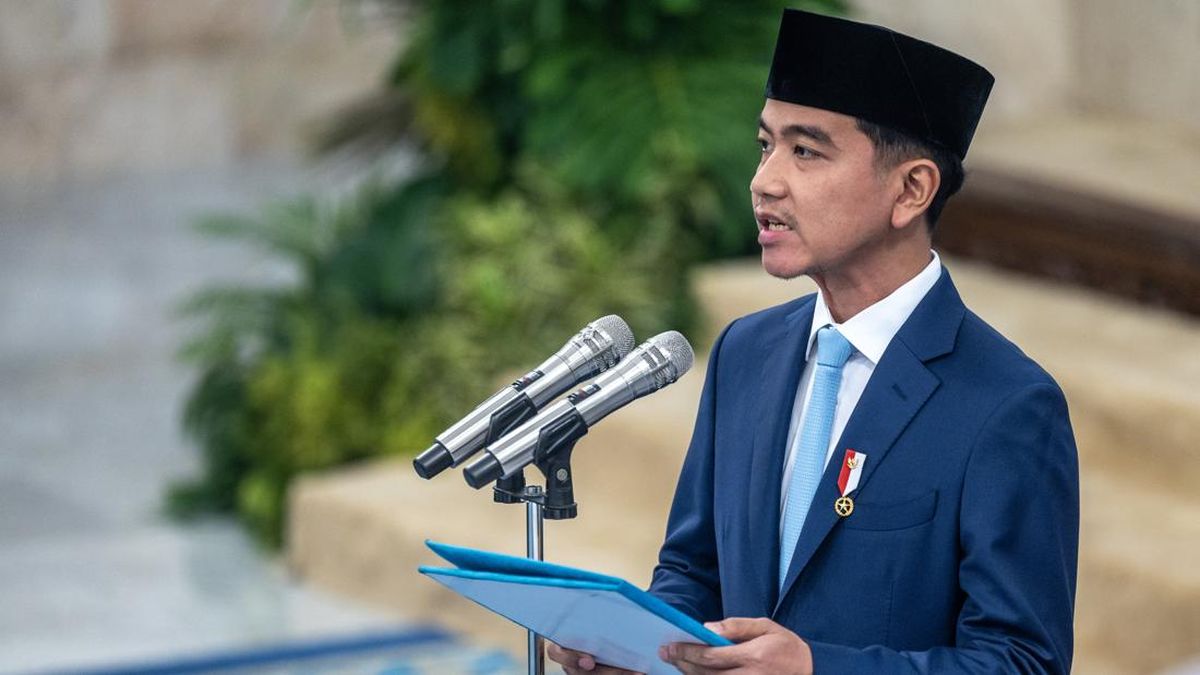
The Supreme Court (MA) has granted an appeal in a lawsuit challenging the high-school equivalency certificate used by Vice-President Gibran Rakabuming Raka as a requirement for his candidacy in the 2024 presidential election.
In a ruling issued on Friday (30 October), the court declared invalid the certificate Gibran used to register as a vice-presidential candidate. The claimant, HM Subhan, also known as Subhan Palal, confirmed that the Supreme Court had granted the appeal.
“I received a notification through my e-court account from the Supreme Court. It was dated 30 October 2026. For case number 742/K/TUN/2026, the ruling grants the appeal,” Subhan said.
In case number 742/K/TUN/2026, Subhan made three requests: that the lawsuit be granted in full; that Gibran’s education equivalency certificate be declared invalid; and that the document be withdrawn from its holder, the Director-General of General and Special Education at the Ministry of Primary and Secondary Education (Kemendikdasmen).
Several public figures have since commented on the Supreme Court ruling. Former Constitutional Court (MK) chief justice Mahfud MD said that any follow-up concerning Gibran’s current position as vice-president was a matter for the political sphere.
“What happens next regarding his office as vice-president is up to politics; it can choose whichever course it wants,” Mahfud wrote on his X account, @mohmahfudmd, on Friday (30 October).
Mahfud said the controversy over Gibran’s high-school equivalency certificate, and the alleged insertion of Article 18(3) of General Election Commission (KPU) Regulation No. 19/2023, should be investigated as a criminal matter.
“The KPU and the Directorate of Primary and Secondary Education should be examined immediately,” he said.
Representatives of several political parties have also responded to the Supreme Court’s decision declaring Gibran’s high-school equivalency certificate invalid.
The latest response came from the Democratic Party. Its deputy secretary-general, Jansen Sitindaon, said Gibran no longer met the requirements to serve as vice-president.
Jansen said the ruling was clear and unequivocal and required no further interpretation. In his view, it affected Gibran’s legitimacy as vice-president.
“Because the Supreme Court ruling has declared the certificate dated 6 August 2019 invalid and null and void—and, further, in point three, ordered it to be withdrawn from its holder and destroyed—I have no choice but to say that, legally, Gibran’s legitimacy as vice-president, to use the wording of Article 7A of the Constitution, no longer meets the requirements,” Jansen said, according to a post on his social media account on Sunday (1 November).
Jansen compared the Supreme Court ruling with an earlier Constitutional Court decision. He said the Constitutional Court ruling had left room for interpretation, whereas the Supreme Court’s order was more explicit.
“This Supreme Court ruling is different: its order is very firm, clear and explicit, and needs no further interpretation. It says: ‘invalid, null and void, to be withdrawn from the holder and destroyed’,” he said.
Jansen therefore said there were two options: Gibran could resign, or the House of Representatives and the People’s Consultative Assembly (DPR and MPR) could take political steps to impeach him.
“Since he is no longer legally valid and does not meet the requirements to be vice-president, I believe there are only two choices now: Gibran resigns with dignity, or the DPR, through the MPR, ‘removes’ him by invoking Article 7A of the Constitution,” he said.
Jansen argued that the DPR and MPR would have to follow up on the ruling if Gibran did not resign voluntarily.
“In a criminal case, the prosecutor carries out the decision; in a civil case, it is the court bailiff. In this case, because it concerns a state office, if the person will not resign, the DPR through the MPR must carry it out. Otherwise, the ruling will simply remain on paper,” he said.
However, Jansen said it remained to be seen whether the DPR and MPR would take political action. He said the prospect of enforcement by the two institutions rested with senior political figures and party elites.
The Gerindra Party, meanwhile, called on the Ministry of Primary and Secondary Education and the KPU to explain the certificate. Party spokesman Sugiat Santoso said the relevant ministry and institutions should publicly clarify how they would follow up the ruling, including what it meant for the administration of candidacy at the time.
“We hope the relevant minister and authorised institutions will provide an open explanation of the follow-up to the ruling, including its implications for the candidacy administration at the time,” Sugiat said on Saturday (31 October).
Sugiat said Gerindra respected the Supreme Court’s decision as part of law enforcement in a democratic country.
“Every court decision must be taken seriously and dealt with in accordance with the applicable law,” he said.
He also urged all parties to understand fully what the ruling concerned, including the legal consequences of the Supreme Court granting the appeal over Gibran’s high-school equivalency certificate. Sugiat noted that the vice-presidency had a constitutional dimension and its own legal mechanisms, which should not be conflated with the case.
PDIP secretary-general Hasto Kristiyanto said many people were calling for Gibran to resign as vice-president. Some party members had also called on the son of Indonesia’s seventh president to step down.
“What Comrades Komarudin and Andreas Pareira have said is that he should resign. This is also the voice of a growing number of people. That voice must not be ignored,” Hasto said in a written statement on Saturday (31 October).
Hasto said PDIP could not pursue a parliamentary inquiry into the controversy over Gibran’s education on its own. The party has 110 seats in the legislature, he said.
“So dialogue with other parties is also needed. These efforts to engage in dialogue are taking place amid the increasingly widespread erosion of legitimacy,” Hasto said. “We believe other parties will listen to that voice too.”
Hasto added that PDIP had begun talks with several parties about possible next steps, saying the issue was not the concern of just one party.
He also said the Supreme Court ruling strengthened the argument that the constitutional requirements for a presidential and vice-presidential candidate had not been met.
The National Awakening Party (PKB) also commented. Muhammad Khozin, a member of the DPR’s Commission II from the PKB faction, said the Supreme Court decision provided an additional basis for—and underscored the urgency of—the legislature taking a political position.
The Supreme Court ruling on the validity of Vice-President Gibran’s equivalency certificate, Khozin said, supplemented the earlier Constitutional Court ruling.
According to Khozin, the Supreme Court had confirmed that the government’s administrative act of issuing Gibran’s equivalency certificate was invalid and null and void.
“Two legal institutions, the Constitutional Court and the Supreme Court, have ruled on the status of Vice-President Gibran’s equivalency certificate,” he said.
Khozin said the Constitutional Court ruling concerned the requirements for presidential and vice-presidential candidates, while the Supreme Court ruling concerned an administrative act under state administrative law—the issuance of a certificate it deemed invalid.
The PKB faction, he said, would use the legal reasoning and decisions of both courts as a basis for determining its next political steps.
Gibran’s lawyer, Muhammad Rullyandi, took a different view, saying the Supreme Court ruling did not affect his client’s position as vice-president.
Rullyandi said the ruling could not be fully enforced because the legal circumstances had changed before it was issued.
“I believe the Supreme Court decision granting the request to invalidate the high-school education equivalency certificate used by Gibran Rakabuming Raka as an administrative requirement for his 2024 vice-presidential candidacy does not affect his position as vice-president,” Rullyandi said, as quoted by detikcom on Saturday (31 October).
“The reason is that the Supreme Court decision cannot be fully enforced because a prior legal situation has intervened,” he added.
Rullyandi explained that the Supreme Court ruling was issued after all stages of the 2024 presidential election had been completed and Gibran had officially been sworn in as vice-president. He therefore argued that the ruling could not be applied retrospectively.
“The Supreme Court ruling meets the criteria under the State Administrative Court system, with reference to Article 117(1) of Law No. 5/1986. In essence, an imperfect ruling cannot be enforced because a prior legal situation has arisen,” he said.
Rullyandi also said the equivalency certificate had been used to meet administrative requirements during the 2024 election process, which had since concluded. In his view, although the Supreme Court ruling was legally binding, it could not be applied.
Source: jawawa.id (https://jawawa.id/newsitem/new-chapter-in-gibran-diploma-controversy-after-supreme-court-annuls-equivalency-certificate-1793584332)
Originally published by CNN Indonesia (https://www.cnnindonesia.com/nasional/20261102072901-12-1422142/babak-baru-polemik-ijazah-gibran-usai-ma-batalkan-suket), translated from Indonesian