
New books spark astronaut dreams in Pasir Buncir village
The sun slowly rises, dispelling the morning mist that blankets the slopes of Pasir Buncir Village in Caringin Subdistrict, Bogor Regency, West Java. The cool mountain air is still palpable as dozens of children gather in a simple courtyard, their attention fixed on a stack of rectangular objects that had just arrived in the village.
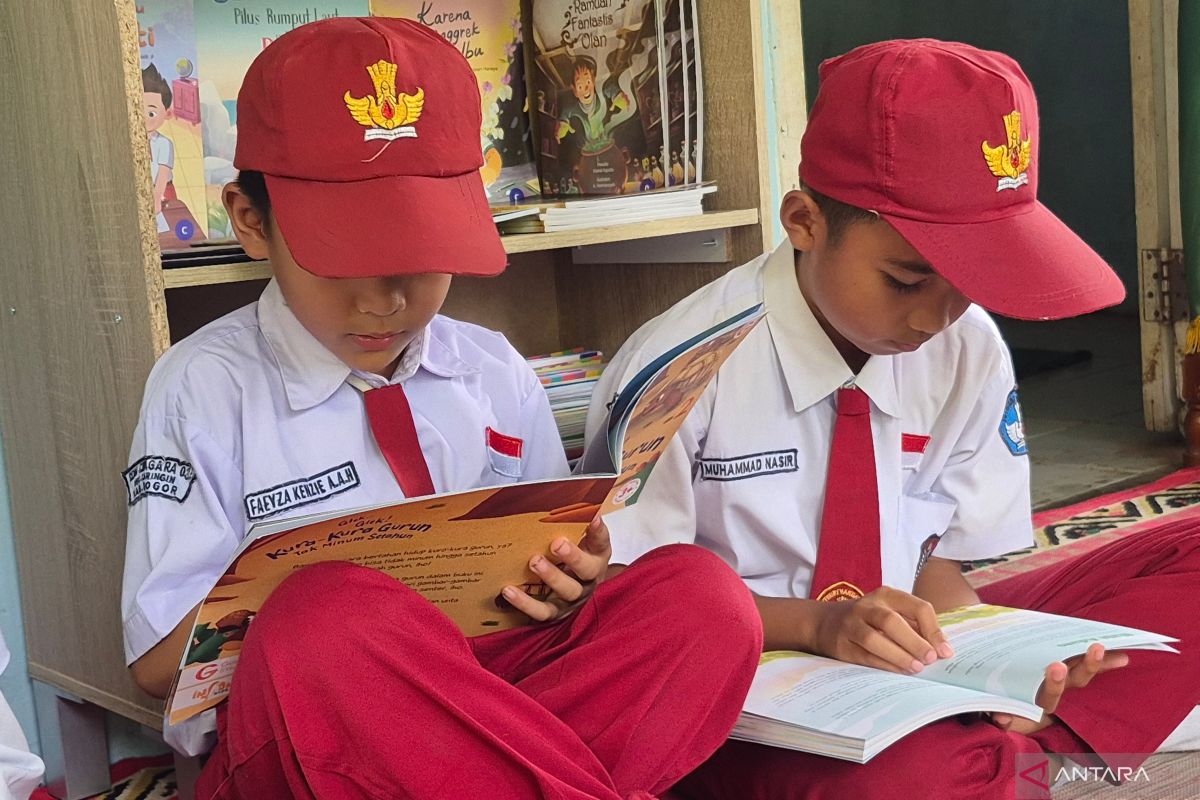
Among the crowd, eight-year-old Faeyza Kenzie flips through the pages of a picture book, her eyes sparkling. The tiny fingers of this second-grade primary school student trace the stiff, smooth cover, as if confirming the object in her lap is real.
Not far away, 11-year-old Muhammad Nasir, a Year 5 student at Cinagara 03 Primary School, leans in. Both are engrossed in the clear images of constellations and spacecraft printed on the new pages. When asked about their future dreams, they reply in unison, loudly: ‘We want to be astronauts.’
The dream of venturing into space sounds grand, yet the daily reality for Faeyza, Nasir, and their peers demands extraordinary resilience. Even accessing adequate primary education requires them to navigate challenging mountainous terrain—let alone imagining rocket technology.
Faeyza and Nasir represent a small part of the young generation growing up in Wangun Jaya and Mekar Jaya hamlets, which fall under Pasir Buncir Village’s administrative area. Around 350 households depend on this area for their livelihoods. Behind its picturesque scenery lies a unique challenge: providing accessible primary education for residents.
Despi Hermawati, a village cadre who regularly supports the children’s development in both hamlets, describes longstanding daily conditions. To reach the primary school near the main village road, children must walk approximately two kilometres. The path is not a smooth pavement but a narrow, steep, winding trail impassable to four-wheel vehicles.
These conditions will require even greater resilience as the children grow older. The nearest secondary school is up to twice as far, and daily commutes with limited mobility demand strong physical and mental endurance. Challenges multiply for those aiming for senior high school, located in another subdistrict with much longer travel distances.
These infrastructure limitations and distant education access points gradually influence social dynamics within the community. Physical exhaustion and transportation costs make it difficult for some parents to send their children to higher education levels.
According to Despi, the lack of accessible basic and secondary education triggers a chain of effects affecting literacy levels. The most apparent sociological challenge is the shifting perceptions among some community members regarding the future of local youth.