
New Book 'Bees and Trees' Highlights Symbiotic Link Between Honey Bees and Tropical Forests
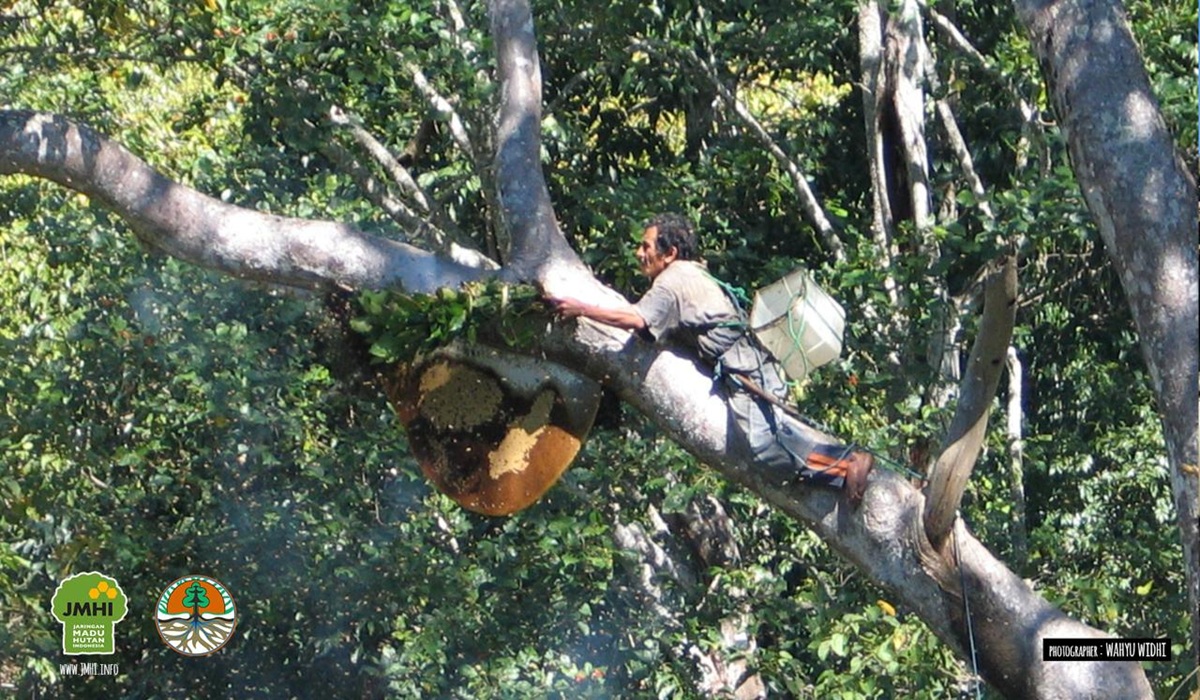
The 2026 World Environment Day served as the backdrop for the launch of a significant literary work on tropical forest ecosystems. The book, titled ‘Bees and Trees: Book One – Asian Giant Honey Bees, Flowers and Forest Peoples’, was officially introduced in Jakarta on Friday (5/6/2026). The launch was initiated by PARARA Environment Day in collaboration with NTFP-EP Asia and the Indonesian Forest Honey Network (JMHI). Focused on bees and trees, the book is not merely scientific documentation but a deep reflection on the future of forest honey farmers and ecosystem sustainability amidst the increasingly real threat of climate change. The book thoroughly explores the mutualistic symbiotic relationship between the Asian giant honey bee and nectar-producing trees. Trees provide nectar, pollen, and nesting sites, while bees act as natural pollinators ensuring forest regeneration continues. However, this harmony is on the brink. Sih Kahono, a researcher at the National Research and Innovation Agency (BRIN) Biological Research Centre, revealed that land conversion into monoculture plantations, such as oil palm, has drastically reduced the bees’ natural habitat. Moreover, weather anomalies caused by climate change disrupt plant flowering cycles, leading to the disruption of bee colony life cycles. ‘These bee colonies migrate based on the seasons. At some point they will return to their original forest. The problem is, what if when they return, the forest is gone or has turned into a settlement?’ Sih Kahono said at the launch. This crisis impacts not only nature but also human well-being. In Flores, volcanic eruptions have reportedly damaged bee forage trees, compounded by a decline in public purchasing power for forest honey products. This threatens the livelihoods of indigenous and local communities who depend on non-timber forest products (NTFPs). Responding to this, Junaidi Zain from the Sustainable Forest Cooperative stressed the importance of wise forest governance. He affirmed a commitment not to open plantation land in protected areas and to focus on utilising NTFPs such as honey, candlenut, cinnamon, and rattan. ‘The implementation of sustainable harvesting standards is crucial. By protecting honey trees and nectar-producing trees, we ensure honey production remains sustainable without damaging nature,’ Junaidi explained. A main attraction of the ‘Bees and Trees’ book is the involvement of the Indonesian Society of Botanical Artists (IDSBA). A total of 16 manual botanical illustrations are displayed to educate the public about the types of trees bees rely on for survival. Through an artistic approach, it is hoped that public and policymaker awareness will increase to protect bee habitats as part of the national food system. The book is expected to be a catalyst for consumers and businesses to support responsible honey harvesting practices, while also strengthening the protection of remaining Asian tropical rainforests.