
New B50 Biofuel Tested on Locomotives and Power Trains: Results Revealed
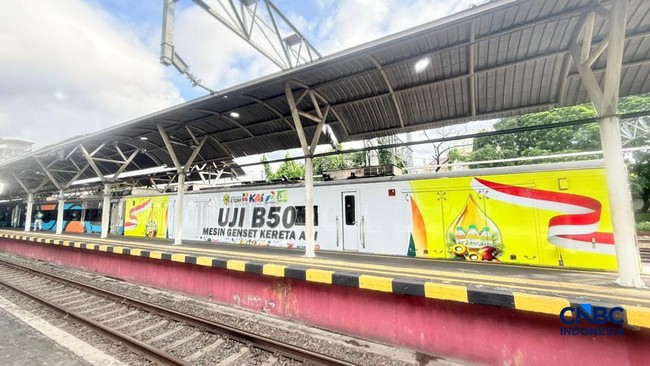
Jakarta, CNBC Indonesia – The government will mandate nationwide implementation of B50 biodiesel from 1 July 2026 as part of strengthening energy security and transitioning to more sustainable energy use. This policy is a strategic step to increase the use of bio-based energy across national transport sectors.
As a rail-based public transport operator, PT Kereta Api Indonesia (Persero) is reinforcing its readiness for B50 implementation through a series of technical tests on diesel-powered rail infrastructure. The measures aim to ensure travel safety, operational reliability, and service quality remain intact during the energy transition.
Anne Purba, KAI’s Vice President of Corporate Communication, stated that B50 implementation is a continuation of biodiesel usage previously applied in B35 and B40 phases within KAI’s operations.
“KAI supports the government’s move to enhance sustainable energy use. At every implementation stage, safety, vehicle reliability, and service quality remain top priorities,” Anne said on Sunday (31 May 2026).
In 2025, B40 biodiesel usage on long-distance train services produced total carbon emissions of 127,315,192 kg CO₂e, approximately 127,300 tonnes, from 47.4 million passengers. Between January and April 2026, KAI-operated long-distance and local train services served 19.2 million passengers with consistent use of biodiesel-based fuel across diesel-powered journeys.
Transport studies indicate rail modes have lower emissions than private vehicles. Average train emissions range from 15-40 grams CO₂ per passenger-kilometre, compared to private vehicles’ 120-250 grams CO₂ per passenger-kilometre.
This demonstrates that rail usage helps keep transport sector emissions in check amid rising public mobility.
To support B50 implementation, KAI collaborates with the Ministry of Energy and Mineral Resources and LEMIGAS through phased testing since mid-April 2026. The testing process includes fuel blending, vehicle condition checks, and operational trials across various fleets.
Locomotive tests at Sidotopo Depot focus on engine performance and fuel consumption during B50 use, monitoring combustion characteristics, engine stability, and operational efficiency for daily use.
Meanwhile, power car tests at Yogyakarta Depot centre on fuel consumption monitoring and periodic checks every 300 operating hours. Testing stages involve initial inspections, using B40 as a baseline, then B50 to assess vehicle responses under various operational conditions.
KAI is also preparing longer-term tests to ensure vehicle durability during intensive field operations. All test results are currently under evaluation and monitoring with government and technical teams.
“The accelerated implementation of B50 requires measured readiness to align with public transport safety and service standards. KAI continues to strengthen coordination and technical testing to ensure optimal and sustainable implementation,” Anne concluded.