
New Alliances Reshaping the Middle East Geopolitical Landscape
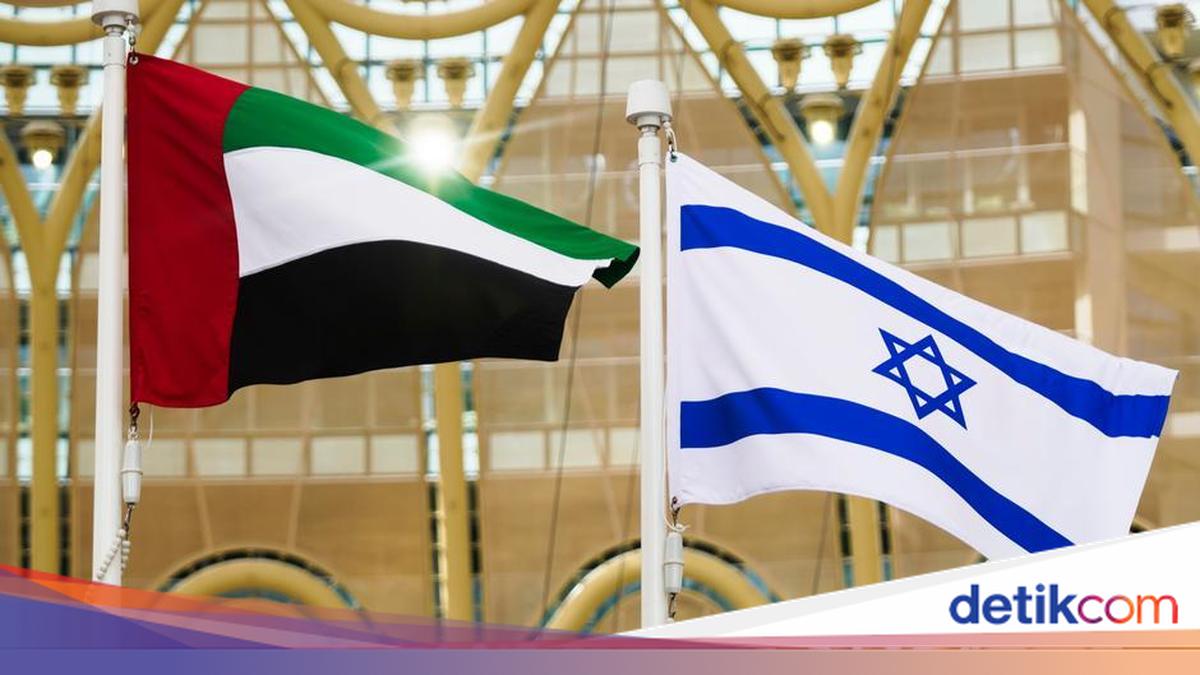
A new agreement is said to have been reached during a secret visit by Israeli Prime Minister Benjamin Netanyahu to the UAE, an event he announced on the evening of 13 May, despite the UAE government subsequently denying the visit took place. A day earlier, US Ambassador to Israel Mike Huckabee revealed in Tel Aviv that Israel had lent an air defence system to the UAE to assist in countering Iranian attacks.
The Middle East is entering a new era. This series of events—coupled with the UAE’s decision to exit OPEC in late April after 59 years of membership—has triggered waves of analysis regarding a major shift in the region. “The old order in the Gulf, which has endured for decades, is beginning to fade, and a new order is being formed,” wrote Cinzia Bianco, a visiting researcher at the European Council on Foreign Relations, in mid-May. Former South Korean Ambassador to Israel, Ma Young-sam, even described the situation as the birth of a “new Middle East order.”
Marcus Schneider of the Friedrich Ebert Foundation in Lebanon described the emergence of two main regional blocs. The first is a “hexagon” consisting of the UAE and Israel. The second is termed the “Sunni Diamond,” which includes Saudi Arabia, Pakistan, Myanmar, and Egypt. According to Schneider, both Israel and the UAE are pursuing “disruption” politics to reshape the Middle East and its surrounding regions. Netanyahu has repeatedly stated that Israel is “changing the face of the Middle East,” particularly following the joint Israeli-US strikes on Iran in early March.
The UAE is also said to share similar ambitions, with Abu Dhabi seeking to build a new geopolitical and geo-economic network centred on itself. However, the relationship is not purely ideological. “For the UAE, Israel offers resources, networks, defence capabilities, technology, and global influence,” Bianco noted.
Meanwhile, the “Sunni Diamond” group is taking a different approach. According to Schneider, Saudi Arabia is now prioritising stability to protect its economic targets. “Their approach is more transactional,” he told DW. “They have a shared interest in engaging with Iran because they are the most affected by conflict. At the same time, they also want to restrain the Israeli mindset that feels it can bomb anything, anywhere, at any time.”
Saudi concerns regarding Israel are reflected in an opinion piece by Prince Turki al-Faisal, former head of Saudi intelligence, in the Asharq Al-Awsat newspaper. The piece is viewed as representing the Riyadh government’s stance: “If Israel’s plan to trigger a war between us and Iran succeeds, the region will sink into destruction. Israel will succeed in imposing its will and becoming the sole dominant power in the region.”
Tensions between the UAE and Saudi Arabia, particularly regarding the Yemen conflict, were evident even before the outbreak of the Iran war. Kristian Coates Ulrichsen of the Baker Institute for Public Policy noted that these differences reflect diverging regional visions. “Saudi Arabia is no longer interested in military adventures, unlike Abu Dhabi, which is considered still comfortable taking risks and supporting non-state armed groups,” he told DW earlier this year.
While Gulf nations showed unity during the outbreak of the Iran war, divisions are resurfacing as one nation strengthens ties with Israel while another views Israel as a threat. “Saudi and the Emirates are moving in opposite directions,” said Schneider.
However, many analysts believe it is too simplistic to view this as merely “choosing sides.” They argue that Middle Eastern relations are far more fluid than during the Cold War era. “We live in an era described as ‘geopolitical promiscuity’,” said Schneider. “Alliances are no longer rigid.”
Ibrahim Ozturk, a professor of economic development at the University of Duisburg-Essen, assessed that Gulf nations are actually attempting to survive amidst extreme instability. “Rather than choosing sides, they are scrambling to find ways to survive in a highly volatile environment,” he said. Ozturk also expressed doubt regarding the long-term viability of both blocs. He noted that the Sunni coalition would be difficult to maintain due to differing political and economic structures, as well as varying dependencies on major powers like China and the United States.
The UAE-Israel alliance also faces weaknesses. Rachel Bronson of the Chicago Council on Global Affairs noted that both remain small states facing major powers such as Turkey, Pakistan, and Saudi Arabia. “The UAE does have sovereign wealth exceeding US$1 trillion. But wealth is not the same as strategic depth,” wrote Bronson.
Schneider even identified an internal contradiction within the UAE. Abu Dhabi, he suggests, wishes to act like Sparta—militaristic and aggressive—while Dubai seeks to be the “Switzerland of the Middle East,” a hub for regional stability, business, and finance. “The problem is, it is difficult to be both at the same time.”