
Never-Ending: The Irony Behind the Jokowi Diploma Case
There is an irony difficult to explain to the layperson in the case of Joko Widodo’s alleged fake diploma. Initially, the question was very simple. As simple as a student asking their teacher, ‘Is this diploma genuine?’ For years, the public debated the same object: a sheet of paper reportedly used by Jokowi when registering as Mayor of Solo, Governor of DKI Jakarta, and finally President of the Republic of Indonesia. But the longer this matter runs, the further it drifts from the original question: is the diploma genuine?
Roy Suryo and Tifauzia Tyassuma were arrested not because they were accused of forging Jokowi’s diploma. Nor were they arrested because they were proven to possess the genuine diploma. Both were charged with several articles in the Electronic Information and Transactions Law (UU ITE) and the Criminal Code (KUHP) relating to alleged electronic data manipulation, defamation, slander, and the dissemination of electronic information deemed unlawful. This is where the layperson begins to frown. Was it not the diploma that was debated all this time? Why has the case instead become about electronic data, slander, and defamation? Was the issue not a physical document? Why is the discussion now about digital files, social media uploads, and electronic information? These questions may sound simple. But it is precisely this simplicity that ensures the polemic never truly ends.
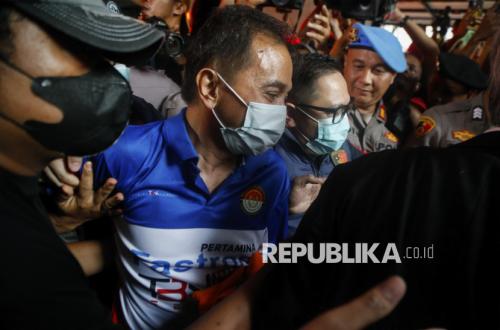
On that Friday morning, Tifa was supposed to undergo one of the most important days of her academic life. She had spent the night preparing dissertation documents for her doctoral examination at the Faculty of Medicine, University of Indonesia. She had dressed in her apartment room and was ready to leave for campus. But the first to arrive were not the examiners, but investigators. At 7:47 AM Western Indonesian Time, officers knocked on her apartment door and took her to undergo legal proceedings. Almost simultaneously, Roy Suryo was also picked up from his home. This event triggered a strong reaction from Din Syamsuddin. ‘Allahu Akbar,’ wrote the former General Chairman of Muhammadiyah in his statement, while expressing his willingness to act as a guarantor so that Roy and Tifa would not be detained. Many read the sentence as an expression of anger. I read it as an expression of unease. Because what Din questioned was not merely the arrest of Roy and Tifa. He questioned the logic of the case resolution.
Din’s logic is simple. If someone questions the authenticity of a diploma, then what should be confirmed first is the authenticity of that diploma. Afterwards, if the accusation is proven false, the accusers can be held legally accountable. But what is now visible to part of the community is the opposite. Those who questioned are processed first, while the debate about the object in question feels as though it never reaches a finish line accepted by all parties.
The Roy-Tifa case itself originated from a report filed by Jokowi with the Metro Jaya Regional Police in 2025. From that moment, a series of investigations, witness examinations, case reviews, suspect determinations, and file transfers to the prosecutor’s office ensued. It should be noted that the case ensnaring Roy Suryo and Tifauzia does not only relate to alleged electronic data manipulation. Both are also charged with layered articles covering alleged defamation, slander, dissemination of electronic information deemed to incite hatred or hostility, and alleged manipulation of electronic documents. In other words, this case has developed far beyond the initial debate about a diploma’s authenticity. It has transformed into a dispute over how that information was produced, disseminated, interpreted, and accounted for in the public sphere.
On one hand, the state views this case as an alleged violation of a person’s reputation and the integrity of electronic information. On the other hand, Roy and Tifa see themselves as parties questioning the authenticity of a document they believe has public consequences. From this, two parallel narratives are born that never truly meet. The case initially resembled people debating the contents of a letter. But along the way, the debate shifted to who photocopied the letter, who uploaded it to the internet, who made notes in the margins, and who distributed it to others. Consequently, the letter’s content, which was the original source of the dispute, slowly moved to the background, while the debate about the letter’s circulation took centre stage.
The police certainly have legal arguments regarding the arrests. According to Police Senior Commissioner Iman Imanuddin, the apprehension of Roy and Tifa was carried out in the context of Phase II after the case file was declared complete (P21). Investigators had to ensure the presence of the suspects and evidence during the transfer process to the DKI Jakarta High Prosecutor’s Office. In terms of procedural law, this reason is valid and understandable. But this polemic does not live solely in the legal realm. It lives in the realm of perception. And public perception often operates with a logic different from legal logic. The public sees something else. They see that for years, the debate was about the diploma’s authenticity. Jokowi says the diploma is genuine. He even handed it over to investigators for examination. Police stated they had conducted various tests, from paper and ink to other forensic aspects. Yet, in the view of some members of the public, the various legal processes and court proceedings held in different cities never truly presented the diploma as the centre of an open and convincing argumentative battle. What emerged instead were procedural lawsuits, authority disputes, questions of legal standing, and criminal cases expanding into the realms of slander, defamation, and electronic data.