
Netherlands Relinquishes This Treasure to Return to Indonesia, Says Culture Minister Fadli Zon
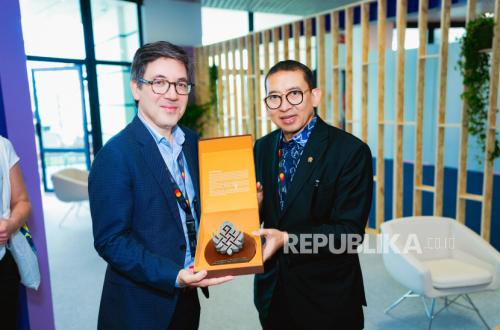
Culture Minister Fadli Zon has stressed that museums should not merely be repositories of historical artefacts but must be able to deliver tangible benefits to society, both culturally and economically. He said this during the International Museum Day 2026 commemoration at the National Museum of Indonesia on Monday, 18 May. He also highlighted Indonesia’s success in repatriating thousands of historical collections from the Netherlands in 2025. According to Fadli, museums play a strategic role as centres of knowledge, reinforce national identity, and underpin the cultural economy. ‘Museums must be places where cultural capital is developed into public value and economic value in a sustainable manner,’ Fadli said. He warned that without living knowledge institutions, products and the cultural industry would lose their historical roots and become shallow. Fadli also referenced the International Museum Day 2026 theme, Museums Uniting a Divided World. He said the theme is highly relevant for Indonesia and the current global situation. ‘Museums are public spaces that can rebuild trust and strengthen social cohesion in a world that is increasingly fragmented,’ he added. In his cultural address, Fadli outlined four main foundations of Indonesia’s museology policy: museums as shapers of national identity, spaces of citizenship to strengthen social cohesion, means of restoring cultural sovereignty, and upstream infrastructure for the cultural economy. One notable achievement highlighted was the government’s success in repatriating 28,131 fossils and records belonging to the Dutch palaeoanthropologist Eugène Dubois back from the Netherlands in 2025. The collection includes early Homo erectus fossil finds now displayed in the Early History exhibition at the National Museum of Indonesia. ‘When this important heritage returns home, the museum’s task is to revive its meaning and return it to its cultural roots through research, conservation, and public interpretation,’ said Fadli.