
Netanyahu’s Rule Could End as Gadi Eisenkot Is Named to Form Israel’s Next Government
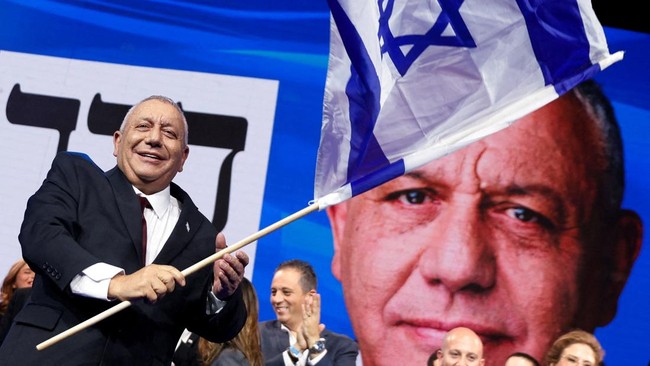
Israeli President Isaac Herzog has appointed former Israeli military chief Gadi Eisenkot to form a new government, opening the possibility of an end to Benjamin Netanyahu’s long tenure as prime minister.
Al Jazeera reported on Sunday (8 November 2026) that Herzog informed Eisenkot of his decision on Saturday evening (7 November). The formal mandate is due to be presented on Sunday.
The decision followed consultations with political parties after Israel’s 27 October 2026 general election failed to produce a clear winner with a parliamentary majority.
Sixty-seven members of the Knesset, including representatives of parties led by Arab citizens, recommended Eisenkot to form a new government. Netanyahu received the backing of just 46 lawmakers.
Eisenkot, leader of the Yashar Party, has 28 days to form a coalition, with a possible 14-day extension. To secure a majority, he needs the support of at least 61 of the Knesset’s 120 members.
In last month’s election, the four-party alliance led by Eisenkot won 48 seats. Netanyahu’s right-wing bloc and religious parties secured 53.
Parties led by Arab citizens of Israel won a record 19 seats. Although they recommended Eisenkot, he has previously rejected the possibility of forming a government with them. If they joined forces, however, the coalition would command 67 seats.
Another option for Eisenkot is to enlist two ultra-Orthodox Jewish parties, United Torah Judaism and Shas. Their support would give him exactly 61 seats. He could also form a minority government with fewer than 61 seats, provided he wins a confidence vote in parliament.
Al Jazeera journalist Nour Odeh, reporting from Ramallah in the Israeli-occupied West Bank, said Herzog’s decision to appoint Eisenkot had been expected because he received the most recommendations. Eisenkot’s main challenge, she said, begins now: forming a government that can win parliament’s confidence without compromising too many campaign promises.
The new government would also have to withstand opposition from the right-wing bloc led by Netanyahu.
Arab parties united in seeking Netanyahu’s departure
Arab parties’ support for Eisenkot reflects their desire to end Netanyahu’s government. Ahmad Tibi, a senior member of the Joint List, a coalition of Arab parties holding 11 parliamentary seats, said Herzog’s decision was as expected.
“We were concerned that the president would move towards a national unity government,” Tibi told Al Jazeera, referring to the possibility of a power-sharing deal between Eisenkot and Netanyahu.
Tibi predicted that Eisenkot would form a minority government with external support from Arab parties. Although this would not be their ideal option, he said their priority was to end Netanyahu’s government alongside the two right-wing figures Itamar Ben-Gvir and Bezalel Smotrich.
Hours before Herzog announced his decision, Netanyahu warned that an opposition government reliant on Arab parties’ support could lead Israel to ruin.
“Such a government, dependent on Islamist groups, will destroy the State of Israel from within, as has happened in European countries, and even much worse,” Netanyahu said in a pre-recorded video address.
Tibi strongly condemned the remarks, accusing Netanyahu of portraying Arab parties as supporters of terrorism. Tibi responded by accusing Netanyahu of being a leading supporter of terrorism, particularly violence by Jewish extremists in the West Bank and Palestinian territories.
Eisenkot is no newcomer to Israeli government. He served as chief of the Israeli military from 2015 to 2019.
He was also an observer in Netanyahu’s war cabinet during the first eight months of Israel’s war in the Gaza Strip, which began in October 2023. Although the two men once served in the same cabinet, they are now political rivals competing for control of the Israeli government.
Eisenkot’s appointment does not automatically end Netanyahu’s term. If Eisenkot fails to form a government within the allotted time, Herzog can give the mandate to another candidate.
If that candidate also fails, a majority of lawmakers can propose a third candidate, who would receive a final 14 days. If all attempts prove unsuccessful, Israel will have to hold another general election within 90 days.
In that event, Netanyahu would remain prime minister in a caretaker capacity until a new government is formed. Odeh said that although Eisenkot has rejected a formal coalition with Arab parties, both sides share the political goal of ending Netanyahu’s government.
Source: jawawa.id (https://jawawa.id/newsitem/netanyahus-rule-could-end-as-gadi-eisenkot-is-named-to-form-israels-next-government-1794106233)
Originally published by CNBC Indonesia (https://www.cnbcindonesia.com/news/20261108080543-4-783257/netanyahu-tamat-orang-ini-jadi-perdana-menteri-baru-israel), translated from Indonesian