
Netanyahu’s Coalition Trails in Polls as US Shifts Its Support
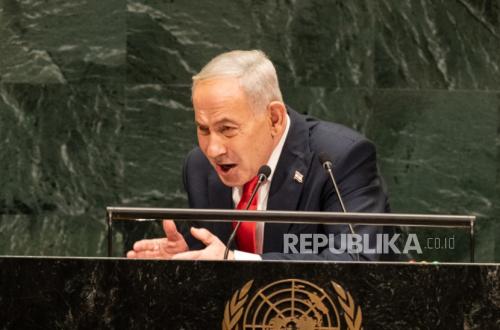
TEL AVIV — US Ambassador to Israel Mike Huckabee held a private meeting with Israeli opposition leader Gadi Eisenkot ahead of the parliamentary election on 27 October. The meeting took place as opinion polls showed support for the opposition bloc exceeding that for Prime Minister Benjamin Netanyahu’s coalition.
Israel’s public broadcaster reported that Huckabee and Eisenkot met in recent days. They discussed several security issues, including tensions in the Israeli-occupied West Bank, violence by illegal Jewish settlers against Palestinians, and the situation in the Gaza Strip.
The report did not disclose the meeting’s location or exact date. Neither Huckabee nor Eisenkot’s office announced it publicly. Eisenkot’s Yashar party declined to comment, according to a report cited by Palestine Chronicle on Thursday (15 October 2026).
The meeting has attracted attention because it took place less than two weeks before the Knesset election. At the same time, a separate meeting between Huckabee and Netanyahu was reportedly cancelled at the last minute.
A source familiar with the matter said Netanyahu was the one who cancelled the meeting. No reason was given, and no replacement date has been set.
There is no indication that the cancellation was directly related to Huckabee’s meeting with Eisenkot. Nevertheless, the sequence of events has prompted scrutiny of Washington’s position ahead of a pivotal political contest that will shape the future of Israel’s government.
A poll released by Israel’s Channel 12 on Monday found that the opposition bloc could win 67 seats in the 120-member Knesset, while Netanyahu’s governing coalition was projected to secure 49.
A political bloc needs at least 61 seats to form a government.
The poll also projected that Eisenkot’s Yashar party would win 23 seats, ahead of Netanyahu’s Likud, on 20.
Asked who would make a more suitable prime minister, 45 per cent of respondents chose Eisenkot, compared with 35 per cent who chose Netanyahu.
The results highlight the political challenge facing Netanyahu ahead of the election. He has led Israel’s government since December 2022, at the head of a coalition often described as one of the most right-wing in the country’s history.
As well as facing electoral competition, Netanyahu is standing trial in several corruption cases, including allegations of bribery, fraud and breach of trust.
Internationally, the International Criminal Court (ICC) issued an arrest warrant for Netanyahu in November 2024 over alleged war crimes and crimes against humanity in connection with the genocide in Gaza.
Israeli attacks on the Gaza Strip have killed more than 74,000 Palestinians since October 2023.
For years, Netanyahu has emphasised his relationship with US President Donald Trump, who has repeatedly praised the Israeli leader.
However, at the time of publication, Trump had not publicly endorsed either Netanyahu or Eisenkot in the coming election.
Huckabee’s meeting with Eisenkot has therefore drawn particular interest because he is the diplomat representing the Trump administration in Israel. The meeting, however, does not in itself prove that Washington’s policy has changed or that US political support has shifted.
The United States has traditionally avoided overt involvement in other countries’ domestic politics. Trump, however, is known to be more willing to express his political preferences in foreign elections.
Huckabee is himself known as a strong supporter of Israel. His discussion of security issues with Eisenkot, including the West Bank and Gaza, does not automatically mean that the two share the same views on all Israeli policies towards Palestinians.
The contest between Netanyahu and the opposition also raises questions about its potential consequences for Palestinians.
An Al Jazeera analysis published on 12 October argued that an opposition victory would not necessarily bring a fundamental change in Israeli policy in Gaza and the West Bank.
The anti-Netanyahu coalition comprises political groups from varied backgrounds. They may unite to remove Netanyahu, but that does not mean they agree on major concessions to Palestinians, including a complete withdrawal of Israeli forces from Gaza.
Some analysts say the differences between Netanyahu’s camp and much of the opposition concern leadership and the way government is run more than any fundamental shift in policies on occupation and settlements.
The outcome of Israel’s election will therefore determine not only who occupies the prime minister’s office, but also how far domestic political change can influence Israeli policy towards Palestinians.