
Netanyahu Under Pressure as Shin Bet Investigates Alleged Foreign Funding in Israeli Election
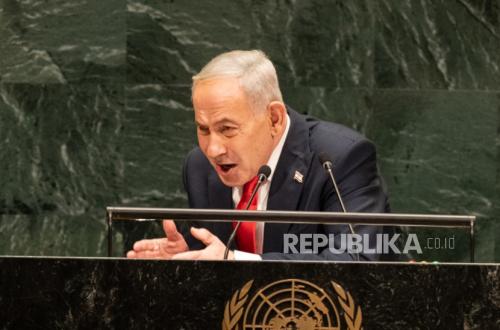
JERUSALEM — Israel’s domestic security agency, Shin Bet, is investigating alleged foreign funding intended to influence the parliamentary election held on Tuesday, 27 October 2026. The investigation has fuelled political tensions, with Prime Minister Benjamin Netanyahu and the Likud party alleging electoral fraud as vote counts showed his governing coalition losing its majority in the Knesset.
The controversy intensified after Israeli media linked the alleged funding to Qatar and Turkey. Shin Bet has not announced evidence confirming either country’s involvement, while Qatar has formally denied that its government funded political activity to influence the Israeli election.
As the investigation continues, Netanyahu faces a serious challenge to retaining power. The full results announced by Israel’s Central Elections Committee on Friday, 30 October 2026, gave Netanyahu’s bloc 53 seats, the main opposition grouping 48, and two Arab parties 19 of the parliament’s 120 seats.
Neither of the two main blocs secured the 61 seats required to form a majority government. This makes support from Arab parties a potentially important factor in the political negotiations that will determine Israel’s next government.
According to reports by Reuters, the Associated Press and The Times of Israel on 29–30 October 2026, the dispute over alleged foreign interference has unfolded alongside Likud’s claim that the election was stolen. However, Israeli police and election officials said they had found no basis for allegations of systematic fraud.
The Shin Bet investigation and the election results are now two significant developments in Israel’s political crisis. Although they are unfolding at the same time, the alleged foreign funding has not been shown to have affected the election result or determined who is entitled to form a government.
Judge Sohlberg’s letter prompts investigation
The investigation attracted public attention after the head of Israel’s Central Elections Committee, Supreme Court Justice Noam Sohlberg, asked Shin Bet Director David Zini to examine alleged foreign influence in the election.
Sohlberg’s letter was dated Wednesday, 28 October 2026, and drew widespread attention after its contents emerged on Thursday, 29 October. In it, Sohlberg cited serious information about an alleged attempt to influence the election through funding from foreign entities acting against Israel’s interests.
However, Sohlberg said he could not establish whether the allegations were true. He asked Shin Bet to use its powers to seek evidence that could either substantiate or refute the information he had received.
Sohlberg also requested that any available findings be submitted within a week. The request was linked to the timetable for handling election appeals and certifying the results, which the election authorities must complete.
The Times of Israel reported that the letter named no particular country, funding recipient or political party allegedly involved. Accordingly, references to Qatar and Turkey in subsequent reporting were information published by media outlets citing their sources, rather than an official conclusion in Sohlberg’s letter.
Shin Bet later said the investigation was based on intelligence gathered by the agency itself. It stressed that the inquiry had not been initiated in response to a report or pressure from any political party contesting the election.
Shin Bet had information about possible foreign influence before polling day. However, the precise date on which the investigation began and the full timeline for sharing information with the election authorities have not been made public.
Shin Bet also confirmed that Zini had briefed Netanyahu, Yashar party leader Gadi Eisenkot and opposition leader Yair Lapid directly on the main allegations under examination. The meeting took place with Sohlberg’s approval and at his request.
The Israeli security agency said the investigation was ongoing and limited in scope to specific alleged offences. It also warned that statements about the content or nature of the allegations should not be treated as representing the agency’s official conclusions.
Qatar and Turkey named, but no evidence made public
The alleged foreign funding became more controversial after several Israeli media outlets reported a possible flow of money to organisations working to increase voter participation among Arab citizens. Channel 12 and other Hebrew-language media linked the information to Qatar, while other reports also raised the possibility of Turkish involvement.
The Jerusalem Post reported on Thursday, 29 October 2026, that Shin Bet’s investigation concerned the alleged use of foreign funds to influence political activity in Arab communities. The report did not say that Qatar or Turkey had been proven to have committed a crime.
The distinction between voter mobilisation and a breach of the law is important in this case. Encouraging people to exercise their right to vote is not, in itself, an offence; bribery or funding that violates legal requirements would need to be established separately.
As of Friday, 30 October 2026, Shin Bet had announced no findings confirming the identity of any funder, the amount transferred, the route taken by the money or any connection to a particular party’s vote tally. The security agency’s official statements have also not identified Qatar or Turkey as responsible parties.
The Qatari government firmly rejected the allegations against it. On Thursday, 29 October 2026, Qatar’s Foreign Ministry spokesman, Majed al-Ansari, said Doha was not involved in Israel’s election and had not funded activities intended to influence its outcome.
Al-Ansari said some Israeli politicians and media figures close to them had waged a disinformation campaign. He said Qatar was once again being made a target in Israel’s domestic political contest, which should be resolved by the country’s own politicians.
He also mocked allegations that have repeatedly linked Qatar to various Israeli political groups. If all those accusations were believed, al-Ansari said, Qatar would appear to control the entire spectrum of Israeli politics.
Al-Ansari said his country would not accept being made a scapegoat for the political failures of others. Doha also said it would continue its diplomatic work, conflict mediation and humanitarian aid, including its support for the Palestinian people.
The dispute has a diplomatic dimension because Qatar has long played an important role in negotiations related to the Israeli-Palestinian conflict. However, Doha’s diplomatic role is not evidence that it was involved in Israel’s election.
Source: jawawa.id (https://jawawa.id/newsitem/netanyahu-under-pressure-as-shin-bet-investigates-alleged-foreign-funding-in-israeli-election-1793350370)
Originally published by Republika (https://news.republika.co.id/berita/tnponn451/netanyahu-terpojok-shin-bet-selidiki-dugaan-dana-asing-di-pemilu-israel), translated from Indonesian