
Netanyahu Open to Coalition Talks but Insists on Remaining Israel’s Prime Minister
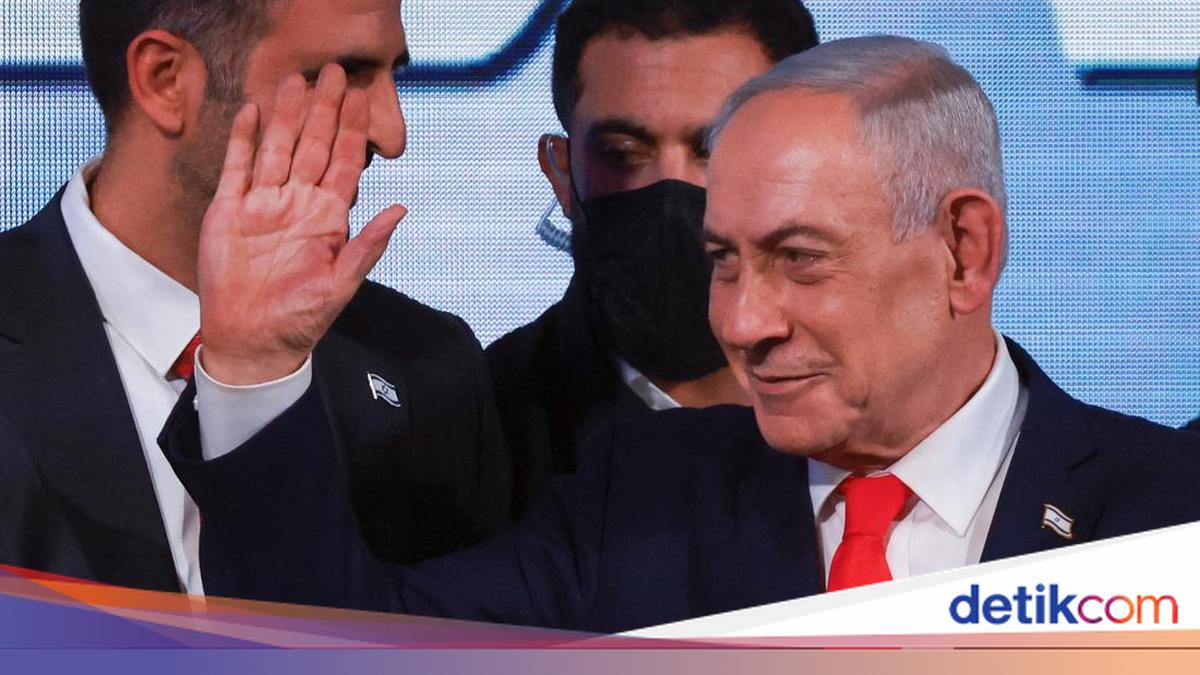
Israeli Prime Minister Benjamin Netanyahu said he was open to talks on forming a broad government after the 27 October election failed to produce a parliamentary majority. However, he insisted that he should remain Israel’s prime minister.
Official election results showed that Netanyahu’s Likud party came first, winning 27 seats in the Knesset. The Yashar party, led by former Israeli military chief Gadi Eisenkot, who heads the opposition camp, came second with 21 seats.
Based on Israel’s main political blocs, Netanyahu’s coalition secured 53 of the 120 seats contested, while the opposition coalition won 48.
Neither side is close to the 61-seat threshold needed for a parliamentary majority and to form a new government. Coalition negotiations will therefore be central to forming Israel’s next government, but are expected to be difficult and protracted.
Netanyahu said, according to Anadolu Agency on Tuesday (3 November 2026), that Likud “wants to form a broad government with our partners and anyone willing to do so who does not support terrorism”.
“I am open to holding a dialogue on this matter,” Netanyahu said in a statement on social media platform X.
He went on to say that “the Israeli public does not want a government dependent on Ra’am and the Joint List”, referring to the two Arab Israeli parties that won seats in the Knesset. Together, the parties secured 19 seats.
Netanyahu described the two Arab parties as a threat to Israel.
“From day one, we have extended our hand to form a broad national government,” the Israeli prime minister said.
Netanyahu added that he had a mandate to remain prime minister following last week’s legislative election.
“A clear majority of the Jewish public chose Likud as the largest party and chose me, as prime minister, to lead the next government,” he said.
Opposition recommends Gadi Eisenkot for prime minister
In recent days, Israel’s opposition has been lobbying intensively to build a strong coalition capable of forming a government. The opposition camp is also known as the anti-Netanyahu bloc.
At least three opposition parties — Together, led by former prime minister Naftali Bennett; the Democrats, led by Yair Golan; and Yisrael Beiteinu, led by former defence minister Avigdor Lieberman — have decided to recommend to Israeli President Isaac Herzog that he task Eisenkot with forming a government.
The two Arab Israeli parties in the Knesset are also expected to recommend Eisenkot, potentially bringing his backing to 67 seats — above the 61-seat threshold for a parliamentary majority.
Herzog is scheduled to hold consultations over two days, beginning on Wednesday (4 November), with representatives of parties that won seats in the Knesset. He will then ask a member of parliament to accept the mandate to form the next government.
Herzog is not required to choose the leader of the largest party in parliament. Instead, he can give the mandate to a member of parliament considered capable of forming a government that can win the Knesset’s confidence.
The member of parliament appointed by Herzog will have 28 days to form a government, with a possible extension of up to 14 days.
However, recommendations to Herzog do not guarantee that a governing coalition will be formed. Lieberman is known to strongly oppose joining a government that includes Arab Israeli parties.
Source: jawawa.id (https://jawawa.id/newsitem/netanyahu-open-to-coalition-talks-but-insists-on-remaining-israels-prime-minister-1793703361)
Originally published by detikcom (https://news.detik.com/internasional/d-8736713/netanyahu-terbuka-untuk-koalisi-tapi-ngotot-harus-jadi-pm-israel), translated from Indonesian