
Netanyahu on Edge: Not Just Iran, a New Giant Emerges Ready to Encircle Israel?
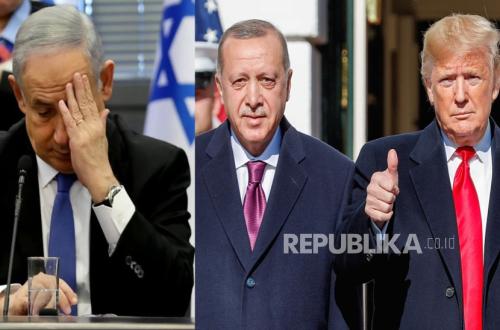
The power map in the Middle East is shifting once again. Amid ongoing conflicts and escalating tensions, discussions are emerging about the formation of a new axis dubbed the “Sunni Axis”, involving countries such as Saudi Arabia, Turkey, Egypt, and Pakistan. This discourse is not mere speculation but a reflection of the changing strategic dynamics in the region.
On the other hand, Benjamin Netanyahu views these developments with high vigilance. For a long time, Israel’s primary focus has been countering the influence of Iran, which leads what is often called the “Shia Axis”.
However, concerns now appear to be broadening. Not only Iran is seen as a challenge, but also the potential consolidation of power among Sunni countries that have previously tended to act independently.
In this context, Israel is making efforts to build a broader network of alliances, involving countries outside the Middle East such as India, Greece, and Cyprus, as well as several partners in the Arab and African regions (UAE, Somaliland, and Uganda). Often referred to as the Six-Nation Alliance. The objective is clear: to create a new balance that can offset the potential developing regional blocs.
However, what is more intriguing is the shift in direction within the Arab world itself. In recent years, Saudi Arabia’s foreign policy has shown increasing flexibility.
Tensions with the United Arab Emirates, particularly in the context of the Yemen conflict and competition for influence in the Red Sea region and the Horn of Africa, have become one factor pushing Riyadh to reassess its old strategies.
If previously Saudi Arabia’s approach tended to be confrontational towards certain groups or actors such as the Muslim Brotherhood in Egypt, Syria, Sudan, and Yemen, now there is a tendency to rebuild communication and even reconcile with parties that were once considered adversaries.
This step is not without reason. In an increasingly complex geopolitical landscape, safeguarding national interests often requires flexibility, even if it means significantly altering long-held positions.
In the same dynamics, Turkey emerges as a key player. Under the leadership of Recep Tayyip Erdoğan, Ankara is increasingly active in expanding its influence, both diplomatically and economically.
Some circles in Israel are even beginning to view Turkey as a new strategic challenge, not only because of its position in the region but also due to its potential to build closer cooperation with other countries, including Pakistan, which has significant military capabilities.