
Netanyahu Loses Majority as Israeli Government Formation Stalls
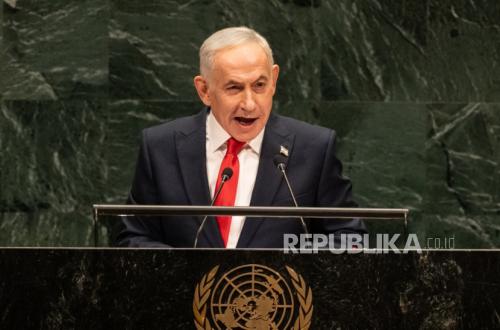
TEL AVIV – Israeli Prime Minister Benjamin Netanyahu has lost his parliamentary coalition majority following the legislative election held on 27 October 2026. However, opposition parties have also failed to win enough seats to form a new government.
The result leaves Israel facing a political impasse. No bloc has secured the 61 seats needed for a majority in the 120-seat parliament, the Knesset.
According to Al Jazeera, on Sunday (1 November 2026), parties backing Netanyahu won 53 seats. His Likud party took 27, followed by United Torah Judaism and Otzma Yehudit with seven each. Shas and Religious Zionism each won six seats.
Jewish parties opposed to Netanyahu secured 48 seats. The bloc comprises Yashar with 21 seats, B’Yachad with 12, The Democrats with eight and Yisrael Beytenu with seven. Arab-led parties won a total of 19 seats: the Joint List took 11 and Ra’am won eight.
The result means that forming a new government will depend on negotiations between parties. Options under consideration include a national unity government or a minority government reliant on support from parties outside the coalition.
Israeli President Isaac Herzog is due to receive the official election results by 4 November at the latest. The newly elected Knesset members will then be sworn in on 10 November. Herzog must appoint a member of parliament to form a government by 11 November. The designated candidate will have 28 days to assemble a coalition, with a possible 14-day extension.
Herzog has not yet announced who will receive the first mandate. The two names considered most likely are Netanyahu and former Israeli military chief Gadi Eisenkot, who leads the Yashar party.
Eisenkot is seen as having a chance because some Arab-led parties are reportedly considering backing him in order to end Netanyahu’s government. However, such cooperation faces obstacles: Eisenkot and several opposition leaders have previously rejected forming a coalition with Arab-led parties.
Former Israeli prime minister Ehud Barak said the opposition could change its position. He argued that Netanyahu would probably also seek support from those parties if he faced a similar situation.
Ra’am leader Mansour Abbas has also signalled that he is willing to work with the opposition. Meanwhile, Yousef Jabareen of the Joint List said his party was prepared to support a government from outside, including by helping it pass a confidence motion in the Knesset.
If the first candidate fails to form a government within 42 days, Herzog can give another member of parliament the opportunity to try, with 28 days to do so. If that attempt also fails, a majority of Knesset members can nominate a third candidate, who will have 14 days.
If all these efforts fail, the Knesset can be dissolved and Israel will have to hold another election. The next vote must be scheduled within 90 days.
Amid the uncertainty, Netanyahu remains caretaker prime minister until a new government is formed. He could therefore continue to lead Israel for several months, even if he does not become part of the next governing coalition.
Source: jawawa.id (https://jawawa.id/newsitem/netanyahu-loses-majority-as-israeli-government-formation-stalls-1793767928)
Originally published by Republika (https://news.republika.co.id/berita/tnym1d483/netanyahu-kehilangan-mayoritas-pembentukan-pemerintahan-israel-buntu), translated from Indonesian