
Netanyahu Discusses Iran Ceasefire, Warns of 'Major Attack'
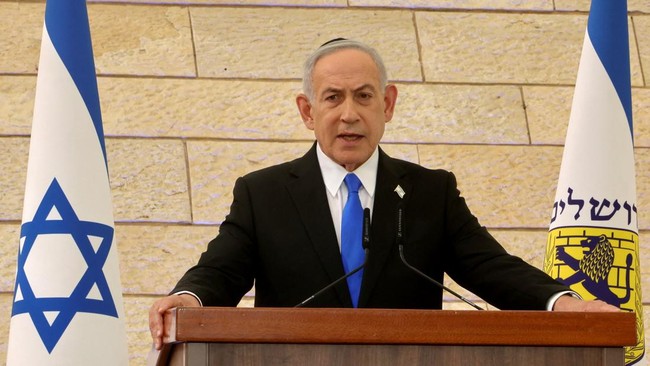
Israeli Prime Minister Benjamin Netanyahu issued a severe threat to Iran on Monday, (09/0/2026), following his declaration that Israel would exercise restraint and cease attacks on Tehran. Citing TIME magazine, Netanyahu urged Iran to reconsider any further strikes on Israeli territory, warning that Israel has prepared a massive offensive to neutralise the Persian nation if provoked.
“If Iran makes the mistake of continuing its attacks against us, we will respond with overwhelming force,” Netanyahu stated emphatically during his speech. He also emphasised Israel’s right to self-defence in the ongoing conflict.
These statements follow signals from the Islamic Revolutionary Guard Corps (IRGC) regarding a cessation of hostilities, as reported by the semi-official Fars news agency, which noted that the IRGC had halted fire towards Israel. Both parties had previously moved towards a retreat following public demands from US President Donald Trump for an immediate end to the exchange of fire. This recent flare-up marks the most significant combat between Israel and Iran since the ceasefire implemented last April.
“Final negotiations regarding ‘peace’ are ongoing, subject to the ignorance or folly that obstructs it,” Netanyahu remarked.
Global leaders have united in condemning the new hostilities in the Middle East, urging both sides to exercise maximum restraint and return to the negotiating table. Iranian state media reported that Iran launched a new wave of missiles towards Israel on Monday morning. This follows Israeli strikes on Iranian cities, with explosions heard in Tehran, Tabriz, and Isfahan. Israel also targeted an Iranian petrochemical plant in Bandar-e Mahshahr after intercepting a wave of ballistic missiles on Sunday night.
Iran claims these missile launches served as a stern warning for Israel to cease its attacks on Lebanon, which have continued despite last week’s ceasefire announcement. Israel’s decision to retaliate against Iran appears to contradict the advice of Donald Trump, who reportedly urged Netanyahu to exercise restraint in hopes of reaching a deal between the United States and Iran.
The conflict expanded briefly before receding. The Iran-backed Houthi rebels claimed responsibility for missiles fired at Israel from Yemen, though all were successfully intercepted. The Houthi group has previously declared a total ban on Israeli maritime navigation in the Red Sea, targeting commercial vessels throughout 2023 and 2024 as retaliation for Israeli bombings in Gaza. A resurgence of such attacks threatens to severely disrupt global shipping and could exacerbate surges in energy and commodity prices due to the war.
While the US and Iran have engaged in low-level hostilities since the ceasefire, both parties remain involved in negotiations aimed at ending the war and reaching a consensus on Iran’s nuclear programme. Israel’s recent strikes on Iran pose a significant test for Trump, who has spent weeks attempting to reduce US involvement in the conflict.
In an interview with the Financial Times on Sunday, following the Iranian missile launch, Trump stated, “Israel will have no choice but to accept any deal negotiated by the US with Iran.”
Netanyahu’s actions are seen by some experts as testing Trump’s position. Concerns persist regarding the sustainability of any potential agreement, especially given Israel’s firm stance that Iran must not possess nuclear weapons, while Iran maintains its programme is purely for civilian use. Experts noted that Israel has historically launched strikes when dissatisfied with US-Iran negotiations, such as in June, which led to US involvement in bombing Iranian nuclear facilities before the Trump-led ceasefire. Previous US and Israeli strikes in late February also disrupted ongoing nuclear talks, with US Secretary of State Marco Rubio previously suggesting Israel might have pushed the US into war with Iran, though both Rubio and Trump later dismissed such claims.