
Netanyahu Becomes a Burden, Trump Reels from Attacks on All Sides
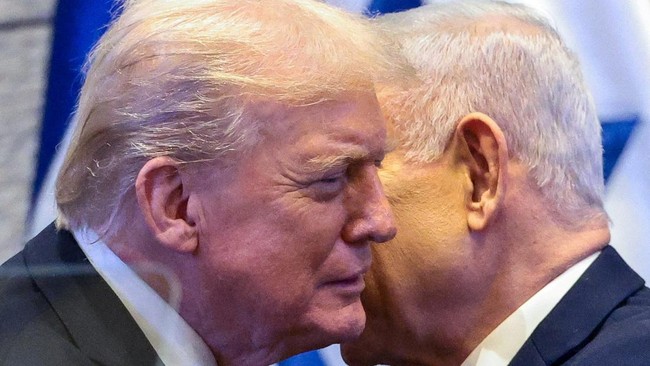
Israeli Prime Minister Benjamin Netanyahu’s rejection of a 15-point peace plan pushed by US President Donald Trump has highlighted a divergence of interests between the two. The situation could become a political problem for Trump ahead of important elections in the US and Israel. Axios quoted a senior US official who said Netanyahu’s decision was inseparable from the prime minister’s ‘political needs’ ahead of the Israeli election on 27 October. The move is considered likely to complicate matters for Trump, who is trying to maintain his image as a leader who brings peace, not war. ‘This makes the administration look weak and basically out of touch, because what we now know about Netanyahu’s political difficulties is nothing new,’ said Yossi Mekelberg, a senior consulting fellow at Chatham House’s Middle East and North Africa Programme. In his view, the US should not keep adjusting its policy to help Netanyahu face the election. Trump’s plan, announced on 30 July, was hailed as a ‘historic breakthrough’ by the Peace Council. The proposal set out a cessation of war, the disarmament of Hamas, the withdrawal of Israeli forces from Gaza, and the transfer of Gaza’s governance to a National Committee for the Administration of Gaza composed of independent Palestinian experts. Hamas had previously stated it had dissolved its government and was willing to hand over power and disarm. Senior Hamas official Bassem Naim said the group remained ‘committed to the roadmap agreed with the mediators and BOP representatives in Cairo ten days ago.’ Naim also urged mediators and the US to pressure Netanyahu to implement the agreement. ‘We hope the mediators and the guarantors from the United States will put pressure on Netanyahu to comply with the roadmap,’ he said. However, Netanyahu insisted Israel would not withdraw troops before Hamas was completely disarmed. ‘The IDF will not carry out any troop withdrawal until Hamas is disarmed,’ Netanyahu said, while acknowledging his government was still discussing several ideas with Washington. Peace Council Director General Nickolay Mladenov said Hamas had agreed to halt military operations, rearming, training, and the presence of armed forces. He stressed the disarmament process also includes individual weapons such as Kalashnikov rifles and is designed through a verifiable mechanism that can be halted if necessary. Domestically in the US, the issue is becoming increasingly sensitive. A Pew Research Center survey in July showed negative views of Israel rose from 43% in 2022 to 62% this year, while trust in Netanyahu also fell to 27% in March from 32% a year earlier. The shift in attitude is not only coming from the Democratic camp. Some supporters of the MAGA movement and conservative figures are also increasingly critical of Trump’s Middle East policy. ‘When Trump is attacked by both the MAGA camp and progressive groups, this could impact his vote share in the election,’ Mekelberg said. The situation places Trump in a difficult position. Shalom Lipner, a non-resident senior fellow at the Atlantic Council, believes Netanyahu’s concerns mainly relate to the potential limitation of Israel’s latitude in dealing with security threats. According to him, if the Gaza deadlock continues, the divergence of interests between Trump and Netanyahu could develop into an open confrontation.