
Nestlé promotes household waste management via minimarkets
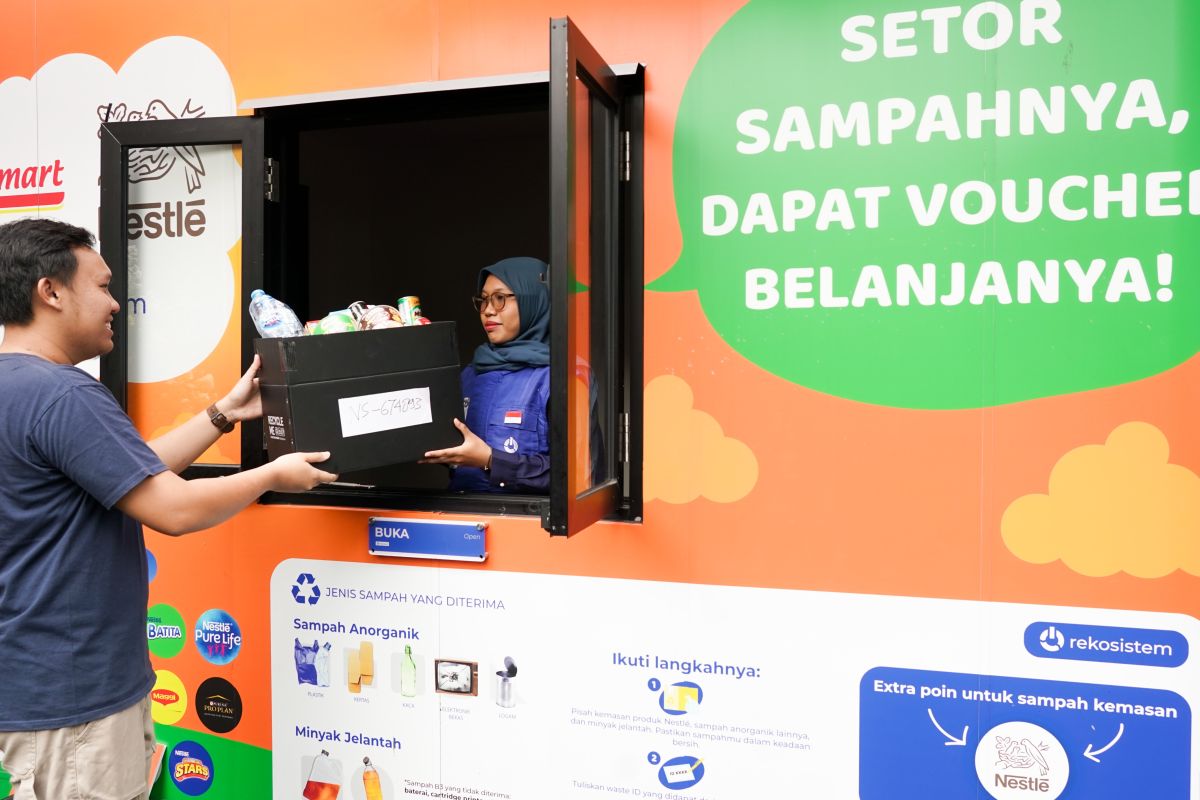
Nestlé Indonesia is promoting the implementation of household waste management within the community by placing waste stations in minimarkets to make it easier for the public to deposit inorganic waste.
“Through the Nestlé Indonesia Waste Station, we want to encourage the active role of industry, retail, waste management partners, and the community to work together in building a more integrated waste management system and providing a meaningful real impact on the environment,” said Fajar Dewantara, Corporate Affairs Director of Nestlé Indonesia, in a press statement.
Through a collaboration with Alfamart, which possesses an extensive retail network close to residential areas, the Nestlé Indonesia Waste Station has been introduced to help the public build wise waste management habits from home across the Alfamart retail network in Jakarta, Bandung, and Bali. Collected waste points can then be exchanged for shopping vouchers, providing a tangible incentive to encourage consistent participation.
“The collaboration with Nestlé Indonesia and Rekosistem is a concrete step in providing facilities that are easily accessible to the public while encouraging behavioural changes towards more responsible waste management,” said Hans Harischandra, Property and Development Director of Alfamart.
This approach, which integrates ease of access, connected digital systems, and consumer incentives, is part of Nestlé’s strategy to drive consumer behavioural change, aligning with its Packaging Sustainability pillar, specifically in promoting ‘Rethinking Behaviour’ to ensure changes in community habits.
This initiative also supports the implementation of the Minister of Environment and Forestry Regulation No. 75 of 2019 regarding the Roadmap for Waste Reduction by Producers. This inauguration brings the total to 15 Nestlé Indonesia Waste Station facilities established by the company in various major cities, including Jakarta, Bandung, Surabaya, and Bali. Cumulatively, the Nestlé Indonesia Waste Station has successfully supported the collection of more than 244,000 kilograms of waste as of early 2026.