
Nepal Demands US$ 20 Million Compensation from UN Following Climate-Driven Disaster
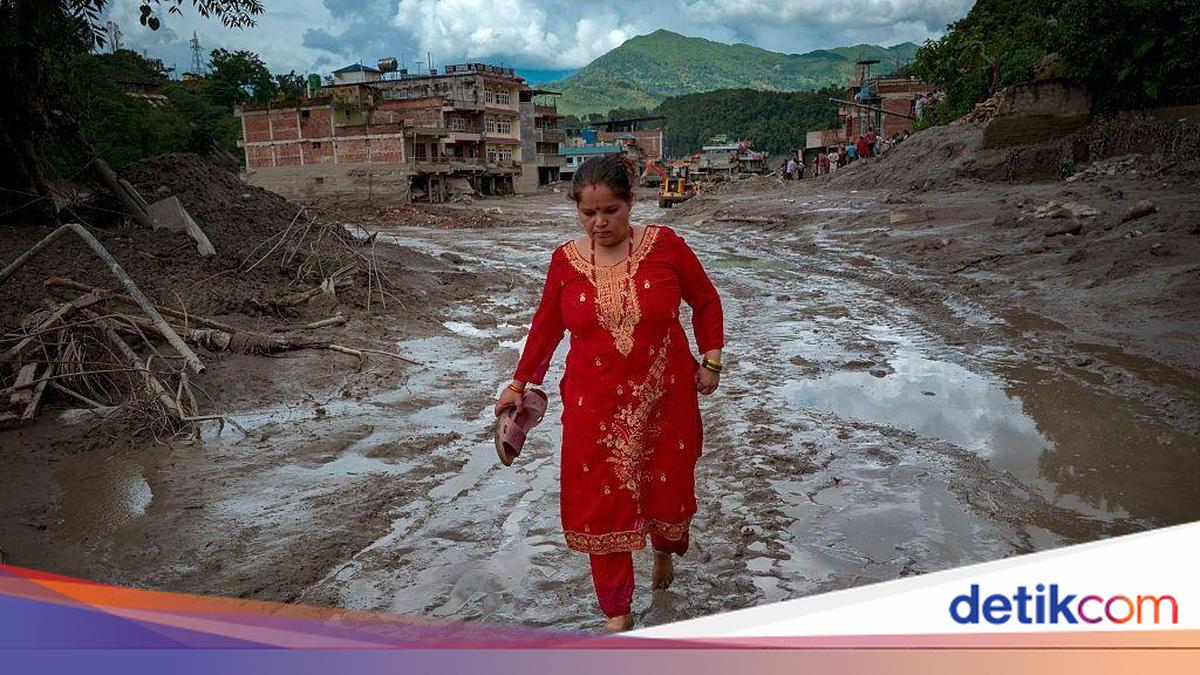
A recent study strongly suggests that climate change contributed to the rock and glacier landslides that triggered massive flooding on the Nepal-Tibet border in late August. Based on this research, Nepal will submit a financial claim of US$ 20 million (approximately Rp354 billion) to the United Nations.
The BBC obtained information regarding Nepal’s plan from another UN agency, the Loss and Damage Fund (LDF). This organisation is tasked with assisting nations in managing the impacts of climate change.
“It is now indisputable that human-induced climate change played a role in creating the conditions that triggered this disaster,” said Friederichke Otto, a climatologist from Imperial College London, who co-authored the study.
Approximately 1,400 people died in the disaster, while 6,150 others remain missing, according to official Nepalese government data as of 16 September.
The international study group, World Weather Attribution, stated that the disaster in Nepal and Tibet was triggered by a “compound event” resulting from rising temperatures, thinning glaciers, melting permafrost, and pre-existing geological weaknesses.
In late August, massive floods and landslides struck various towns and villages along the Nepal-Tibet border. The event caused thousands of deaths and disappearances, swept away thousands of homes, and damaged energy infrastructure.
Academics assess that the flood was initiated by the collapse of rock walls and glacier ice near the peak of Langtang Lirung, a mountain located on the Nepalese side of the Himalayas.
The collapsing material struck the valley floor with such immense force that it was recorded as a magnitude 5.2 earthquake by the United States Geological Survey (USGS).
“Climate change is a factor that amplifies the instability of pre-existing geological vulnerabilities,” stated World Weather Attribution on Thursday (17/09).
However, they noted that climate change was not the sole cause of the disaster.
According to their research, temperatures in the region during July and August were approximately 1.5 degrees Celsius above normal. Temperatures in the area have become warmer due to the influence of human activity on the climate.
Glacier ice in the region is also thinning by about half a metre every year. This condition is said to weaken existing cracks and increase instability.
High snowfall in October and November 2025 [sic] also added a large volume of meltwater at the beginning of this year. The combination of these various factors is believed to have interacted and intensified this compound event, according to World Weather Attribution researchers.
Nepal had previously prepared to submit satellite imagery and preliminary reports regarding the floods to support its application for UN financial assistance. Now, the World Weather Attribution report serves as the strongest evidence to support their claim.
According to the World Weather Attribution research, rock masses beneath the surface of Nepal also weakened due to two factors: first, the magnitude 7.8 earthquake that struck the region in 2015, and second, the rock and ice landslides caused by that earthquake.
However, to date, there is no report considered authoritative enough to confirm the exact extent to which the 2015 earthquake impacted the disaster that occurred last August.
According to World Weather Attribution academic Walter Immerzeel, a mountain hydrologist from Utrecht University, the Nepal and Tibet regions are geologically vulnerable.
According to Immerzeel, the area “has likely been weakened by the 2015 earthquake and is becoming increasingly unstable due to glacier retreat and the melting of permafrost.”
The World Weather Attribution study has not yet been published in a peer-reviewed scientific journal. However, World Weather and Attribution claims that all their studies use the same methodology and have undergone the peer-review process regarding the analysis of extreme weather events.
The findings of World Weather Attribution reinforce the views of several experts expressed shortly after the disaster in Nepal and Tibet occurred.
Some academics told the BBC that rising temperatures in the Himalayan region have the potential to be a factor triggering rock and glacier landslides.
According to Simon Cook, a glacier expert from the University of Dundee, while it is difficult to link a single event directly to climate change, global warming ultimately makes high-mountain ecosystems increasingly unstable.
Cook also stated that the World Weather Attribution report is a very valuable study for understanding the underlying causes of the disaster.
While the World Weather Attributions research provides “sufficiently strong evidence that climate change is a key factor,” Cook assessed that the academic community cannot yet explain exactly how these links are interconnected.
“There is still much to learn regarding the processes involved, as well as what we can do to monitor these high-mountain regions to provide early warnings for similar events in the future,” said Cook.
Following the disaster last August, the Nepalese government has called for greater global efforts to address climate change. They emphasised that Nepal is one of the countries with very low greenhouse gas emissions, yet is among the most vulnerable to its impacts.