
Neighbouring Malaysia and the Magnet for Indonesian Workers
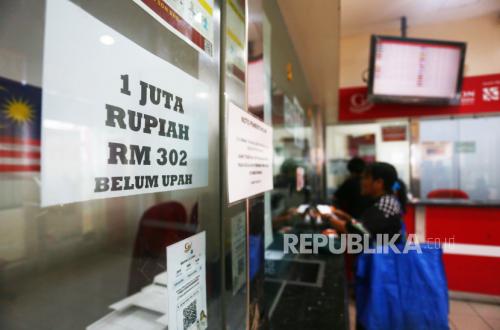
Whenever news emerges about Indonesian migrant workers in Malaysia—whether about economic success, protection issues, or cases of undocumented departures—a recurring question almost always arises: why do they often come from the same regions? Why are so many from NTB, NTT, Madura in East Java, North Sumatra, Aceh, and West Java? The quickest answer is usually because these areas are poor. However, this explanation is too simplistic. If poverty were the sole cause, then the poorest regions in Indonesia should consistently be the largest senders of migrant workers. The reality is not that straightforward. There are areas that are relatively not the poorest yet remain major pockets of migrant workers. Conversely, there are regions with low levels of welfare that do not produce international migration flows on the same scale. This suggests there is something deeper at play than just economics. The phenomenon of Indonesian worker migration to Malaysia actually demonstrates how history, social networks, a culture of migration, and economic structures work simultaneously to shape the decisions of millions of people. In many villages that send workers, the decision to go to Malaysia is rarely made individually. It is often a family decision. One child departs to secure a regular income. The money is sent back to renovate a house, buy rice fields, build a small business, or finance a younger sibling’s education. In many rural areas, migration is no longer a last resort when the economy fails. Instead, it has become a primary strategy to accelerate economic mobility. For some families, working abroad for five years is considered more realistic than waiting for formal job opportunities that may never materialise. In this logic, migration is not understood as a failure of development, but as an instrument of family development.