
Neighbouring Giant Stock Exchange on the Brink of Collapse, Saved by This Investor
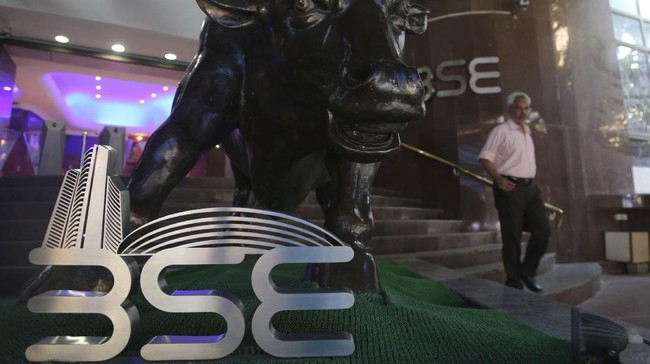
New Delhi — The Indian stock market managed to avoid a total plunge after domestic investors played a crucial role by injecting substantial funds to curb the mass selling by foreign investors over the past year. This rescue move marks a pivotal turning point for the stability of India’s capital markets amid macroeconomic pressures triggered by geopolitical conflicts.
Drawing on CNBC’s Squawk Box Asia report on Wednesday (20 May 2026), the involvement of retail and local institutional investors has now become the main pillar of resilience for the domestic economy in the country. The Chief Executive of India’s oldest stock exchange said that the trend of local participation in capital market instruments is rising massively and on a positive path.
‘India is growing, and a large portion of the population has yet to enter the capital market,’ said Sundararaman Ramamurthy, Chief Executive of the Bombay Stock Exchange (BSE), to CNBC International.
Ramamurthy added that 35 million new Indian investors were registered through the BSE in the past year alone.
This condition has directly transformed the ownership structure of Indian capital markets compared with previous periods. Based on latest capital movements data, foreign investor ownership has been decisively challenged by domestic capital strength.
‘Foreign participation ownership in the Indian stock market used to be higher than domestic institutions, but today that has reversed,’ Ramamurthy said.
Ramamurthy added that Indian institutional investors invested net funds of US$91 billion (Rp 1,610.70 trillion) in the equity market over the past year. The scale of domestic intervention proved massive and exceeded the aggressiveness of capital withdrawals by global fund managers.
Over the same period, foreign investors recorded net withdrawals from the Indian equity market of US$35 billion (Rp 619.50 trillion).
Although there were substantial outflows from abroad, India’s benchmark indices managed to withstand the external shocks thanks to solid domestic liquidity. Ramamurthy outlined this at the Motilal Oswal India Corporate Day 2026 event held in Singapore.
‘This not only countered foreign outflows but also substantially strengthened the Sensex index and prevented a total fall,’ Ramamurthy said.
To date, foreign market participants have reportedly remained bearish on the prospects of India’s equity market due to perceived weak corporate earnings. This negative sentiment was compounded by worsening macro conditions from higher global oil prices amid ongoing armed clashes in the Middle East.
Another factor weighing on global investor interest is the absence of a large technology giant in the AI sector. Although widely known as a global leader in information technology, India is considered to lack a large AI ecosystem company, which has further dimmed foreign investment appeal.
Citing a regular HSBC Research report on Tuesday, the absence of an AI-based growth narrative left the Indian stock market’s performance lagging when measured in US dollars. Overall, the Indian stock market has fallen about 10% in US-dollar value.
‘Shares in Asia have largely been driven by positive sentiment around AI,’ the HSBC Research report noted.
The HSBC Research report added that unlike India, AI-focused markets like South Korea and Taiwan have surged roughly 80% and 40% respectively since the start of the year.
Nevertheless, the situation did not dampen local participation as domestic funds continued to flow into domestic equities. According to local Indian media, total inflows into domestic equity mutual funds surged to 384.4 billion rupees, or close to US$4 billion (Rp 70.80 trillion), in April, up 58% year on year.
According to comprehensive data from LSEG, India’s benchmark BSE Sensex is currently down 11% year to date. This red score places the Indian stock market among the worst performing markets in Asia this year.